logo logo
giving banner
Donate
    • Membership
    • Donate
  • Social Justice
    • Racial Justice
    • Climate Justice
    • Disability Justice
    • Economic Justice
    • Food Justice
    • Health Justice
    • Immigration
    • LGBTQ+
  • Civic News
  • Nonprofit Leadership
    • Board Governance
    • Equity-Centered Management
    • Finances
    • Fundraising
    • Human Resources
    • Organizational Culture
    • Philanthropy
    • Power Dynamics
    • Strategic Planning
    • Technology
  • Columns
    • Ask Rhea!
    • Ask a Nonprofit Expert
    • Economy Remix
    • Gathering in Support of Democracy
    • Humans of Nonprofits
    • The Impact Algorithm
    • Living the Question
    • Nonprofit Hiring Trends & Tactics
    • Notes from the Frontlines
    • Parables of Earth
    • Re-imagining Philanthropy
    • State of the Movements
    • We Stood Up
    • The Unexpected Value of Volunteers
  • CONTENT TYPES
  • Leading Edge Membership
  • Newsletters
  • Webinars

NYC High Line Completed: Is it a Net Positive for NYC?

Tom Klaus
September 25, 2014


High Line

September 22, 2014; Cherry Hill Courier-Post

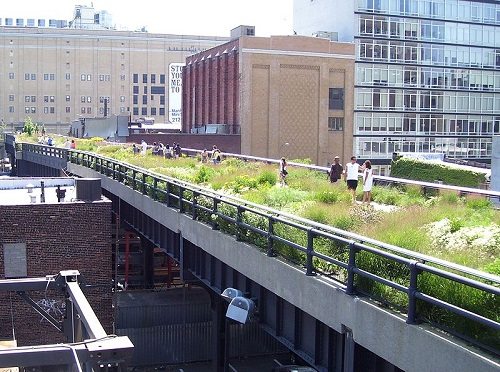
The wait is finally over for New Yorkers and tourists eager to explore the entirety of the 22-block elevated walkway park, known as the High Line at the Rail Yards, along Manhattan’s West Side. It has taken 15 years and, according to the Courier-Post, it cost $223 million in public and private money to build. The completion of the High Line at the Rail Yards has been greeted with celebration, consternation, and criticism.

The celebration came on Saturday, September 20th, with the official opening of High Line Park. The Friends of the High Line led the celebration, which included a procession of community members, volunteers, and business owners who walked the full length of the park carrying banners and ribbons. Friends of the High Line, a 501(c)3 that includes such celebrities as actor Edward Norton, has been the driving force behind the redevelopment of the abandoned elevated freight railway into “one of the nation’s most distinctive urban transformations.” They were joined by New York city, state, and federal officials at the opening event.

Sign up for our free newsletters

Subscribe to NPQ's newsletters to have our top stories delivered directly to your inbox.

By signing up, you agree to our privacy policy and terms of use, and to receive messages from NPQ and our partners.

The consternation was focused on one of the possible attendees at the High Line’s opening event, New York City Mayor Bill de Blasio. As reported by the NPQ Newswire in October 2013, de Blasio has been seen as a threat to private conservancies, such as the Friends of the High Line, for his support of a plan to redistribute some of their wealth to neglected public city parks and spaces. New York Post columnist Steve Cuozzo wondered last week whether Mayor de Blasio would even show up for Saturday’s dedication. Cuozzo seemed to throw down the gauntlet to the mayor, in whom he has little confidence, when he wrote: “Let’s see if he shows his face at the park dedication with its implicit, but unmistakable challenge: Match this!” Mayor de Blasio did show up and, with an apparent shout-out to his predecessor Michael Bloomberg’s administration (which may have surprised Cuozzo) praised the High Line, saying, “The High Line is a true testament to our city’s embrace of innovative and pioneering urban planning.”

The criticism has come from at least three fronts. In 2012, Jeremiah Moss complained in a New York Times opinion piece that the park had already become an overrun catalyst for gentrification to the point of being “Disney World on the Hudson.” Gardeners have weighed in on the park with their complaints, even as they welcome the focus on green space. It is, however, the gentrification issue that can be found as a subtext to nearly every criticism. As the Courier-Post article highlights, those businesses and people who benefit from the High Line Park are thrilled with the visionary “redevelopment” of the rail yards. Those who are forced to relocate due to high rents and inflated prices, in a neighborhood that is emerging as one of the trendiest in New York City, have had enough of “gentrification.”

The High Line at the Rail Yards extends from Gansevoort to West 34th Street along Manhattan’s West Side, offering a unique view of the Hudson River to the west and New York’s iconic skyline to the east. There are multiple entry points to the walkway along its route. This opening week at the High Line features a variety of events including walking tours, yoga and tai chi, stargazing, and live music.—Tom Klaus


 

Our Voices Are Our Power.

Journalism, nonprofits, and multiracial democracy are under attack. At NPQ, we fight back by sharing stories and essential insights from nonprofit leaders and workers—and we pay every contributor.

Can you help us protect nonprofit voices?

Your support keeps truth alive when it matters most.
Every single dollar makes a difference.

Donate now
logo logo logo logo logo
About the author
Tom Klaus

Tom Klaus, PhD is a nonprofit consultant specializing in leadership, program, and organizational development as well as research and evaluation. His clients include local, statewide, regional, and national organizations. He has extensive experience with community engagement, intractable controversy management, nonprofit board development and strategy planning, and the management of government funded health and human services grants and projects that are national in scope. In addition to his consulting practice, he has also managed the creation, development and testing of the Roots to Fruit of Sustainable Community Change model (R2F) with a colleague from the University of Iowa. The R2F model integrates the Collective Impact Five Conditions with other salient theoretical frameworks to present a measurable approach to producing long-term community change. Tom Klaus is also an adjunct professor at Eastern University (Philadelphia) in the School of Leadership Development and Ph.D. in Organizational Leadership programs and a frequent keynote speaker and workshop leader. From 2005 to 2013 Tom was Director of Capacity Building & Sustainability at Advocates for Youth in Washington, DC. During that time he served as a project director and as a technical assistance (TA) provider for a Centers for Disease Control and Prevention (CDC) funded teen pregnancy prevention project. In the role of project director he managed the daily work of the project. As a lead TA provider he created and provided organizational and leadership development training, coaching, materials, and support to local, state, regional and national organizations on a variety of issues, including controversy management, project and organizational sustainability, collaborative partnerships, and organizational change. From 2010 to 2013 Tom led the development of an innovative community mobilization and sustainability framework that is being used by the CDC in its teen pregnancy prevention grantee sites across the United States. Tom Klaus came to Advocates for Youth in December, 2005, from his home state of Iowa, where he had been the executive director and a founding board member of Iowa’s statewide teen pregnancy prevention organization; a developer and master trainer of several teen pregnancy prevention programs that were replicated nationally; a writer of numerous articles and curricula; a youth worker and counselor; and had held local, state, regional, national, and international leadership positions in both religious and public service organizations. Tom has written award winning and award nominated books on adolescent issues for religious publishers. He has also traveled throughout the United States as a speaker in hundreds of schools, colleges, and conferences on topics related to teen pregnancy prevention, adolescent sexual health, male involvement in teen pregnancy prevention, and organizational leadership and change. Tom Klaus is an alumnus of the Greater Des Moines Leadership Institute and a trained facilitator in Appreciative Inquiry, an asset-based change and development model for organizations. He has also received training in the fundamentals of Dynamic Governance, a sociocratic approach to organizational leadership and management. Tom earned degrees in religion and English at William Penn University, a Master of Science degree in counseling from Drake University, and the Doctor of Philosophy in Organizational Leadership (Nonprofit Concentration) at Eastern University. In 2013 Tom began a consulting practice, Tom Klaus & Associates, which is focused on partnering with nonprofit leaders to build greater organizations and programs for good. He is also adjunct faculty in Eastern University's School of Leadership Development and Ph.D. in Organizational Leadership program. Tom's doctoral research examined leadership in an intractable conflict over sexuality education in public schools in the United States. Other recent research and consulting work has included community engagement, reflective leadership, program and organizational sustainability, intractable conflict management, leadership development and coaching, organizational analysis, and board development. Tom is currently working toward accreditation as a leadership and executive coach with MentorCoach LLC and certification by the International Coaching Federation. Tom Klaus is known by his colleagues and clients as an authentic transformational leader; an innovative and focused strategic thinker and planner; a creative problem-solver; a talented trainer, teacher, and motivational speaker; an award-winning writer of numerous books, popular press articles, and professional research publications; and an effective relationship builder with a warm and engaging personality, appreciative management style, and a keen, quirky sense of humor. Tom is also an avid (though not great) ballroom dancer; a frequent (though not often enough) dog walker to his miniature schnauzers; and a practicing (though not perfect) Quaker.

More about: AccountabilityCommunity OrganizingFundraisingNonprofit NewsPolicy
See comments

You might also like
If Farm School NYC Closes, What Will the City Lose?
Farm School NYC and Iris M. Crawford
Be Bold This GivingTuesday: Lessons from Public Rights Project
Jennifer Johnson
Leading “Against the Current”: A Conversation with Eveline Shen
Isaiah Thompson and Eveline Shen
GivingTuesday: Ride the Wave, Don’t Fight It
Rhea Wong
How to Handle Founder’s Syndrome with Grace
Marian Urquilla
The New COVID Vaccine Rules Leave Parents with More Questions Than Answers
Barbara Rodriquez

Upcoming Webinars

Group Created with Sketch.
December 9th, 2:00 pm ET

Nonprofit Safety & Security: Protecting Our People, Data, and Organizations in a Time of Unprecedented Threat

Register
Group Created with Sketch.
January 29th, 2:00 pm ET

Future is Collective

Register

    
You might also like
Participants growing garlic at the Farm School NYC. 2025.
If Farm School NYC Closes, What Will the City Lose?
Farm School NYC and Iris M. Crawford
A group of diverse people volunteering by distributing food off of a truck, representing how Nonprofits across the country are ramping up their GivingTuesday campaigns.
Be Bold This GivingTuesday: Lessons from Public Rights...
Jennifer Johnson
Cover of “Choosing to Lead Against the Current: The Courageous Operating System for Changemakers–Empowering leaders to transform the world with integrity, impact, and purpose”
Leading “Against the Current”: A Conversation with...
Isaiah Thompson and Eveline Shen

Like what you see?

Subscribe to the NPQ newsletter to have our top stories delivered directly to your inbox.

See our newsletters

By signing up, you agree to our privacy policy and terms of use, and to receive messages from NPQ and our partners.

  • About
  • Advertise
  • Careers
  • Contact
  • Copyright
  • Donate
  • Editorial Policy
  • Funders
  • Submissions

We are using cookies to give you the best experience on our website.


Nonprofit Quarterly | Civic News. Empowering Nonprofits. Advancing Justice.
Powered by  GDPR Cookie Compliance
Privacy Overview

This website uses cookies so that we can provide you with the best user experience possible. Cookie information is stored in your browser and performs functions such as recognising you when you return to our website and helping our team to understand which sections of the website you find most interesting and useful.

Strictly Necessary Cookies

Strictly Necessary Cookie should be enabled at all times so that we can save your preferences for cookie settings.