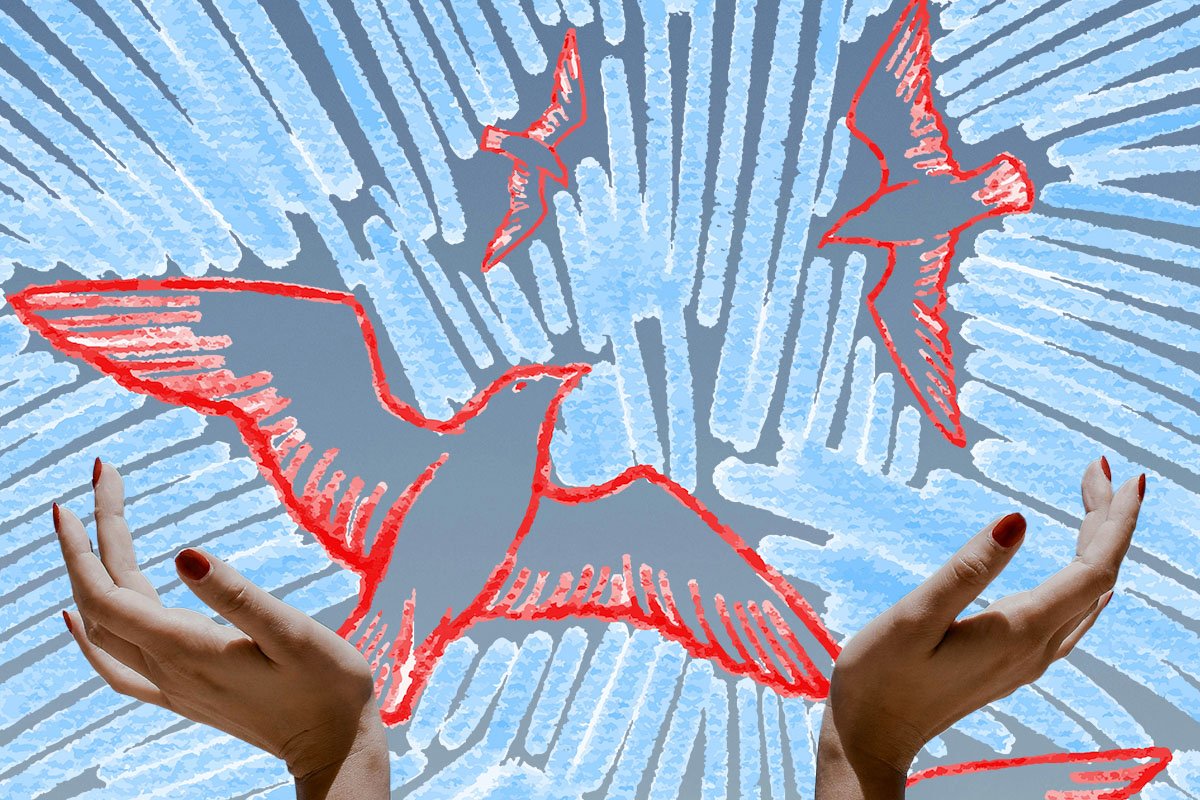

Investing in Life: A Vision of Solidarity & Collective Liberation explores how philanthropy can become so effective in supporting transformative change that it ultimately works toward its own irrelevance—helping build a future where collective wellbeing and life itself are truly centered. Through essays, analysis, and insights from social justice movements, the series highlights the extraordinary courage of communities that organize, resist, and build alternatives in the present while laying the material foundations for thriving futures. With Palestine as a compass, the series traces the profound connections between the struggles for collective liberation and our shared commitment to life-affirming futures for all.
Dystopia is an engineered social and political condition in which inequality, violence, surveillance, extraction, dispossession, and perpetual crisis are imposed on the majority for the benefit of the few that hoards wealth and power. Far from an imagined future, it is the reality in which many of us are already living. This condition is systemic—deliberately designed and sustained through interlocking structures of imperial, colonial, and corporate power. These systems seek to control land, extract resources, and dominate populations. They operate through coordinated networks that enact profit-driven violence while rendering crises as normal, even inevitable. At the same time, they deploy sophisticated public relations strategies to obscure harm, reshape perception, and preserve legitimacy.
Philanthropy is not an outside story to dystopia—it is entangled within it. The wealth that funds charitable giving is often built through endowments invested in harmful industries. It is accumulated through the same systemic injustices that continue to drive many of the crises shaping our current global reality.
In today’s constructed dystopian narratives and actions, violence is rebranded as “redevelopment,” “peace,” or “reconstruction.” These are actions by which states and powerful actors seek greater control and domination. It is deliberate. Disinformation reframes devastation as opportunity—sites for investment, governance experiments, or technological expansion. History, however, reveals the pattern: these are not ruptures but continuities of past harms, and those continuities are precisely what we must refuse to forget.
Philanthropy is not an outside story to dystopia—it is entangled within it.
The continuity of violence and oppression is evident in the current so-called peace initiatives that consistently function as tools to consolidate power, legitimize dispossession, and concentrate wealth—but are masked as otherwise. Such “peace initiatives” are cloaked as humanitarian or technocratic solutions, yet they operate less like pathways to self-determination and more so as instruments for extending control over land, infrastructure, and resources.
The so-called Gaza Board of Peace, which purports to govern and rebuild Gaza, is one example. It is made possible through externally controlled mechanisms and actors that are backed by billions in funding, with private corporations projecting profit margins as high as 300 percent. These efforts echo earlier models where the language of stability obscures systems of domination and exploitation.
They follow a long lineage of imposed agreements and interventions in which Palestinians have been systematically denied meaningful sovereignty. In doing so, an oppressive feedback loop is evident. These actions have not only helped produce the conditions enabling the present genocide and ethnic cleansing of the Palestinian people, but they have continued to sustain the infrastructures that allow it to persist.
These are not ruptures but continuities of past harms, and that continuity is precisely what we must refuse to forget.
Recognizing Dystopian Patterns of Behavior
These dynamics are not new. The United States, for example, has long relied on similar frameworks. During the era of the Indian Peace Commission of 1867–1868, the language of “peace” and “stability” was used to justify policies that enabled the genocide of Indigenous peoples, while enforcing displacement, separating families, seizing land, and expanding militarized control. These processes were not incidental—they were foundational, generating immense wealth and underpinning the country’s growth through another violent system of accumulation: slavery.
That same logic persists today: the language of “security” and “public safety” is used to justify forms of state violence through mechanisms such as the US Immigration and Customs Enforcement (ICE), which deploy systems of surveillance and enforcement that extend state power over marginalized communities. This often results in family separation, detention, and human rights abuses with absolute impunity.
In Haiti, similar patterns have unfolded over centuries. External powers imposed crushing economic and political constraints to reassert control following the Haitian Revolution—the first successful revolt of enslaved people that established Haiti as an independent nation. Most notably, France demanded indemnity in exchange for recognition of independence. This was all under the guise of “stability, legitimacy, and diplomacy,” which ultimately structured its economy around extraction and dependency, while plunging Haiti into generations of debt.
In the case of Haiti, international interventions—framed as humanitarian assistance or stabilization—reinforced external control over governance, security, and development. From foreign-imposed economic policies to UN-led missions and post-earthquake reconstruction efforts, “aid” and “investment” have frequently prioritized foreign contractors and institutions over Haitian sovereignty—deepening inequality and weakening local capacity. As in other contexts, the language of rebuilding and stability has often masked systems that reproduce dependency, dispossession, and profit extraction.
Recognizing how the condition of dystopia is produced is essential—but it is only the first step.
Grassroots Movements Build Alternative Paths Forward
Across Palestine, Haiti, and beyond, grassroots organizers are not only resisting the systems that produce dystopia—they are actively building alternatives rooted in community well-being, safety, and freedom, while confronting some of the most aggressive acts of violence. Here, we share some of their reflections expressed during a political education series co-organized by Funding Freedom, Funders4Palestine, and Rawa, in March 2026.
Sign up for our free newsletters
Subscribe to NPQ's newsletters to have our top stories delivered directly to your inbox.
By signing up, you agree to our privacy policy and terms of use, and to receive messages from NPQ and our partners.
Ahmed Mortaja, a grassroots organizer, shares about the horrific experience of pulling bodies from the rubble with neighbors during bombardment, then witnessing a teacher gathering children in a crowded shelter: “I don’t know what he was teaching, but this inspired me to do community work.” That moment sparked an initiative to rehabilitate a hospital—organized not through institutional channels but through direct, community-led action. “We Gazans know best what Gaza needs,” Ahmed explained. “We can respond rapidly…we lived in starvation and struggle…but communities help. Communities supported.”
These community responses are not exceptional—they too are systemic. Systems of domination are built by top-down approaches where the center is profit. In parallel, grassroots systems of care, resilience, and sustainability are built and sustained by decentralized approaches where the center is community well-being. Across contexts, grassroots efforts consistently outperform top-down interventions in speed, trust-building, adaptability, and long-term sustainability. These community-led approaches affirm and center life.
Souzen Joseph, leader and organizer, reflects on international aid in Haiti, highlighting: “When it’s community-led, it always succeeds. When it’s huge, international organizations, it never does—the results are always on paper.”
Waed Abbas, Palestinian organizer and researcher, highlights how bureaucratic aid systems often undermine the very communities they claim to serve, describing a landscape where resources are consumed by “technicalities, approvals, and positions—filled with non-experts,” while local actors remain underfunded and undervalued. At the same time, these grassroots and community centered efforts are not only meeting material needs, they are building collective well-being where care is at the center.
In Gaza, community initiatives have created meaningful generational infrastructure that provides informal spaces for children’s learning, mutual aid networks for food and shelter, and moments of psychological relief in the midst of trauma. These socioemotional practices—grounded in dignity, solidarity, and shared survival—are critical. They not only sustain life but seed the possibility of a future.
Why This Matters for Philanthropy
For philanthropy, the implications are profound. The dominant funding model—top-down, risk-averse, and bureaucratic—is not only ineffective in these contexts; it often reinforces the very systems it claims to challenge.
Grassroots organizers are frequently the first and most effective responders, yet they remain the least resourced. Meanwhile, large institutions absorb most of the funding, imposing rigid and slow frameworks disconnected from reality on the ground.
If philanthropy is to play a meaningful role in this moment, where so much is at stake across every single context, it must move beyond incremental reform toward structural transformation. The following calls to action outline a pathway forward:
- Align your practices with a structural, interconnected analysis of power: Funders must move beyond fragmented or issue-based approaches to confront the reality that systems of oppression are deeply interconnected and mutually reinforcing. This requires a clear political and economic analysis. Funding must support cross-movement organizing, political education, and strategies that address root causes—not just symptoms. This includes significantly increasing support to Global South movements to address historic extraction.
- Divest from systems that profit from genocide, displacement, surveillance, and extraction: It is not enough to fund justice work while simultaneously investing in industries that profit from war, surveillance, and displacement. Especially in philanthropy where most of the funds are held in endowments rather than grantmaking. As a sector that benefits from public tax benefits, it must interrogate where its wealth is held and redirect resources toward life-sustaining work.
- Resource community-led work in flexible, courageous, and relevant ways: Grassroots organizers are not peripheral—they are the backbone of resilience and our survival. Resourcing grassroots organizing effectively means moving flexible, unrestricted, and multi-year funding directly into the hands of those on the frontlines—especially informal, unregistered, and grassroots groups that are often invisible or illegible to funders but are central to sustaining life and resistance of their communities. Funding in this way requires the courage to fund groups that are politically targeted, criminalized, and surveilled, and it requires trusting communities to decide how best to respond to rapidly changing conditions without being constrained by rigid deliverables or timelines.
- Move money boldly and remove bureaucratic barriers: Rigid reporting and compliance structures can delay or even endanger critical work. Funders must embrace trust-based approaches—moving resources quickly, reducing administrative burdens, and redefining accountability in contexts of crisis.
- Organize with other funders and leverage collective power: No single funder can meet the scale of this moment alone. Coordination is essential. Organize with other funders to share risk, develop aligned strategies, and respond collectively to political threats—whether through funding mechanisms, public advocacy, or resistance to harmful legislation. This includes joining donor networks and collaboratives, such as Funders4Palestine, strengthening relationships with movement organizations, and leveraging not only financial resources but also voice, legitimacy, and access to decision-making spaces.
- Invest in long-term, community-led sustainability and commit to discipline and sustained struggle: Community resilience is more than the capacity to endure—it requires space for autonomy, self-determination, and the resources to build life-sustaining systems outside of, and in resistance to, dominant structures. Short-term, crisis-driven funding cycles undermine community resilience by forcing organizations into survival mode and preventing long-term planning, strategy, and growth. Instead, commit to sustained, multi-year support that enables communities to build infrastructure, deepen relationships, and develop their own solutions—while defining priorities, allocating resources, and leading on their own terms.
- Center knowledge, refuse dehumanization, and shift who gets to design the future: Dominant systems—especially technological ones—are built by a narrow set of actors, reflecting limited perspectives while claiming universality. This results in systems that encode bias, reinforce inequality, and make decisions about people’s lives without their participation or consent. Resisting this requires more than critique—it requires a redistribution of power over knowledge production, design, and governance.
Philanthropy must work toward a future where resources are redistributed, governed, and sustained by communities themselves.
At the core of the systems that shape the world is a deeper question: whose knowledge counts, and who gets to shape the future? Support those who are building alternative frameworks, grounded in lived experience, collective care, and accountability.
- Be the first to fund emerging work, not the last: Philanthropy is risk-averse by design, since it exists to protect capital, reputation, and institutional stability rather than confront power. And in this moment, aversion to risk by powerful people and institutions is not a neutral force; it actively limits possibilities for all of us. To disrupt the status quo, funders must identify and resource grassroots work before it becomes legible, fundable, or palatable for dominant frameworks. Some of the most critical organizing emerges in early, informal, or politically contested spaces—long before it is validated by institutions.
- Disrupt misinformation and disinformation while actively advancing narratives that center community well-being: Philanthropy must take responsibility for identifying and dismantling false and harmful narratives not only in public discourse, but also within its own institutions in internal practices, strategies, policies, and structures. Disrupting misinformation and disinformation requires active efforts to stop its spread, alongside proactive investment in narratives that affirm justice, dignity, and community power.
- Work to make philanthropy irrelevant: Philanthropy, as it currently exists, is a product of the very systems of extraction, accumulation, and inequality that movements are working to dismantle. It concentrates decision-making power in the hands of a few and is often disconnected from the realities of those most impacted. Our work as funders is not to reform this system, it is to invest in the people working to build a world where resources are managed and held collectively and democratically—a world where philanthropy itself becomes irrelevant. Philanthropy must work toward a future where resources are redistributed, governed, and sustained by communities themselves. This is the act of taking justice seriously. We can no longer uphold and sustain charitable gatekeeping.
Resist the dystopia by investing in community. Invest in life. Invest in a present and a Future. Invest in Grassroots resilience.
Grassroots Resilience Leads Us Toward Collective Liberation
Resisting the dystopia is not impossible nor a theoretical exercise. Resistance is already happening—every day, in communities building infrastructure rooted in care, solidarity, creativity, and the profound commitment of people who to refuse to abandon one another. The role of funders is not to design this future, but to take accountability and leverage their role with discipline and urgency.
As Waed reminds us: “We are not invested because we want to get a huge salary, or kind of move up in the ranks, a genocide is unfolding. We won’t quit because we want to see a free Palestine and live in it. It’s our cause. It’s our people, it’s our trees, it’s the oxygen we breathe. It’s important to invest in those who won’t quit.”
Resist the dystopia by investing in community. Invest in life. Invest in a present and a Future. Invest in Grassroots resilience.