
Collaboration is not inherently equitable. It becomes just only when we intentionally center community voice, shift power, and act with accountability.
Vu Le, writer and founder, NonprofitAF
In the nonprofit sector, we love to talk about collaboration. It’s one of our most cherished buzzwords—reassuring, inclusive, and well-intentioned. We feel cozy and comfortable talking about collaboration when the choice feels safe and easy. But in this moment of overlapping crises, easy collaboration isn’t enough. We need partnerships—strategic, intentional, equity-rooted partnerships that shift how we steward community assets, not just in crisis but long before it.
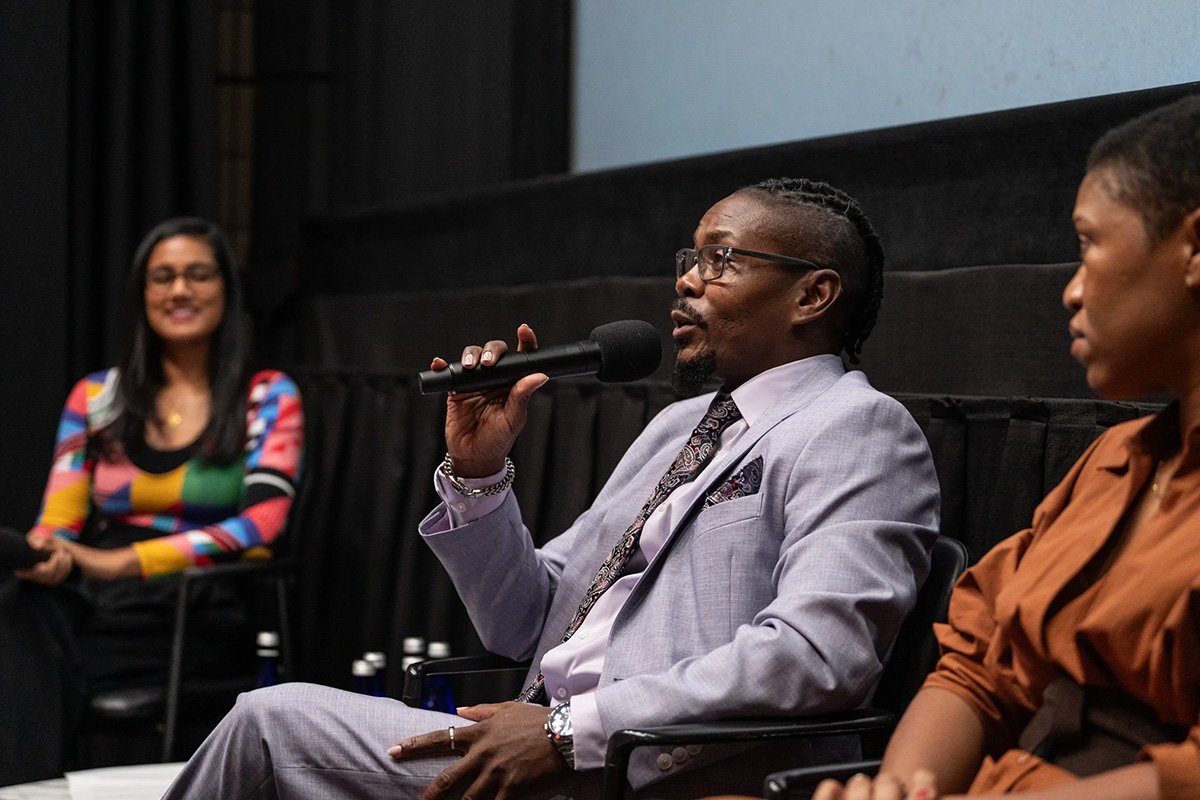
Such was the focus of a recent webinar hosted by NPQ, “The Power of Partnership: Protecting Communities and Essential Programming through Partnerships & Mergers.” The authors were joined by leaders Lissa Jones-Lofgren, interim executive director of Haven Housing, and Hoang Murphy, CEO of People Serving People.
Here, we build upon that conversation by exploring the necessary mindsets, types of partnerships, and a call to action: partnership can no longer be passive, paternalistic, or performative. Boards and leaders must instead pursue partnership as an act of leadership, with purpose and intention.
Why Partnership, Why Now?
In today’s landscape of overlapping crises, nonprofits are navigating what feels like a permanent state of uncertainty. Federal funding is retracting, philanthropic dollars are in flux, and frontline staff are burning out. For many, the instinct is to double down, protect what’s left, and preserve the organization at all costs. But that instinct can be self-defeating.
Boards and leaders must pursue partnership as an act of leadership, with purpose and intention.
The Nonprofit Sustainability Initiative (NSI) supports Los Angeles County nonprofits in exploring strategic partnerships. They offer a powerful reframing for their work: What if we stopped asking nonprofit leaders to ensure the survival of their organizations and help them instead focus on sustaining their organizations’ missions?
As they put it, “Partnerships bring new vitality to an organization.” They create pathways to build capacity, scale vision, and preserve purpose. In that light, partnership is not merely a crisis response—it’s a transformational strategy.
NSI, along with nine other organizations in a national network of funders, normalize what it calls “sustained collaboration”: strategic partnerships that permanently restructure how organizations work. These can take the form of jointly managed programs, back-office consolidations, shared ventures, or full-scale mergers. Their goal is to cultivate a sector where funders, service providers, and consultants treat partnership as a common and courageous tool—not a last resort.
“After an organizational assessment….The board decided that it was more important to maintain the integrity of the work than to maintain Haven Housing as an organization.”
Many nonprofits only consider partnership when a funding cliff is imminent, a funder requires it, a leader retires with no successor, or burnout makes continued operations untenable. By that point, options are often limited, but in reality, there’s a spectrum of possibilities.
The “partnership continuum” ranges from loosely aligned coalitions to deeply integrated structures. On one end, coalitions and movements serve as essential strategies for organizations committed to being responsible and collaborative members of their ecosystems. On the other end, asset transfers and mergers can evoke fear—of erasure, loss, or failure. And yes, when rushed or reactive, they can be painful. But when grounded in mutual trust, community accountability, and long-term vision, these partnerships can preserve and even expand the reach of critical work.
A powerful example comes from Haven Housing, whose board, after careful assessment, made a bold and value-aligned decision. As Interim Executive Director Lissa Jones-Lofgren noted: “After an organizational assessment….The board decided that it was more important to maintain the integrity of the work than to maintain Haven Housing as an organization.”
This approach reflects the first principle in BoardSource’s article “The Four Principles of Purpose Driven Board Leadership”: “Purpose before organization: prioritizing the organization’s purpose, versus the organization itself.” This principle emphasizes that a board’s highest commitment must be to the mission, not the institution. When a board centers purpose, it is willing to ask hard questions: Are we the best vehicle to advance this work right now? Should we share, transfer, or restructure to better serve our community?
Haven Housing’s board answered those questions with courage and clarity. Maintaining mission over organization isn’t just a lofty principle; it’s an imperative. As a sector, we must shift from exploring partnership as a last resort to pursuing partnership with purpose.
Which Partnership Is Right for Your Organization?
Not every partnership has to result in a merger, and no two partnerships are the same. But every partnership should be mission-centered and community-accountable. Early in the process, stakeholders should ask:
- What could we accomplish together that we couldn’t accomplish independently?
- What challenges, opportunities, or crises are we hoping to respond to?
The answers to these questions will help define what structure might be most effective for your partnership. Some of the most relevant partnership models for this climate include:
- Program or asset transfer: Moving a high-impact program to a better-resourced organization that can sustain it.
- Back-office sharing: Consolidating select operations like HR, finance, or data to improve service quality and efficiency.
- Integration: Could be a full merger or the creation of a new entity through the affiliation of existing organizations—often using a “parent-subsidiary” model or other frameworks that preserve separate legal identities while aligning governance and operations.
- Joint ventures: Creating shared initiatives with pooled funding and clear governance.
- Fiscal sponsorship or hosted incubation: A way for emerging or sunsetting programs to live within another structure.
La Piana Consulting, The Bridgespan Group, and others detail many more options from informal collaboration to a formal merger, but they should all strive to answer the same questions: What arrangement most honors the mission and serves the community long-term? What new corporate structure will best help us achieve our partnership vision?
Sign up for our free newsletters
Subscribe to NPQ's newsletters to have our top stories delivered directly to your inbox.
By signing up, you agree to our privacy policy and terms of use, and to receive messages from NPQ and our partners.
Are We Ready to Partner?
Effective partnerships start with a partnership mindset. Many boards and executives approach partnership discussions either from a place of scarcity (What are we losing?) or control (How do we retain our voice?). But good partners operate from a different perspective. They understand that autonomy and interdependence are not opposites. They see shared decision-making not as a dilution of leadership but as an expression of mutual trust and purpose.
Three mindset shifts are especially critical:
- Autonomy and interdependence: Strong partners know who they are—and know they can’t do it all alone.
- Planfulness and responsiveness: They prepare proactively and pivot when conditions change.
- Prompt, engaged decision-making: Strong partners can hold ambivalence and don’t wait for perfect clarity. They assess urgency thoughtfully and lead appropriately and act with enough information and shared conviction.
These mindsets are the conditions for justice-rooted, community-driven partnerships that hold up under pressure, uncertainty, and rapid change.
Here are two tools to self-assess and evaluate potential partnership:
Risk template: This tool helps organizations prepare for partnership by assessing their current operating environment. Teams identify potential risks, rate each by likelihood and impact (low, medium, or high), and then prioritize the top five risks for focused discussion.
Partner screen: This values-based tool supports organizations in assessing potential partners through collaboratively defined criteria—typically 5 to 8—grounded in mission and community priorities. Each partner is scored on a scale from 0 (poor fit) to 3 (exceptional fit), with space for nuance and discussion rather than rigid formulas. Criteria can be weighted to reflect organizational priorities, and scores should evolve as new information emerges.
A Case from the Field: Haven Housing and People Serving People
When Jones-Lofgren assessed Haven Housing’s future, it became clear that maintaining Haven as a standalone entity was no longer viable. The board wasn’t interested in survival for survival’s sake. They asked: How do we preserve the integrity of the work, even if it means letting go of the organization?
The answer: Gift St. Anne’s Place—a culturally vibrant shelter serving women and children and a longstanding program site of Haven Housing—to a trusted peer. Haven Housing transferred the program, the building, and cash to People Serving People (PSP), an organization with shared values and the operational infrastructure to sustain it.
As Hoang Murphy, PSP’s CEO, described it, “It’s a gift…unheard of in any other scenario. They gave us a building, a program—and frankly, cash. That doesn’t happen in most orgs. Most don’t make that decision early enough to be in a position to do that.”
The partnership also prioritized equity. Haven Housing’s Board Chair Shereese Turner—herself a former resident of St. Anne’s Place—was invited to join the PSP board and now serves as its vice chair. That’s what shared stewardship looks like.
“To honor the gift fully, we also had to make sure there was power balancing and equity in that. That meant [Haven Housing’s board chair] needed to be one of the folks I report to,” Murphy added.
The result? A transition rooted in trust, culture, and community. By proactively pursuing a shared vision, both organizations created a dignified, forward-looking model for what is possible when purpose and community are prioritized.
Calls to Action: For Leaders, Boards, and Funders
There is a lot of allegiance to organizational structure in this field…Your real allegiance is to the mission, not your EIN.
Lindsay Kijewski, director of the Nonprofit Repositioning Fund, Philadelphia
To nonprofit leaders:
As able, pursue partnership options from a place of opportunity, not fear. Build the relationships and trust that will carry you through the hard decisions ahead. Include staff and community voices early and center mission.
To Boards:
Get comfortable asking, Are we still the best stewards of this work? It’s not a question of failure—it’s a question of commitment. Challenge yourselves to look beyond the organization and toward the community’s future.
Familiarize yourself with the different forms that partnerships and corporate restructuring can take in the nonprofit sector—and be mindful of any assumptions you may be carrying over from other experiences.
To funders:
Support partnership exploration on both ends of the spectrum, not only when it’s reactive but when it’s generative. Fund the due diligence, facilitation, and capacity-building needed to make these transitions successful. Allow flexibility in funding that gives leaders space to think beyond their daily demands. Reward courageous decisions and the results that move the mission forward.
The power of partnerships lies not just in resource-sharing, but in vision-sharing. In redefining what leadership looks like. In choosing collective impact over institutional preservation. We know the continuum of possibilities. Now we must explore it—with strategy, with humility, and with heart.