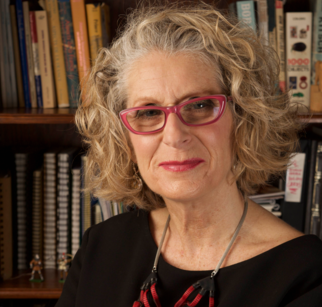
Simone P. Joyaux, ACFRE is recognized internationally as an expert in fund development, board and organizational development, strategic planning, and management. She is the founder and director of Joyaux Associates. Visit her website here.
Here’s the deal when it comes to setting a charitable contributions goal: Internal and external factors affect your ability to raise money. How much money you want doesn’t matter as much as the internal and external factors.
And there’s more: The best fund development planning process helps define your capacity and capability to raise money. The fund development planning process tests and refines the charitable contributions goal.
And still more: The smart organization bases its budget on what the fund development planning process says, not what the organization wants or needs in gifts.
This is what many organizations tell me: “First we add up all the expenses to carry out our mission. Then we figure out how much revenue we think is pretty reliable.” (That might be ticket sales if you’re an arts organization. Or maybe government contracts for services delivered. Or a for-sure grant from some foundation.)
“And then,” says the organization, “we figure out the gap and that’s our fundraising goal.”
Yup, the primary criteria for setting charitable contributions goal is how much the organization wants / needs to do its work.
Of course, most organizations also look at how much they’ve raised in the past. Let’s see: “Last year we raised 10% more than the previous year. So how about raising 15% more this year. Or, it’s a bad economy, so let’s just aim for raising 10% more again this year.”
But that’s not enough. Here are some of the factors that I consider:
Sign up for our free newsletters
Subscribe to NPQ's newsletters to have our top stories delivered directly to your inbox.
By signing up, you agree to our privacy policy and terms of use, and to receive messages from NPQ and our partners.
Internal factors
- Historical trends in gifts by source (e.g., individuals, foundations, corporations, etc.) and solicitation strategies (e.g., face-to-face personal solicitation, direct mail, proposals, fundraising events, etc.)
- Balanced mix of sources and solicitation strategies
- Analysis of donors and their gift history – to determine the likelihood of the donor’s loyalty, potential for increase, etc.
- Transition rate of first-time donors to second gifts
- Loyalty and lifetime value
- Effectiveness of the organization’s relationship-building program (e.g., donor-centered communications and extraordinary donor experiences)
- Quality of acquisition program
- Capacity of the organization to do the existing work and more work (e.g., board member and other volunteer participation; staffing; technology; etc.)
- And more…
External factors include things like the economy, societal changes, congestion in your marketplace, and so forth.
Some organizations do use a good fund development planning process. These organizations figure out how much they think they can realistically raise, based on capacity and capability. But when the figure doesn’t match what they need to do what they want… too many organizations budget what they want. When I say to them, “How can you do this? This seems fiscally irresponsible!”) – here’s what they answer – and these are direct quotes:
- “God will provide.” Now my understanding is that the goddess helps those who help themselves. So I’m thinking that bad planning and bad decision-making isn’t going to make the goddess very happy or supportive.
- “We’ll just work harder.” This statement is often accompanied by a quirky smile, a serious glint in the eye, and hands up in the air. Really? The good fund development planning process already included working harder, and harder still. Extending capacity and capability as much as is realistically and sacrificially possible. So how does “just work harder” work?
- “Maybe someone will die.” Yes, a client of mine was happily getting bequests that were covering deficits each year. Do you want to rely on death?
So… How does your organization set its charitable contributions goal?
You probably understand a lot of this pretty well. It might be your board or your boss who is promoting this bad approach to business. So you have to fight them.
Keep this in mind: The chief development officer is responsible to explain all this to the CEO, the board, the Finance Committee, and everyone else! Yup, you’re accountable for enabling everyone to understand this. (See my December 2009 column on enabling.)
Third, yet another thing to keep in mind: You’re the leader in fund development. You have to be a good enabler. You’re more than a technician; you have to be an organizational development specialist. See my previous columns: (“What’s the Role of the Fundraiser? March 2010; Are You Just a Great Fundraising Technician parts 1 and 2,” October 2010).
You can fight them with your expertise and experience. You can help them understand with your leadership and enabling skills. But maybe they won’t choose to learn and understand and change. So you’re stuck. Now it’s your choice. Do you want to stay there? Can you afford to leave? This is when it’s really hard.