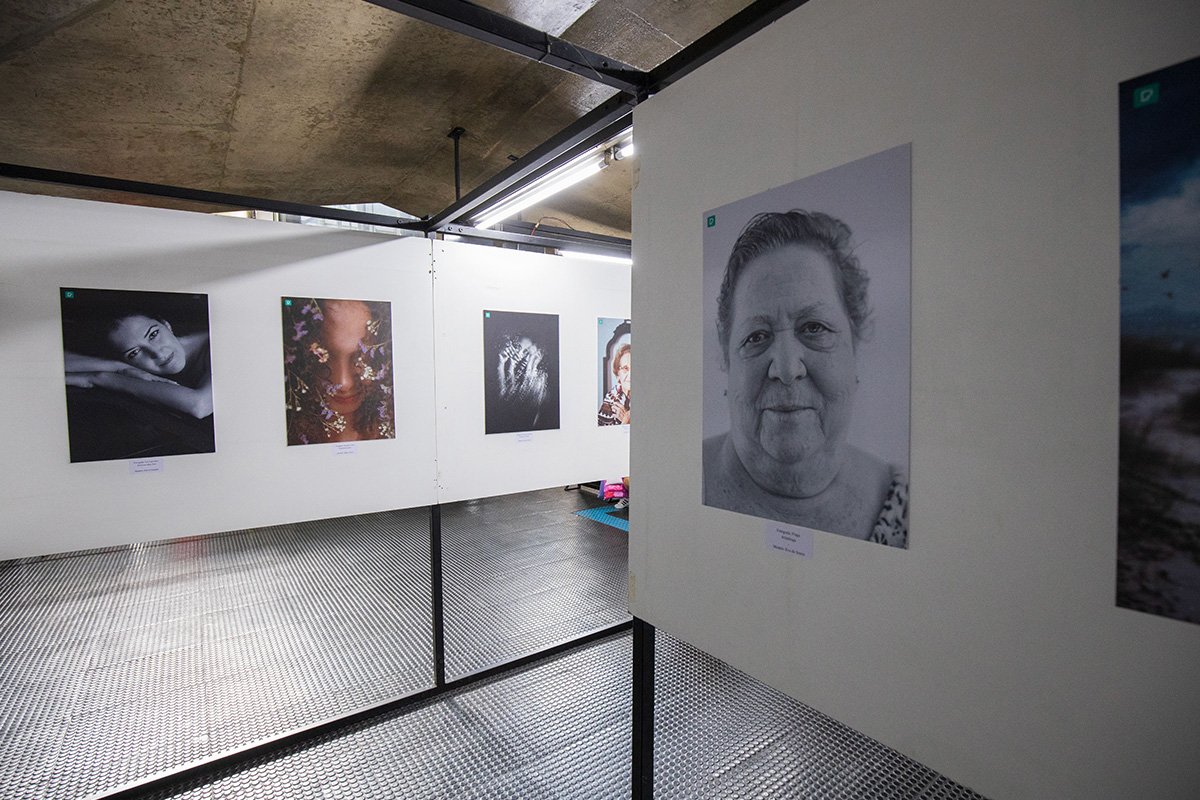
SF Camerawork, a gallery supporting experimental photographers, unconventional techniques, and sociopolitical themes, announced on Aug. 10 that it was closing after more than 50 years. The news rocked the local creative industry, because the San Francisco nonprofit was known for championing bold, experimental work from Bay Area artists and had featured iconic artists like Robert Mapplethorpe and Susan Meiselas. The space also became part of the community by offering public lectures and workshops for aspiring photographers.
But less than three weeks after the closure announcement, the gallery reversed course under new leadership after lawmakers included $1 million over two years for the nonprofit in Assembly Bill 113. The speed of that reversal introduces a question that extends beyond a single arts institution: What happens in that narrow window between a nonprofit deciding it can’t continue and actually disappearing? During this stage, an organization receives very little attention, yet it’s at this point that an overlooked factor in nonprofit survival—called rescue capital—can decide who gets saved and who shuts down.
The Anatomy of a Nonprofit Rescue
Founded in 1974 by a collective of artists, SF Camerawork helped launch photographers by offering a framework focused on creative freedom independent of a sales revenue model. In 2024, the gallery was designated as a legacy business by the city’s Small Business Commission for its role in helping grow San Francisco’s photography community.
But in 2025 the gallery cited years of rising operational costs, a decline in public funding, and a changing philanthropic landscape as reasons why it was closing. Tax filings dated back to 2022 show that for three years in a row, the gallery had failed to cover its expenses with incoming revenue.
Hope arrived in the form of funding when Gov. Gavin Newsom heard about the closure from Stanlee Gatti, a famed event designer and prolific philanthropic connector. According to news reports, Newsom requested a proposal from the gallery, and Sharon Tanenbaum, who was executive director of SF Camerawork from 2004 to 2010, put one together within a few hours.
The case of SF Camerawork points to a different set of assets that gave it a second life: rescue capital.
Newsom put the proposal into Assembly Bill 113, a last-minute budget trailer bill that secured a $1 million allocation for SF Camerawork over two years. The nonprofit also received around $90,000 in additional private commitments. While the funding was being secured, the nonprofit was also undergoing structural changes. Original co-founder and photographer Hal Fischer came up with a last-minute rescue plan that included a new board with local arts professionals Alexis Gordon, Sarah Miller, Adrian Martinez, Alex Ramos, Dave Elfving, and Erika Gentry.
With funding secured for the next two years and a new leadership board, the gallery reopened its doors on September 9. The speed of the turnaround is what makes this case so remarkable, and the documentary records point to a sequence of events that all happened in a matter of weeks and prevented closure.
Rescue Capital Doesn’t Appear on a Form 990
A Form 990 can reveal a lot about a nonprofit’s finances. It can show shrinking revenue, rising expenses, and declining reserves, which is exactly what SF Camerawork’s Form 990 looks like. The gallery’s financial filings reveal that it was burning through its reserves over multiple years. In 2022, it had net assets of $373,367; by 2024 its net assets had fallen to $71,711.
A smaller grassroots organization might be facing the same financial pressures, but without the networks or rescue capital, this vulnerability is rarely translated into action.
But a Form 990 can’t measure whether an organization has the public visibility, credibility, and relationships capable of mobilizing a rescue. The numbers in SF Camerawork’s filings document a deteriorating position, but they don’t explain why the closure didn’t become permanent.
Sign up for our free newsletters
Subscribe to NPQ's newsletters to have our top stories delivered directly to your inbox.
By signing up, you agree to our privacy policy and terms of use, and to receive messages from NPQ and our partners.
Instead, the case of SF Camerawork points to a different set of assets that gave it a second life: rescue capital. Typically, rescue capital is emergency funding used to bridge a funding gap before closure. Tanenbaum’s proposal, legislative support, Assembly Bill 113, private donor commitments, and reorganized leadership are resources you rarely see on the balance sheet.
Institutional reputation, trusted relationships with policymakers, experienced former leaders willing to make last-minute rescue plans, and enough public visibility can become forms of organizational resilience or rescue capital when financial resilience is broken down.
The sector is now facing an equity challenge over which institutions are considered worth saving before permanent closure.
Who Doesn’t Get a Second Chance?
SF Camerawork’s closure is not an entirely unique tale, and its reopening invites a harder question: Which nonprofits never reach this stage of rescue?
Every year, organizations close their doors because they lose major funders, exhaust their reserves, or simply can’t keep up with the rising operational costs. The San Francisco Standard reported that five major galleries have closed since June 2025, including KADIST, Rena Bransten Gallery, Altman Siegel Gallery, and Jack Fischer Gallery. Most cited financial struggles at the time of closure.
Unlike SF Camerawork, the many organizations that do close might not have had decades of recognition, relationships with elected officials, and enough visibility for their financial struggle to become a public one. A smaller grassroots organization might be facing the same financial pressures, but without the networks or rescue capital, this vulnerability rarely leads to action. Does this mean that nonprofit survival increasingly depends on assets that extend beyond financial management?
The case of SF Camerawork illustrates that the nonprofit sector is facing more than just a fundraising challenge. The sector is now facing an equity challenge over which institutions are considered worth saving before permanent closure.
The Missing Stage in the Nonprofit Life Cycle
The nonprofit sector spends a lot of time examining how organizations launch, grow, are governed, and sustain themselves after they close. But very little attention is given to the narrow window when closure is negotiable. SF Camerawork shows that during this period, reputation, relationships, and political will can reshape the future of an organization.
The example of SF Camerawork should encourage nonprofits to ask themselves what forms of rescue capital they are building, and that should happen long before a crisis arrives.