

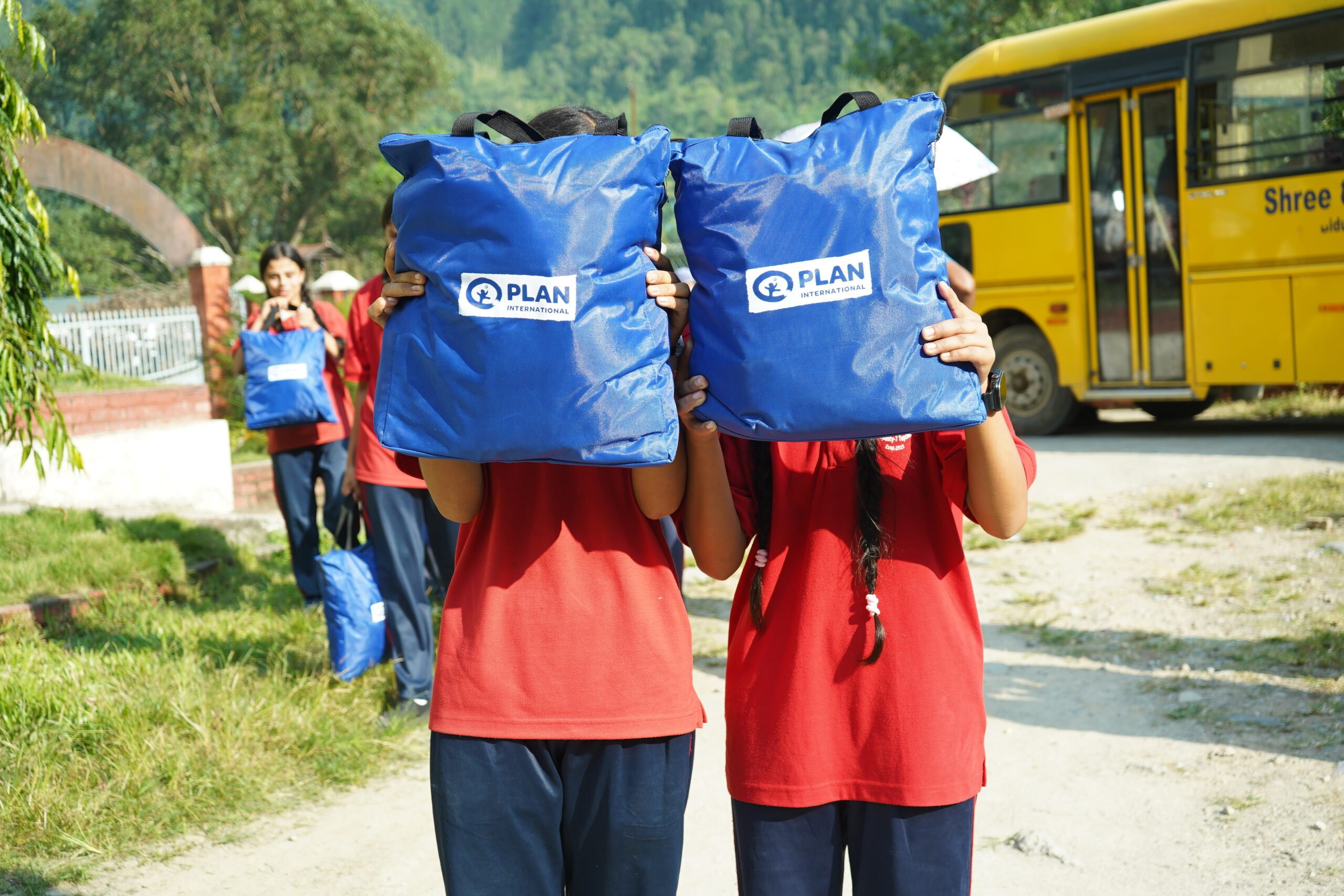
After flash floods swept through Nepal on August 26, Sriram Haridass, Nepal representative for the United Nations Population Fund (UNFPA), visited affected communities in Nuwakot. He met women and girls who’d lost everything in the disaster, including clothes, underwear, and basic hygiene supplies. Housed in temporary shelters, managing menstruation had become a challenge for most. Some couldn’t bathe for as long as five days during their periods, while others, lacking clean clothes, had to continue wearing the same underwear.
“When floods hit, menstruation doesn’t pause, but almost everything a woman or girl needs to manage it safely can disappear overnight,” said Haridass. “Imagine having to change a sanitary pad in a crowded shelter without a private space, adequate water, clean underwear, or somewhere safe to dispose of [a pad]. These are not minor inconveniences. They affect health, dignity and personal safety.”
The Nepal floods impacted nearly 160,000 women and girls, and according to UNFPA, about 98,500 of these were of reproductive age. Nonprofits like UNFPA and Plan International distributed “dignity kits” containing menstrual and personal hygiene supplies to help people manage their periods safely. But the crisis highlights a largely overlooked consequence of climate change: how extreme weather events endanger menstrual health.
“These are not minor inconveniences. They affect health, dignity and personal safety.”
A growing body of evidence is now establishing the association between menstrual health and extreme weather events, showing how human-caused climate change disproportionately affects women, girls, and people who menstruate. A review published in October this year synthesized evidence from studies between 1947 and 2025, and discovered that across diverse settings, climate hazards undermined menstrual health and hygiene. These hazards included floods, cyclones, droughts, water scarcity, salinity intrusion, and air pollution.
Lauren D’Mello-Guyett, lead author of the review and an assistant professor with the London School of Hygiene and Tropical Medicine (LSHTM), told NPQ that across climate hazards, people reported urinary and skin infections, alongside shame and stress, due to inadequate menstrual support. Meanwhile, in displacement shelters, studies repeatedly found exposure to harassment and a lack of private space. These harms, D’Mello-Guyett said, are largely preventable, but menstruation is rarely considered in disaster planning.
“Menstrual health and hygiene should be written explicitly into climate adaptation policy, disaster preparedness plans and humanitarian response frameworks, rather than treated as an add-on,” according to D’Mello-Guyett. “These measures matter outside emergencies too, because communities exposed to climate hazards face recurrent disruption.”
How extreme weather events impact menstrual health
More than 300 million people worldwide menstruate on any given day. The World Bank notes that to manage menstruation effectively, access to water, sanitation, and hygiene facilities are needed, as well as affordable and appropriate hygiene materials, information on good practices, and a supportive environment without embarrassment or stigma. When extreme weather events disrupt these interlinked domains, the impacts are manifold.
Arundati Muralidharan, co-founder of the think tank, Menstrual Health Action for Impact, said that one of the first consequences of an extreme weather event is infrastructure devastation, which includes disruption of access to menstrual products. “For example, in the case of Nepal floods, you had entire areas that were washed off…supplies reaching the affected places became more challenging. And even [humanitarian] aid may prioritize food, water, and medical supplies over something like a menstrual product,” said Muralidharan.
When menstrual hygiene products are unavailable, people are forced to manage their periods with materials at hand, said Srijana Gurung, Nepal’s acting country director for the nonprofit Plan International. Some may reuse old pieces of cloth, use sanitary products for longer than recommended, or reuse menstrual materials which aren’t properly washed or dried. “These are difficult choices that no woman or girl should have to make,” said Gurung.
One of the first consequences of an extreme weather event is infrastructure devastation, which includes disruption of access to menstrual products.
The consequences extend beyond physical discomfort. Madhusudan Subedi, a professor of social anthropology and health humanities at Nepal’s Patan Academy of Health Sciences, said that a lack of adequate menstrual hygiene support during climate disasters can have serious consequences for physical health. Such disasters often limit access to clean water, private bathing spaces, and appropriate disposal facilities. This can make bathing and maintaining personal hygiene nearly impossible, increasing the risk of urinary tract infections, bacterial vaginosis, skin issues, and other diseases.
“Inadequate menstrual hygiene support can generate anxiety, stress, embarrassment, and a loss of dignity, particularly when women and girls are unable to manage menstruation safely and privately,” said Subedi, adding that such disruptions also lead to reduced mobility, limiting participation in education, work, and community life within relief settings.
Such circumstances also pose safety risks, as women and girls are forced to travel long distances, sometimes at night, to find water or a private place, according to Meghna Ranganathan, co-director of the Gender Violence and Health Centre at LSHTM. “Several studies have documented increased risks of harassment and sexual violence when women sought out secluded spaces to wash or change,” said Ranganathan, citing additional evidence that exposure to the hazards of natural disasters is linked to an increase in violence against women and girls.
And yet, menstrual health and hygiene is rarely discussed in the context of climate change.
Sign up for our free newsletters
Subscribe to NPQ's newsletters to have our top stories delivered directly to your inbox.
By signing up, you agree to our privacy policy and terms of use, and to receive messages from NPQ and our partners.
Haridass of UNFPA said that this is partly because menstrual health is still treated as a private issue rather than a public health, dignity, and human rights concern. Another reason, he said, is fragmented responsibility. Health experts may see menstruation as a sanitation issue, sanitation specialists may focus on distributing supplies, and shelter planners may overlook needed privacy.
“It can become everyone’s concern but nobody’s explicit responsibility,” Haridass said. “There is also a tendency to dismiss menstrual health as ‘not lifesaving,’ making it particularly vulnerable when humanitarian funding is stretched. But that is a dangerously narrow way of looking at it.”
The way forward
As climate disasters become more frequent and more severe, menstrual health must be included in climate policies, disaster preparedness, and humanitarian response frameworks. This, according to Subedi, requires a coordinated, holistic approach.
To illustrate, he said that many people recognize the need for providing menstrual pads during climate disasters, but the availability of appropriate disposal facilities may not receive sufficient attention from government agencies and nonprofits. Similarly, when relief distribution is poorly coordinated, some may receive menstrual pads while others receive undergarments, creating gaps in meeting basic menstrual health needs.
“It can become everyone’s concern but nobody’s explicit responsibility. There is also a tendency to dismiss menstrual health as ‘not lifesaving,’ making it particularly vulnerable when humanitarian funding is stretched.”
This lack of coordination was evident at a school shelter in Nepal’s Nuwakot, where more than 400 people shared three toilets without running water. Women received sanitary pads, but lacked adequate means to dispose of them. As one survivor told a French news site, “They are giving us pads but we don’t have undergarments.”
“The lesson is clear,” Subedi told NPQ. “Menstrual health is not simply about distributing menstrual pads. It requires a comprehensive package that includes privacy, clean water, soap, washing facilities, shelter, menstrual products, undergarments, and, most importantly, dignity, empathy, and compassion.”
There’s also a need to address the stigma around menstruation, said Marni Sommer, professor of sociomedical sciences at Columbia University’s Mailman School of Public Health. Sommer told NPQ that during climate disasters, many survivors are hesitant to ask for support, including the need for menstrual materials, clean toilets with disposal facilities, or medications for menstrual pain. Response workers, too, may feel shy or uncomfortable. Humanitarian organizations and governments must address these issues by providing adequate facilities as well as creating an enabling environment for managing menstruation.
“In societies and communities around the world, there are differing beliefs and sensitivities to asking about menstruation. However, as a natural bodily function, and one that is so universally experienced, response workers [must] ideally approach the topic thoughtfully,” said Sommer, who led the development of “Menstrual Hygiene Management in Emergencies Toolkit.”
Co-published with 29 humanitarian organizations and United Nations agencies, the toolkit considers cultural sensitivities and includes guidance on language and approaches for engaging on menstruation during disasters.
Beyond humanitarian response, scientific evidence, too, must be bolstered, according to D’Mello-Guyett, lead author of the recent global review, “Effects of climate change on menstrual health and hygiene.” The review, co-published with four other researchers at LSHTM, identified 25 eligible studies. However, most of these were concentrated in South Asia. The researchers found no studies from sub-Saharan Africa or Latin America, and none on extreme heat. D’mello-Guyett stressed the need for more studies in underrepresented regions and for research including overlooked and gender-diverse populations.
“This matters because evidence shapes what responses are designed and funded. Where local evidence is missing, responses may rely on findings from places with different climates, housing, water systems, social norms and health services, and may overlook hazards such as heat altogether,” said D’Mello-Guyett. “The absence of studies does not mean the absence of need.”
After flash floods struck Nepal, Gurung of Plan International met Juna Maya, a 25-year-old woman from Aamachhodingmo in Rasuwa. Maya’s community was among those severely affected by the floods, with roads damaged, bridges swept away, and transportation disrupted. Basic items such as sanitary pads became difficult to find—and Maya’s experience, said Gurung, asserted the importance of including menstrual health in emergency assistance.
“Menstruation does not stop during a flood,” said Gurung, and no one should “have to worry about where she will find sanitary pads or a private place to manage her period while her family is struggling to recover from a disaster.”