As a Black woman, I know that people like me were not being considered when fifty-six White men representing the Second Continental Congress gathered in Philadelphia to sign the Declaration of Independence.
When they wrote about the unalienable rights that they “are endowed by their Creator with”, they were indeed writing solely about the rights of White men; otherwise they would have undoubtedly seen the contradiction in enslaved Black people being deprived of their liberty. Indeed, historians contend that the vast majority of the signers of the Declaration of Independence, our nation’s “Founding Fathers”, were slaveholders who could protest the indignities they had been subjected to by the King of Britain while failing to recognize the inhumane treatment they perpetuated on the men, women, and children they enslaved.
On the 250th anniversary of country’s founding, we must grapple with this history and the fact that so many years later, the most marginalized people are not even considered in rooms of power.
It was not until 189 years after the nation’s founding in 1776 that Black women were granted the protected right to vote for the first time with the passage of the Voting Rights Act of 1965. According to scholars like Steven Levitsky, it was not until then that the United States could accurately claim to be a full democracy.
Ongoing Attempts to Weaken Democracy
Ever since then, it seems, there have been ongoing attempts to weaken this democracy by those who seek to move backward. Less than fifty years after the Voting Rights Act was enacted, the United States Supreme Court decided to weaken it with its Shelby County v. Holder decision, effectively getting rid of the law’s preclearance provision, which had required states and localities with a history of racial discriminatory voting practices to submit new electoral changes to the federal government before they could enact them. Once preclearance was gone, legislatures in states like mine, North Carolina, began enacting voting laws that targeted African Americans “with almost surgical precision”.
Such laws were struck down for being blatantly discriminatory, but the weakening of the Voting Rights Act in 2013 paved the way for more recent threats like the recent Louisiana v. Callais Supreme Court decision. On April 29th, six members of the United States Supreme Court voted to effectively dismantle Section 2 of the Voting Rights Act, ruling that race can no longer be considered in the drawing of congressional and other districts.
Immediately, representatives from Alabama, Louisiana, and Tennessee began redrawing their voting maps, sparking protests at the dilution of Black voting power.
The North Star
The very day that Louisiana vs. Callais decision was handed down, I was attending an environmental justice panel where speakers talked about how communities of color, particularly in the South, are having to wage war against pollution in their communities. It seems like there is always one battle after another.
At times like these, I often reflect back on a conversation I had with LaTosha Brown, one of the founders of Black Voters Matter, just days after the 2024 election. Many people across the country were devastated by the realization that there would be yet another Donald Trump presidency, and it would inevitably bring harm, particularly to those who were already struggling to survive.
Like Tubman, each of us must find our North Star as we work our way toward freedom.
As someone who works directly with those most marginalized, those most disenfranchised, Brown knew the stakes of the election. She also knew that the aftermath was not a time to give in to despair.
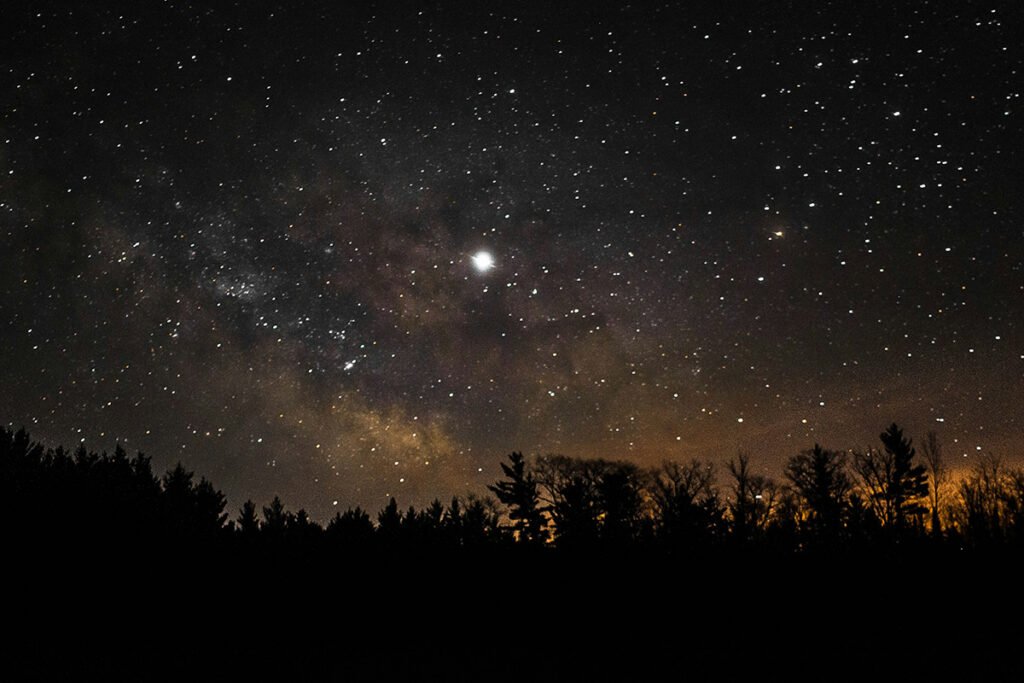
At that moment, although I was interviewing Brown for NPQ’s Racial Justice Magazine, the interview transformed into a transfer of hope. Brown inspired me. She talked about how, oftentimes in moments of despair, she reflects upon Harriet Tubman and how Tubman used darkness as a tool.
It was the cover of darkness that allowed Tubman to make several trips into the bondage of slavery and guide people to freedom. She herself was guided by the North Star. As Brown reminded me that day: “The North Star is not the brightest star in the sky but the most consistent, the most dependable.”
Sign up for our free newsletters
Subscribe to NPQ's newsletters to have our top stories delivered directly to your inbox.
By signing up, you agree to our privacy policy and terms of use, and to receive messages from NPQ and our partners.
Like Tubman, each of us must find our North Star as we work our way toward freedom. With the recent Supreme Court action to weaken the Voting Rights Act, I have come to believe that part of my North Star is my unwillingness to allow the sacrifices of those who came before me to be in vain.
What I did know, however, is that it would always be my duty to build upon the work of those who came before me.
My siblings and I are the first generation in our family to be born with the protected right to vote. When my father was born in 1963, and my mother was born in 1964, the Voting Rights Act of 1965 had not yet been enacted.
Yet, it is because those people who came before me fought, sacrificed, and in some cases risked their lives, I was born with the protected right to vote. I never thought that in my lifetime, I would see this right so drastically weakened.
What I did know, however, is that it would always be my duty to build upon the work of those who came before me. As Coretta Scott King reminds us: “Struggle is a never ending process. Freedom is never really won. You earn it and win it in every generation.”
The Decision to Stay
So, like Brown, like civil rights leader Shirley Sherrod, and others that I have had the opportunity to speak with and learn with, I have made the conscious decision to stay in the South. Like them, I believe that “when you change the South, you change the nation.” I believe that is exactly why we are currently seeing so many attempts to roll back gains that transformed the nation.
Now is not the time to give up, and it certainly is not the time to abandon the South.
It was the South, particularly during the Reconstruction period, that showed the US what a true multiracial democracy could look like. This period birthed some of the most progressive policies the nation has ever seen. For instance, the idea that every child has a right to a public education is directly tied to the Reconstruction period. Prior to then, education was reserved for wealthy people, but when states began drafting new constitutions, written in part by newly emancipated Black people, they were intentional about including the right to an education.
It was in the South, Warren County, North Carolina, in particular, where the environmental justice movement was born—and where activists continue to highlight how certain communities will be hit first and worst by climate change and environmental disasters.
And it was in the South, where the Student Nonviolent Coordinating Committee (SNCC) was founded, birthing a generation of activists like Julian Bond, John Lewis, Diane Nash, Joyce Ladner, Dorie Ladner, Kwame Ture, and more who made the conscious decision to put their bodies on the line and engage in deep organizing across the deep South as they attempted to change the country.
Many of these individuals are no longer living, but they laid the foundation for the work that is to come. Now is not the time to give up, and it certainly is not the time to abandon the South. Rather, it is time to gravitate toward our North Stars, look back through history, and remember how those most excluded have often led the US closer to becoming the democracy it professes to be.