

February 16, 2017; San Francisco Chronicle Blogs
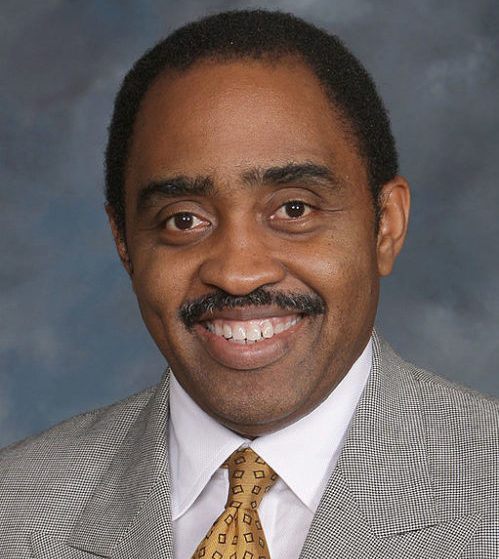
A blog post on the website of the San Francisco Chronicle presents an interview by Dr. Emmett Carson, founding CEO and president of the Silicon Valley Community Foundation (SVCF). In the interview, Carson describes an evolving global landscape in philanthropy. He says that donors see themselves as being more connected to the broader community and are looking to fund organizations that “respond to the entirety of their philanthropic interests, not just one slice.” (Listen carefully, small nonprofits) According to Carson, these evolving outlooks intersect with the ways SVCF “doesn’t just design philanthropy strategies” but goes a step further by advocating for issues on behalf of all communities, spanning from San Jose to San Francisco.
Carson explains that focusing on advocating for equal opportunities in income, education, or housing “is what’s propelled his organization forward for the past ten years.” In his words, “we’re all givers and we’re all recipients of the work we do.” He also feels that the foundation actively reminds potential donors that philanthropy is not only a vehicle for wealthy people. “An individual can open a donor-advised fund at SVCF at $5,000,” Carson clarifies.
Carson substantiates his insights on global evolvements in community philanthropy by pointing out notable causes in SVCF advocacy. For instance, he cites that several of their donors wanted to be involved in fighting the 2014–2016 Ebola outbreak. While the New York Times referred to the efforts as “doomsday prep for the super-rich,” Carson feels that the donors basically “understood that stopping Ebola in Africa meant Ebola wouldn’t get to the United States.”
Carson also addressed the pressing matter of housing costs in Bay Area communities. He touched on issues going beyond sheltering the homeless, such as problems with housing senior citizens. Student housing is another problem. Carson noted an upward trend indicating that “15 percent of San Jose State [University] students [are] sleeping in cars because of the housing crisis.” He also pointed out why community donors could see housing problems in diverse neighborhoods as becoming a broader, regional issue: “Because of the housing shortage, people have to live further and further away, which creates more congestion. They have less time for their families…civic engagement…and less time to get to know neighbors.”
Sign up for our free newsletters
Subscribe to NPQ's newsletters to have our top stories delivered directly to your inbox.
By signing up, you agree to our privacy policy and terms of use, and to receive messages from NPQ and our partners.
This explains the backdrop behind the SVCF involvement in the passing of affordable housing initiatives like Measure A in Santa Clara county. Mercury News singles out the “big names” like Mark Zuckerberg and Priscilla Chan, whose Chan Zuckerberg Initiative was also involved in the passing the $950 million affordable housing bond. Indeed “getting the measure passed was a big job, but now it’s time for the bigger job of using that money to get people into housing.” The Mountain View Voice reports that the measure’s prescriptive language earmarked about 74 percent of the funding towards helping extremely low-income residents “who are homeless or making less than 30 percent of the Area median income [AMI]—$33,500 for a family of four.” Zuckerberg, as readers may recall, has donated at least $1 billion to the SVCF.
Meanwhile, NBC News Bay Area reveals latest reports of overcrowded domestic violence shelters in Silicon Valley that are turning victims away due to the lack of space. This is happening even though “the bond lists survivors of domestic violence as a ‘vulnerable population’ in need of housing.” We have yet to see the fruits of the extensive objectives regarding the laying out of money allocations. However, the Mountain View Voice confirms that major plans are in the works that are inclusive of all cities across the Bay Area.
When asked about the SVCF accomplishment that he is most proud of, Carson refers to their sponsorship of the California Mathematics Placement Act (SB-359), which was passed in 2015. EdSource confirms that SVCF advocated for the bill in response to a 2010 research report by the Noyce Foundation indicating “disturbing math misplacement” incidents “that found capable minority students were held back from algebra courses in the ninth grade.” These kids were held back despite their satisfactory grades in math based on the “discretion” of their teachers. The incident caused understandable outcry. Meanwhile, some educators still debate the overreliance on placement tests.
Dr. Carson leads “what is known to have become the largest community foundation in the world,” with “over $8.0 billion in assets under management,” so his perceptions and reflections on the role of philanthropy and philanthropists should be heard and pondered carefully. Is it the role of community foundations to be advocates themselves? What kinds of conundrums might that establish with high-dollar donors who have their own ideas about the way things ought to be?—Noreen Ohlrich