logo logo
Donate
    • Membership
    • Donate
  • Social Justice
    • Racial Justice
    • Climate Justice
    • Disability Justice
    • Economic Justice
    • Food Justice
    • Health Justice
    • Immigration
    • LGBTQ+
  • Civic News
  • Nonprofit Leadership
    • Board Governance
    • Equity-Centered Management
    • Finances
    • Fundraising
    • Human Resources
    • Organizational Culture
    • Philanthropy
    • Power Dynamics
    • Strategic Planning
    • Technology
  • Columns
    • Ask Rhea!
    • Ask a Nonprofit Expert
    • Economy Remix
    • Gathering in Support of Democracy
    • Humans of Nonprofits
    • The Impact Algorithm
    • Living the Question
    • Nonprofit Hiring Trends & Tactics
    • Notes from the Frontlines
    • Parables of Earth
    • Re-imagining Philanthropy
    • State of the Movements
    • We Stood Up
    • The Unexpected Value of Volunteers
  • CONTENT TYPES
  • Leading Edge Membership
  • Newsletters
  • Webinars

Wikipedia’s Founder Thinks He Has Something New in News—But It Sounds Awfully Familiar

Marian Conway
May 1, 2017
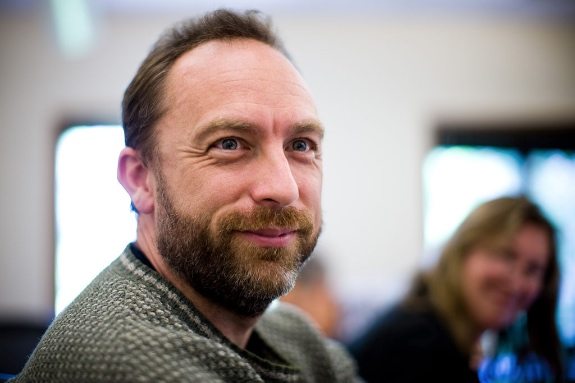
By Joi Ito (originally posted to Flickr as Jimmy Wales) [CC BY 2.0], via Wikimedia Commons

April 25, 2017, BBC

The cofounder of Wikipedia, Jimmy Wales, has announced the upcoming launch of a news service combining volunteer writers and professional journalists. He is calling his new model to fight “fake news” with “factual and neutral” articles Wikitribune. It will be free to online readers and will rely on donors buying monthly subscriptions instead of advertising.

Wikipedia already operates somewhat similarly: Volunteers create content, including attributing sources for the facts, but the public is able to edit the articles with Wikipedia staff as overseers. Unlike a traditional Wikipedia page, the proposed volunteer-generated news pieces on Wikitribune would be released only after editor review.

If this sounds familiar to you, consider that these very NPQ newswires you’re reading now have been written by volunteer writers and then reviewed for accuracy and facts cited by paid editors and journalists at a nonprofit which relies on donors. Accordingly, we can look at Jimmy Wales’ idea with a practiced eye; we think it works, but it needs the right mix of staff and protocols—and some serious capital.

Mr. Wales is hoping to raise enough funds for ten to twenty paid journalists, stating, “In terms of minimums, if we could only hire two journalists, then it would be a blog and not really worth doing.”

Mr. Wales intends to work on Wikitribune full-time for the near future, with input from advisors like Silicon Valley venture capitalist Guy Kawasaki, journalism lecturer Prof. Jeff Jarvis, U.S. law professor Larry Lessig, and model/actress Lily Cole.

The director of Harvard University’s Nieman Journalism Lab, Joshua Benton, suggested that the crowdfunding model might limit Wikitribune’s potential. “There are a variety of people who—if it does this right—will view it as a trusted platform,” he said, but at 10–20 journalists, it’s unlikely that Wikitribune can fix the fake news problem; while it may be successful, he cannot see it scaling up.

Sign up for our free newsletters

Subscribe to NPQ's newsletters to have our top stories delivered directly to your inbox.

By signing up, you agree to our privacy policy and terms of use, and to receive messages from NPQ and our partners.

The online encyclopedia has 295 Wikipedias by language, with 284 active at the moment. It is difficult to imagine that the news model could grow to that size. Commercial news organizations have to have people moving around the globe to succeed, even bureau chiefs in significant geographical regions. That will require many more dollars and more time spent on fundraising than program.

Besides the scaling up, another feature of Mr. Wales’s plan is troubling to a journalist’s ethos: “Funders will get to influence the contents.”

“If you can get together a certain number of people who are interested in Bitcoin [for example] and you flag that when you sign up as a monthly supporter, then we’ll hire a Bitcoin person to do the beat full-time,” Mr. Wales explained. “So, it’s the monthly supporters who will be able to determine what are the topics we are going to cover. But it is going to be neutral. They can’t pick their favorite hack, who pumps forward their agenda. That’s part of the editorial control.”

The proposition is interesting, as it extends the idea of a self-organized system to its revenue flows, much as in Wikipedia’s central work. But, funder influence can be a tricky ethical issue on nonprofit news sites once you allow it to affect editorial choices in any way. Still, these waters should hardly be new to Wikipedia.

On the positive side, it has become apparent in the “fake news” era that people will pay for higher quality news, evidenced by the increase in subscriptions for the New York Times and the Guardian in 2017. Wales wants to get users to pay for news and then play a hugely active role in determining its focus. While “charity is a poor basis for journalism,” Mr. Wales believes that users will invest in his plan, financially and emotionally.

But still, Jimmy Wales should have a conversation with the NPQ editors and staff—and the volunteer writers who have been working in this mode for nearly a decade. After years of experience using this “new” model of volunteer writers and paid editors, NPQ might help him understand its very rich benefits as well as some of its scaling issues.—Marian Conway


Our Voices Are Our Power.

Journalism, nonprofits, and multiracial democracy are under attack. At NPQ, we fight back by sharing stories and essential insights from nonprofit leaders and workers—and we pay every contributor.

Can you help us protect nonprofit voices?

Your support keeps truth alive when it matters most.
Every single dollar makes a difference.

Donate now
logo logo logo logo logo
About the author
Marian Conway

Marian Conway, the executive director of the NY Community Bank Foundation, has a Masters in Interdisciplinary Studies, Writing and a Ph.D. in Public Policy, Nonprofit Management. She has discovered that her job and education have made her a popular person with nonprofits and a prime candidate for their boards. Marian keeps things in perspective, not allowing all that to go to her head, but it is difficult to say no to a challenge, especially participating in change, in remaking a board. She is currently on eleven boards of various sizes and has learned to say no.

More about: Nonprofit NewsVolunteer Management
See comments

You might also like
For Every $100 Foundations Give, Only 19 Cents Go to Volunteer Support
Jan Masaoka
Facebook and Volunteerism: What Are Some Tricks of the Trade?
Jan Masaoka
Building Blocks of a Public Policy Agenda for Volunteerism
Jan Masaoka
How Can the Nonprofit Field Better Support Volunteerism?
Jan Masaoka
Meet the Hidden Majority of Nonprofits: The All-Volunteer Organization
Jan Masaoka
When Can Volunteers Lead?
Jan Masaoka

Upcoming Webinars

Group Created with Sketch.
March 19th, 2:00 pm ET

Open Board Search

How Casting a Wide Net Transforms Nonprofit Governance

Register
Group Created with Sketch.
March 26, 2:00 pm ET

Learn Out Loud

How Every Philanthropy, Nonprofit, and Community Member Can Leverage Power in Our Fight Against ICE

Register

    
You might also like
The Washington Post pulled up on the screen of an Apple iPhone.
As Jeff Bezos Dismantles The Washington Post, 5 Regional...
Dan Kennedy
Senator Elizabeth Warren speaks into a microphone in front of a sign reading "We are the Supermajority" while an audience listens.
Supermajority, Group Organizing Women Around Politics, Is...
Jennifer Gerson
a dime, representing small amount of money that are dedicated to volunteers for every $100 donated.
For Every $100 Foundations Give, Only 19 Cents Go to...
Jan Masaoka

Like what you see?

Subscribe to the NPQ newsletter to have our top stories delivered directly to your inbox.

See our newsletters

By signing up, you agree to our privacy policy and terms of use, and to receive messages from NPQ and our partners.

  • About
  • Advertise
  • Careers
  • Contact
  • Copyright
  • Donate
  • Editorial Policy
  • Funders
  • Submissions

We are using cookies to give you the best experience on our website.


Nonprofit Quarterly | Civic News. Empowering Nonprofits. Advancing Justice.
Powered by  GDPR Cookie Compliance
Privacy Overview

This website uses cookies so that we can provide you with the best user experience possible. Cookie information is stored in your browser and performs functions such as recognising you when you return to our website and helping our team to understand which sections of the website you find most interesting and useful.

Strictly Necessary Cookies

Strictly Necessary Cookie should be enabled at all times so that we can save your preferences for cookie settings.