logo logo
Donate
    • Membership
    • Donate
  • Social Justice
    • Racial Justice
    • Climate Justice
    • Disability Justice
    • Economic Justice
    • Food Justice
    • Health Justice
    • Immigration
    • LGBTQ+
  • Civic News
  • Nonprofit Leadership
    • Board Governance
    • Equity-Centered Management
    • Finances
    • Fundraising
    • Human Resources
    • Organizational Culture
    • Philanthropy
    • Power Dynamics
    • Strategic Planning
    • Technology
  • Columns
    • Ask Rhea!
    • Ask a Nonprofit Expert
    • Economy Remix
    • Gathering in Support of Democracy
    • Humans of Nonprofits
    • The Impact Algorithm
    • Living the Question
    • Nonprofit Hiring Trends & Tactics
    • Notes from the Frontlines
    • Parables of Earth
    • Re-imagining Philanthropy
    • State of the Movements
    • We Stood Up
    • The Unexpected Value of Volunteers
  • CONTENT TYPES
  • Leading Edge Membership
  • Newsletters
  • Webinars

Regressive Racial Frameworks and Trump’s Rant Re. Puerto Rico

Ruth McCambridge
October 2, 2017
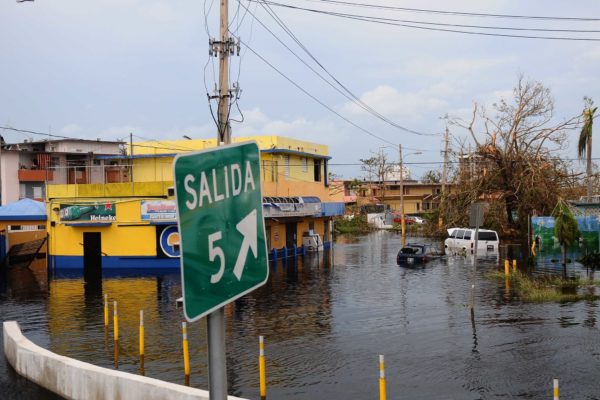
Flooded area in Carolina, Puerto Rico, after the path of Hurricane Maria in the island. (Photo by Sgt. Jose Ahiram Diaz-Ramos)

September 30, 2017; Business Insider and CNN

As we all by now know, Trump spent much of this past weekend tweeting ugly messages to Carmen Yulín Cruz, the mayor of San Juan, who had the audacity as a Latina to criticize the slowness of the federal rescue response to San Juan. Those tweets, seemingly mindless, could not have been more carefully crafted to fit racist narratives. In one, he said that Puerto Ricans, still without communication, food, water and medical supplies, were expecting to have everything done for them instead of pitching in as a community. This kind of glib infantalization is supported by yet another tweet in which he called those protesting “ingrates,” as if they were in a parent/child—or, perhaps more accurately, colonialist—relationship, where the colonized are characterized as incapable of sophisticated action.

The use of the imagery of the ungrateful colonized or enslaved person in race rants is hardly new. Last week, Jelani Cobb wrote “From Louis Armstrong to the NFL: Ungrateful as the New Uppity.” In this article for the New Yorker, he writes,

Visible, affluent African American entertainers are obliged to adopt a pose of ceaseless gratitude—appreciation for the waiver that spared them the low status of so many others of their kind. Stevie Wonder began a performance in Central Park last night by taking a knee, prompting Congressman Joe Walsh to tweet that Wonder was “another ungrateful black multi-millionaire.” Ungrateful is the new uppity. Trump’s supporters, by a twenty-four-point margin, agree with the idea that most Americans have not got as much as they deserve—though they overwhelmingly withhold the right to that sentiment from African Americans. Thus, the wonder is not the unhinged behavior of this weekend but rather that it took Trump so long to exploit a target as rich in potential racial resentment as wealthy black athletes who have the temerity to believe in the First Amendment.

And the same goes for women who have the unbridled temerity to demand a response to Puerto Rico equal to that which would have occurred on the mainland.

Sign up for our free newsletters

Subscribe to NPQ's newsletters to have our top stories delivered directly to your inbox.

By signing up, you agree to our privacy policy and terms of use, and to receive messages from NPQ and our partners.

Trump insists that considering the logistics, things have gone very well, But, let’s take that “considering the logistics” phrase up for a moment. At the very core of an effective disaster response is preplanning that assumes that even the most inaccessible places will be affected, that takes into account the state of the infrastructure and any other special contextual issues, like poverty or functioning as an island under the crippling Jones Act. Understanding all of that as a necessary foundation to disaster preparedness makes the protestations about logistics, as if the federal government were caught completely unaware, nonsensical.

Meanwhile, the retread racist imagery was not the only tableau the American people were forced to observe. Why was the president so slow to mobilize himself to the devastated island? The Associated Press reports:

Trump…appeared unconcerned with the optics of spending his Sunday afternoon watching The Presidents Cup at the Liberty National Golf Club as the crisis continued. Trump was a guest in the commissioner’s hospitality suite perched above the course’s 14th hole, and he waved several times at news cameras positioned briefly on the grass below.

When Trump presented the trophy to Team U.S.A., he dedicated it to the people of Puerto Rico, Texas, and Florida still recovering from hurricane devastation. Referring to Puerto Rico, Trump said: “We have it under really great control.”

—Ruth McCambridge

Our Voices Are Our Power.

Journalism, nonprofits, and multiracial democracy are under attack. At NPQ, we fight back by sharing stories and essential insights from nonprofit leaders and workers—and we pay every contributor.

Can you help us protect nonprofit voices?

Your support keeps truth alive when it matters most.
Every single dollar makes a difference.

Donate now
logo logo logo logo logo
About the author
Ruth McCambridge

Ruth is Editor Emerita of the Nonprofit Quarterly. Her background includes forty-five years of experience in nonprofits, primarily in organizations that mix grassroots community work with policy change. Beginning in the mid-1980s, Ruth spent a decade at the Boston Foundation, developing and implementing capacity building programs and advocating for grantmaking attention to constituent involvement.

More about: Nonprofit NewsPolicyPuerto RicoSocial MediaTrump Administration
See comments

You might also like
The Ellisons’ Empire: Media Consolidation, Narrative Control, and the Threat to Democracy
Coty Poynter
Disability Groups Are Standing United for Trans Rights. That Hasn’t Always Been the Case.
Sara Luterman
New Student Loan Limits Could Threaten Diversity in Nursing and Public Health Programs
Lauren Nuttall
‘I’m Heartbroken’: Trans Kansans Reckon with Their Driver’s Licenses Being Invalidated
Sherman Smith and Morgan Chilson
After Years of Waiting, She Wanted to Start Gender-Affirming Care. Politics Interfered.
Orion Rummler
In the Face of Authoritarianism, Connection Is Resistance
EJ Juárez

Upcoming Webinars

Group Created with Sketch.
March 19th, 2:00 pm ET

Open Board Search

How Casting a Wide Net Transforms Nonprofit Governance

Register
Group Created with Sketch.
March 26, 2:00 pm ET

Learn Out Loud

How Every Philanthropy, Nonprofit, and Community Member Can Leverage Power in Our Fight Against ICE

Register

    
You might also like
A man in a business suit with a television for a head, his arms and legs are being controlled by puppet strings.
The Ellisons’ Empire: Media Consolidation, Narrative...
Coty Poynter
A person at a march holds a sign with the blue, pink, and white trans flag that reads “We See You, We’ve Got You”
Disability Groups Are Standing United for Trans Rights. That...
Sara Luterman
Yellow CLOSED sign hanging in a dusty shop window, conveying themes of business failure, recession, and economic downturn.
Nonprofits in Limbo as Flipcause Bankruptcy Unfolds
Lauren Girardin

Like what you see?

Subscribe to the NPQ newsletter to have our top stories delivered directly to your inbox.

See our newsletters

By signing up, you agree to our privacy policy and terms of use, and to receive messages from NPQ and our partners.

  • About
  • Advertise
  • Careers
  • Contact
  • Copyright
  • Donate
  • Editorial Policy
  • Funders
  • Submissions

We are using cookies to give you the best experience on our website.


Nonprofit Quarterly | Civic News. Empowering Nonprofits. Advancing Justice.
Powered by  GDPR Cookie Compliance
Privacy Overview

This website uses cookies so that we can provide you with the best user experience possible. Cookie information is stored in your browser and performs functions such as recognising you when you return to our website and helping our team to understand which sections of the website you find most interesting and useful.

Strictly Necessary Cookies

Strictly Necessary Cookie should be enabled at all times so that we can save your preferences for cookie settings.