
logo logo
Donate
    • Membership
    • Donate
  • Social Justice
    • Racial Justice
    • Climate Justice
    • Disability Justice
    • Economic Justice
    • Food Justice
    • Health Justice
    • Immigration
    • LGBTQ+
  • Civic News
  • Nonprofit Leadership
    • Board Governance
    • Equity-Centered Management
    • Finances
    • Fundraising
    • Human Resources
    • Organizational Culture
    • Philanthropy
    • Power Dynamics
    • Strategic Planning
    • Technology
  • Columns
    • Ask Rhea!
    • Ask a Nonprofit Expert
    • Economy Remix
    • Gathering in Support of Democracy
    • Humans of Nonprofits
    • The Impact Algorithm
    • Living the Question
    • Nonprofit Hiring Trends & Tactics
    • Notes from the Frontlines
    • Parables of Earth
    • Re-imagining Philanthropy
    • State of the Movements
    • We Stood Up
    • The Unexpected Value of Volunteers
  • CONTENT TYPES
  • Leading Edge Membership
  • Newsletters
  • Webinars

Can’t Sue a Hashtag: Judge Dismisses Suit against Black Lives Matter

Carole Levine and Cyndi Suarez
October 2, 2017
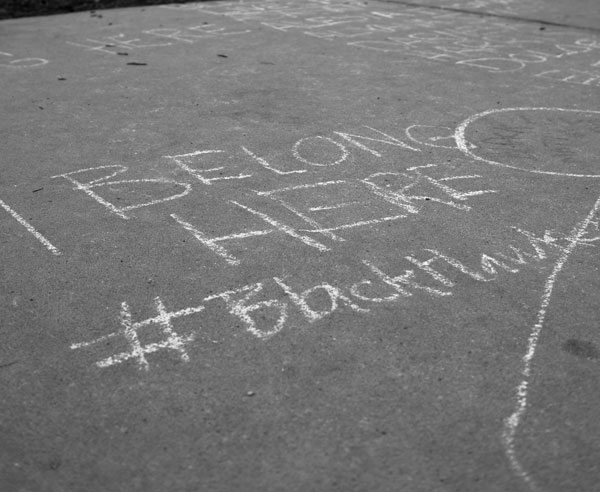
“Black Lives Matter” by Phil Roeder

September 29, 2017; Washington Post and Atlanta Journal-Constitution

Making clear that there is a distinction between a social movement (or a social media movement) and an organization, a federal judge dismissed a lawsuit brought by an injured police officer in Baton Rouge, Louisiana, against Black Lives Matter and, ironically, DeRay Mckesson, who has been labelled one of its leading activists but who is in fact questionably connected to the movement’s leadership network. We wrote about this as far back ago as 2016:

Mckesson, who is an alumnus of [Teach for America (TFA)], made a name for himself during the Ferguson protests with his Twitter coverage of the action—and, not for nothing, he boasts nearly 300,000 followers on that medium. His campaign garnered more than $70,000 in donations within 24 hours of his announcement, but even in Mckesson’s own estimation, he is affiliated with neither the 26-chapter Black Lives Matter Network—founded by Opal Tometi, Alicia Garza, and Patrisse Cullors in 2012—nor with other organizing groups in that movement. In fact, the one organization that he seems to be firmly affiliated with long-term is TFA, which brings with it certain baggage as far as some critics are concerned.

In any case, U.S. District Judge Brian A. Jackson threw out the suit, which was filed anonymously. The ruling could be appealed, but Judge Jackson was clear in his writing that a movement is not the same as an organization and therefore cannot be sued.

In addition to bringing charges against Black Lives Matter (BLM) and the Black Lives Matter Network, the plaintiff also brought charges against Mckesson as a BLM leader for inciting others to commit violent acts that led to his injuries. Adding to the depth of the charges, the suit also included charges against the hashtag #BlackLivesMatter.

Judge Jackson was not kind in his dismissal statement:

Although many entities have utilized the phrase “black lives matter” in their titles or business designations, “Black Lives Matter” itself is not an entity of any sort. Therefore, all claims against “Black Lives Matter” must be dismissed because social movements lack the capacity to be sued.

Sign up for our free newsletters

Subscribe to NPQ's newsletters to have our top stories delivered directly to your inbox.

By signing up, you agree to our privacy policy and terms of use, and to receive messages from NPQ and our partners.

The judge further wrote that an “attempt to bring suit against a social movement and a hashtag evinces either a gross lack of understanding of the concept of capacity or bad faith.” As such, Jackson said, Black Lives Matter cannot be sued “in a similar way that a person cannot plausibly sue other social movements such as the Civil Rights movement, the LGBT rights movement, or the Tea Party movement.”

The charges against Mckesson of inciting others to riot were also summarily dismissed. Judge Jackson based this on two critical points: First, since Black Lives Matter is not an organization with a traditional leadership structure, Mckesson therefore cannot be sued as its leader. Second, Mckesson’s acts during the July 9, 2016 demonstration were well within the bounds of his constitutional right of association and that he only engaged in protected speech. The ruling said Mckesson could not be held liable for the actions of others.

Such distinctions between movements and organizations could have implications for future litigation. As observed in this case, it would be difficult to sue the Civil Rights Movement or the Tea Party, but easier to go after organizations like the NAACP or ALEC, each of which has an incorporation, a leadership structure, and nonprofit status. Basing a lawsuit on defensible positions against entities and individuals who can be sued makes a difference.

In this case, the positions taken were not defensible, at least in the legal interpretation of Judge Jackson. But this case is only one of two:

Mckesson and Black Lives Matter are named in a separate lawsuit in the same court, filed by an officer who was wounded when a gunman opened fire on law enforcement officers in Baton Rouge last July. The gunman, Gavin Long, killed three officers and injured three others in the ambush-style attack before being fatally shot by authorities. He wrote in a suicide note that his actions were a “necessary evil” designed to retaliate against law enforcement.

The officer’s lawsuit, which is still pending, accuses Black Lives Matter, Mckesson and other prominent activists of inciting the violence. They have denied wrongdoing.

As social movements such as MoveOn, Indivisible, and the Tea Party proliferate, further efforts could arise to blame them and legally implicate them for actions linked to their philosophies. Although it was summarily dismissed, the linking of a hashtag to a violent act should give some pause to how social movements are perceived in this era of social media. It may be a teachable moment on the value of movements versus the value of organizations. However, a hidden story may be just who is in fact a leader of a movement and who isn’t. Who determines that—the media, the person claiming to be leader, the movement? BLM has been quiet on the “Mckesson as BLM leader” saga, but this story shows how convoluted it can get.—Carole Levine and Cyndi Suarez


Our Voices Are Our Power.

Journalism, nonprofits, and multiracial democracy are under attack. At NPQ, we fight back by sharing stories and essential insights from nonprofit leaders and workers—and we pay every contributor.

Can you help us protect nonprofit voices?

Your support keeps truth alive when it matters most.
Every single dollar makes a difference.

Donate now
logo logo logo logo logo
About the authors
Carole Levine

Carole Levine is a principal consultant at Levine Partners, providing consulting services to small and medium-sized nonprofit organizations. She has held senior management positions in four national nonprofits: The National PTA (Deputy Executive Director); Communities in Schools (Vice President of Expansion and Technical Assistance); The Family Resource Coalition (Director of Technical Assistance); and National Lekotek Center (Director of Development). Carole holds a BA in education and political science from Washington University, and an M.Ed. in Early Childhood Leadership and Advocacy from National Louis University. Carole has served on the boards of numerous organizations, holding national positions on the board of National Council of Jewish Women and on the International Council of Jewish Women. She is currently the Chair of Courts Matter Illinois, serves on the board of Chicago Women Take Action and is active on the Promote the Vote Illinois Coalition. Carole is passionate about purposeful work, justice for all, advocacy and her family (which includes 6 amazing grandchildren!).

Cyndi Suarez

Cyndi Suarez is the former president and editor-in-chief of NPQ (Nonprofit Quarterly). She is author of "The Power Manual: How to Master Complex Power Dynamics", in which she outlines a new theory and practice of liberatory power. Suarez has worked as a strategy and innovation consultant with a focus on networks and platforms for social movements. She has 20 years of experience in the nonprofit sector—in community-based, advocacy, organizing, consulting, infrastructure, and philanthropic organizations. She is passionate about elegant design and designing for power. Her studies were in feminist theory and organizational development for social change.

More about: LiberationNonprofit NewsPolicy
See comments

You might also like
New Student Loan Limits Could Threaten Diversity in Nursing and Public Health Programs
Lauren Nuttall
‘I’m Heartbroken’: Trans Kansans Reckon with Their Driver’s Licenses Being Invalidated
Sherman Smith and Morgan Chilson
After Years of Waiting, She Wanted to Start Gender-Affirming Care. Politics Interfered.
Orion Rummler
In the Face of Authoritarianism, Connection Is Resistance
EJ Juárez
Nonprofits Can Help Fight Trump’s Persecution of Immigrants
Matthew Rozsa
Can the Fight Against AI Revitalize the US Labor Movement?
Ted Siefer

Upcoming Webinars

Group Created with Sketch.
March 19th, 2:00 pm ET

Open Board Search

How Casting a Wide Net Transforms Nonprofit Governance

Register
Group Created with Sketch.
March 26, 2:00 pm ET

Learn Out Loud

How Every Philanthropy, Nonprofit, and Community Member Can Leverage Power in Our Fight Against ICE

Register

    
You might also like
A close shot of the front of the US Department of Education in Washington, DC.
New Student Loan Limits Could Threaten Diversity in Nursing...
Lauren Nuttall
The blue, pink, and white trans flag drawn in chalk on dark pavement.
‘I’m Heartbroken’: Trans Kansans Reckon...
Sherman Smith and Morgan Chilson
A person holding up a hand-painted sign reading, “Make Trans Healthcare Accessible”
After Years of Waiting, She Wanted to Start Gender-Affirming...
Orion Rummler

Like what you see?

Subscribe to the NPQ newsletter to have our top stories delivered directly to your inbox.

See our newsletters

By signing up, you agree to our privacy policy and terms of use, and to receive messages from NPQ and our partners.

  • About
  • Advertise
  • Careers
  • Contact
  • Copyright
  • Donate
  • Editorial Policy
  • Funders
  • Submissions

We are using cookies to give you the best experience on our website.


Nonprofit Quarterly | Civic News. Empowering Nonprofits. Advancing Justice.
Powered by  GDPR Cookie Compliance
Privacy Overview

This website uses cookies so that we can provide you with the best user experience possible. Cookie information is stored in your browser and performs functions such as recognising you when you return to our website and helping our team to understand which sections of the website you find most interesting and useful.

Strictly Necessary Cookies

Strictly Necessary Cookie should be enabled at all times so that we can save your preferences for cookie settings.