logo logo
Donate
    • Membership
    • Donate
  • Social Justice
    • Racial Justice
    • Climate Justice
    • Disability Justice
    • Economic Justice
    • Food Justice
    • Health Justice
    • Immigration
    • LGBTQ+
  • Civic News
  • Nonprofit Leadership
    • Board Governance
    • Equity-Centered Management
    • Finances
    • Fundraising
    • Human Resources
    • Organizational Culture
    • Philanthropy
    • Power Dynamics
    • Strategic Planning
    • Technology
  • Columns
    • Ask Rhea!
    • Ask a Nonprofit Expert
    • Gathering in Support of Democracy
    • Hope in the Dark
    • Humans of Nonprofits
    • Inside the States
    • In Defense of Civil Society
    • The Myth of Heroic Leadership
    • Notes from the Frontlines
    • Notes from the Long Arc
    • Reimagining Philanthropy
    • The Unexpected Value of Volunteers
    • We Stood Up
  • Newsletters
  • NPQ Online Events
    • Learn Out Loud
    • Leading Edge Webinars
    • Partner Events
    • On Demand
  • Leading Edge Membership

Planners Struggle to Build Support for Regional Solutions to Climate Change

Rob Meiksins
October 27, 2017
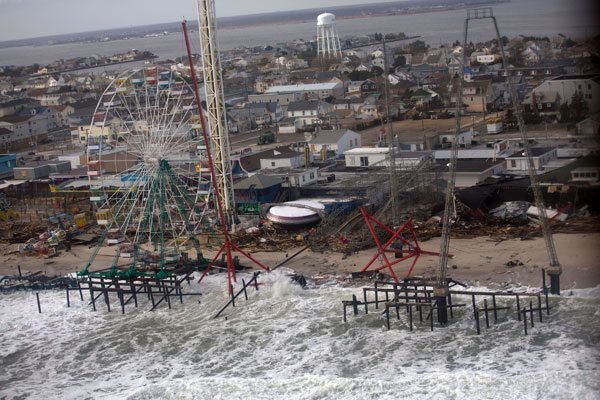
The view from aerial tour of Hurricane Sandy damage of New Jersey’s barrier beaches. (Official White House Photo by Sonya N. Herbert)

October 25, 2017; Next City

An effort to prepare for catastrophic flooding in the northeast US might provide some lessons to the nonprofit sector in how to approach collaboration.

Five years after Hurricane Sandy blasted into the shoreline of New Jersey, the city of Hoboken developed an exciting new idea on how to avert another such disaster. They applied for and got an award from the federal government for what’s being called “Resist, Delay, Store, Discharge.” Now, nearby Jersey City is launching a plan of its own. This $2 billion project would build a two-mile long seawall, do some landfill, and add new property close to the shoreline. The problem is that the flooding blocked by the seawall has a strong probability of heading toward Hoboken and could overwhelm the plan being developed there.

Sign up for our free newsletters

Subscribe to NPQ's newsletters to have our top stories delivered directly to your inbox.

By signing up, you agree to our privacy policy and terms of use, and to receive messages from NPQ and our partners.

A new report from the Regional Plan Association suggests that this kind of uncoordinated local planning is very common and unlikely to have any real success. “Coastal Adaptation: A Framework for Governance and Funding to Address Climate Change” outlines several key recommendations to avert disasters like storms on the scale of Hurricane Sandy and the consequences of the expected rise of coastal seawater as global warming melts the Arctic shelf. Key recommendations include:

  • Produce and update a regional coastal adaptation plan that aligns policies across New York, New Jersey, and Connecticut.
  • Develop and manage science-informed standards that would guide adaptation projects and development in the region.
  • Coordinate and encourage collaborative adaptation projects across municipalities in all three states.
  • Evaluate and award funding from new adaptation trust funds aligning with the standards that are to be established.

The plan argues that “coastal flooding is a regional risk that is largely managed locally,” which leads to an uncoordinated approach with conflicting interests, approaches, and priorities. The recommended Regional Coastal Commission would be a collaboration among existing entities in each of the three regions that are addressing climate change adaptation in some way already across a variety of disciplines. This would include, but should not be beholden to, politicians, according to the report.

Apparently (and remarkably), although one of the basic tenets of environmentalism is that everything is connected to everything else, no body like the Regional Coastal Commission exists anywhere in the United States to address issues of rising coastal water, although a similar recommendation was made for a regional body in the San Francisco area. The goal of keeping politicians involved—but a little at arm’s length—is to ensure the program cannot be politicized or made subject to changes in local political leadership. Of course, leadership and championship must emerge from somewhere, and it is in such cases that the civil sector—that is, philanthropy and nonprofits—need to step forward.—Rob Meiksins


The work isn’t done. Neither is our commitment.

The challenges facing nonprofits aren’t going away. Neither can the journalism that informs, connects, and amplifies the sector.

Help NPQ keep this work free and accessible.

Give Today
logo logo logo logo logo
About the author
Rob Meiksins

Rob has served in the nonprofit sector for over 30 years in roles ranging from intern to program manager, executive director to board director, and consultant. Starting out in professional theatre in New York City, Rob moved to Milwaukee to work with Milwaukee Rep as the dramaturg. Later, he started to work more and more helping people and organizations in the nonprofit sector articulate, and then take the next step towards their vision. Currently he is working on a new effort to establish an intentional process for nonprofits to identify their capacity-building needs and then learn about and implement the tools that will help. Ideally this is a partnership between nonprofits, consultants, and the philanthropic community to strengthen the sector we all see as critical.

More about: Climate ChangeNonprofit NewsPartnershipsPolicy
See comments

Stuffing-1
You might also like
The climate crisis has a period problem
Puja Changoiwala
Proposition 40 and the question at the heart of America’s safety net: Who should pay?
María Constanza Costa
Soul work: What it takes to build democracy from the ground up
Kathryn Wells
American farmers’ politics are more complicated than headlines suggest
Lisa Held
Preserving the body politic against anti-immigration surges on Election Day
Katherine Graham
North Carolina is the canary in the coalmine for attacks on our democracy—and a model for how we fight back
Caitlin Swain and Marcus Bass

Upcoming Webinars

Group Created with Sketch.
December 3, 2:00 pm ET

After the Midterms

What’s Next for Nonprofits?

Register
Group Created with Sketch.
January 28, 2:00 pm ET

Democratic Staff Structures

Weaving Shared Leadership and Union Practice in Nonprofits

Register
You might also like
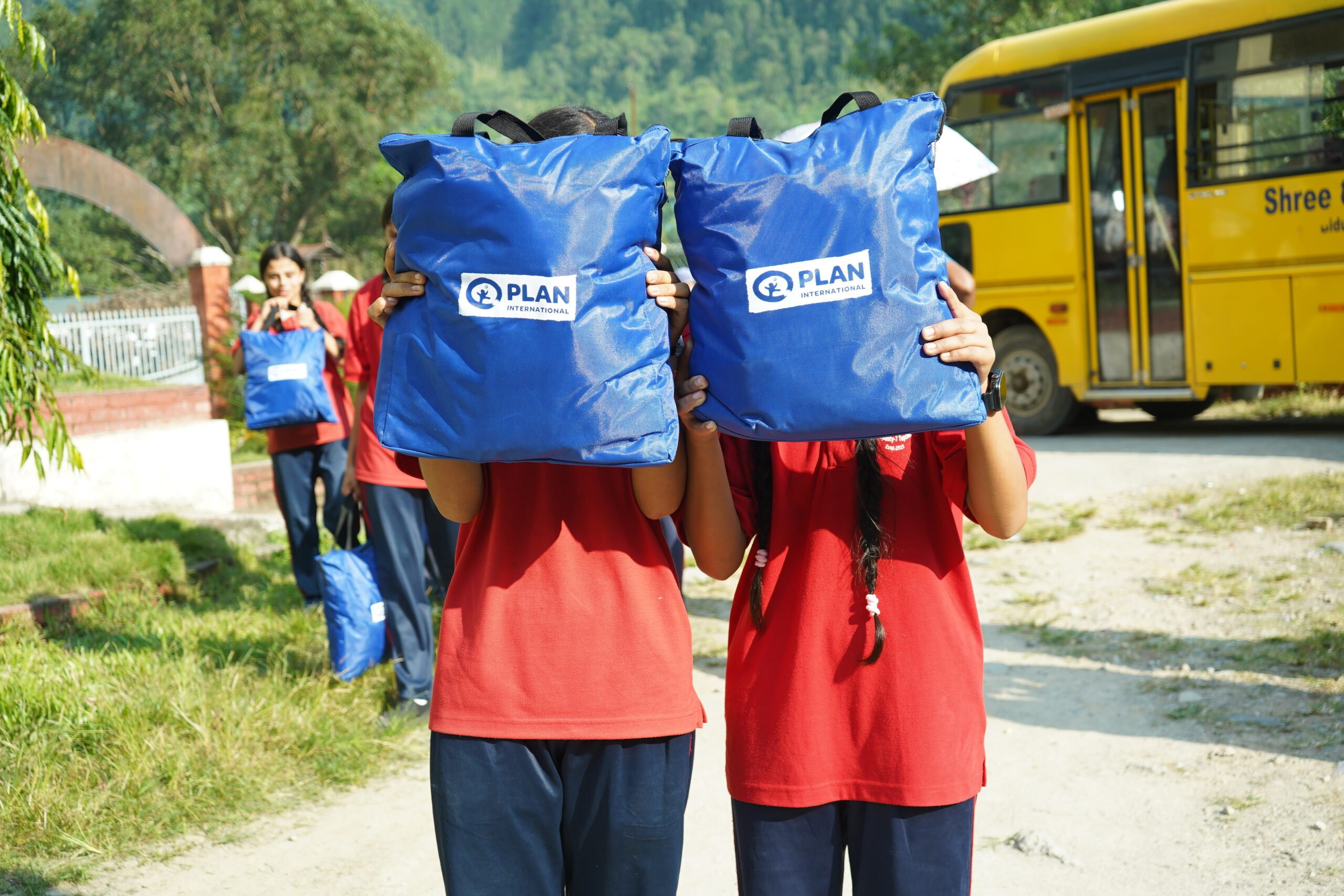
Flood-affected students in Nuwakot, holding hygiene kits distributed by Plan International during the Nepal floods. The kits include sanitary pads and hygiene products. (Image source: Plan International).
The climate crisis has a period problem
Puja Changoiwala
A person holding up a protest sign that reads, “Tax the Rich”
Proposition 40 and the question at the heart of America’s...
María Constanza Costa
An illustration of several peoples with different skin tones linking arms in a chain-like orientation.
Soul work: What it takes to build democracy from the ground...
Kathryn Wells

Like what you see?

Subscribe to the NPQ newsletter to have our top stories delivered directly to your inbox.

See our newsletters

By signing up, you agree to our privacy policy and terms of use, and to receive messages from NPQ and our partners.

  • About
  • Advertise
  • Careers
  • Contact
  • Copyright
  • Donate
  • Funders
  • Editorial Policy
  • Media Relations
  • Privacy Policy
  • Submissions

We are using cookies to give you the best experience on our website.


Nonprofit Quarterly | Civic News. Empowering Nonprofits. Advancing Justice.
Powered by  GDPR Cookie Compliance
Privacy Overview

This website uses cookies so that we can provide you with the best user experience possible. Cookie information is stored in your browser and performs functions such as recognising you when you return to our website and helping our team to understand which sections of the website you find most interesting and useful.

Strictly Necessary Cookies

Strictly Necessary Cookie should be enabled at all times so that we can save your preferences for cookie settings.