logo logo
Donate
    • Membership
    • Donate
  • Social Justice
    • Racial Justice
    • Climate Justice
    • Disability Justice
    • Economic Justice
    • Food Justice
    • Health Justice
    • Immigration
    • LGBTQ+
  • Civic News
  • Nonprofit Leadership
    • Board Governance
    • Equity-Centered Management
    • Finances
    • Fundraising
    • Human Resources
    • Organizational Culture
    • Philanthropy
    • Power Dynamics
    • Strategic Planning
    • Technology
  • Columns
    • Ask Rhea!
    • Ask a Nonprofit Expert
    • Gathering in Support of Democracy
    • Hope in the Dark
    • Humans of Nonprofits
    • Inside the States
    • In Defense of Civil Society
    • The Myth of Heroic Leadership
    • Notes from the Frontlines
    • Notes from the Long Arc
    • Reimagining Philanthropy
    • The Unexpected Value of Volunteers
    • We Stood Up
  • Newsletters
  • NPQ Online Events
    • Learn Out Loud
    • Leading Edge Webinars
    • Partner Events
    • On Demand
  • Leading Edge Membership

On King’s Birthday, Gov. O’Malley Calls for Md. Death Penalty Repeal

Louis Altman
January 22, 2013

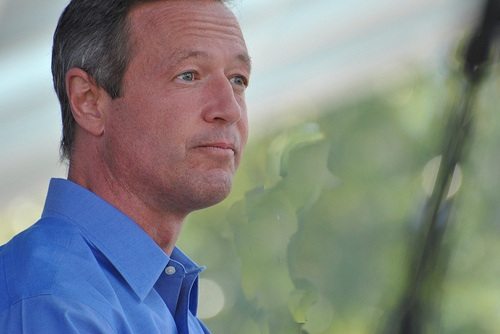
Omalley

January 15, 2013; Source: Wall Street Journal

One week ago today, on Martin Luther King, Jr.’s birthday, Maryland Gov. Martin O’Malley (D) announced that he would introduce a bill calling upon the Maryland legislature to abolish the death penalty in Maryland. O’Malley cited the death penalty’s high cost and ineffectiveness, and noted that its use puts the U.S. in the company of Iran, China, Yemen and North Korea—some of the few remaining bastions of government-sanctioned executions.

O’Malley hopes the time is ripe for change. At a news conference in Annapolis, Md. organized by the NAACP, the governor borrowed a signature King phrase: “Hate multiplies hate. Violence multiplies violence.” In 2009, the governor failed with a similar effort, leading to compromise legislation requiring an increased standard of proof in capital punishment cases such as DNA evidence or video evidence linking a defendant to a killing. Meant to be stringent and fair, many think that effort merely exacerbated racial bias in sentencing, as evidenced by O’Malley’s renewed vigor on the issue and the NAACP’s sponsorship of Tuesday’s event. If the governor’s wish is fulfilled, Maryland will follow five other states that have removed the death penalty in recent years. NPQ noted the repeal of the death penalty in Connecticut last year and Illinois, New Jersey, New Mexico, and New York have also repealed capital punishment since 2007. Thirty-three states maintain capital punishment laws.

Sign up for our free newsletters

Subscribe to NPQ's newsletters to have our top stories delivered directly to your inbox.

By signing up, you agree to our privacy policy and terms of use, and to receive messages from NPQ and our partners.

To some extent, O’Malley’s effort looks akin to putting a cap on an empty bottle. Maryland has only executed five inmates since reinstatement of its death penalty in 1978, and no one has been executed in the state since 2004. The last death sentence in the state was issued in 2005. “If you look over 30 or 40 years, the death penalty was on the books and yet Baltimore still became the most violent and addicted city in America,” O’Malley said. “Having the death penalty on the books did nothing to keep the homicides from rising.” O’Malley also stated, “We know what does not work. And we know that the way forward is always found through greater respect for the human dignity of all.”

Proponents of preserving the state’s capital punishment program are equally passionate, but appear short on statistics. “This governor’s priorities are all messed up,” said Republican House of Delegates member Neil Parrott. “By watering down punishments for violent crime, he’s encouraging crime to happen in Maryland rather than in Virginia or other states,” Parrott pleaded. In the Maryland State Senate, 24 of 47 votes will be required to move the legislation on to the state House of Delegates, where its passage is, reportedly, nearly guaranteed. State Senate President Thomas V. Mike Miller, a Democrat, is pro-death penalty but is said to promise to bring a vote to the full Senate if 24 votes are mustered in favor of repeal. Echoing Parrott, Miller said that he would rather expand the death penalty than eliminate it.

According to a recent Gallup poll, 63 percent of Americans support capital punishment, down from a high of approximately 80 percent in the early 1990s. Is this controversy a moral question or should the death penalty’s ability, or lack thereof, to reduce killing be the only germane issue? And should governments simply follow public opinion on issues of life and death? Where do you stand? –Louis Altman


The work isn’t done. Neither is our commitment.

The challenges facing nonprofits aren’t going away. Neither can the journalism that informs, connects, and amplifies the sector.

Help NPQ keep this work free and accessible.

Give Today
logo logo logo logo logo
About the author
Louis Altman

Louis Altman is a Vocational Rehabilitation Counselor with the Syracuse, New York office of ACCES-VR, a state agency that works with people with disabilities to help them achieve vocational goals and other related objectives. A licensed attorney in New York for over twenty years, Louis is also an adjunct professor at the State University of New York at Buffalo, teaching Legal & Ethical Issues in Counseling for the University's masters program in Rehabilitation Counseling, a program he graduated from. Louis has been writing newswires for NPQ since 2012. He has a wide variety of interests in the arts, business and sociology, and whatever unique and influential developments NPQ readers might find valuable to know. To leverage his training and experience he is working with NPQ to develop a focus on legal and vocational issues relevant to the nonprofit community.

More about: Nonprofit NewsPolicy
See comments

Stuffing-1
You might also like
Proposition 40 and the question at the heart of America’s safety net: Who should pay?
María Constanza Costa
American farmers’ politics are more complicated than headlines suggest
Lisa Held
Preserving the body politic against anti-immigration surges on Election Day
Katherine Graham
North Carolina is the canary in the coalmine for attacks on our democracy—and a model for how we fight back
Caitlin Swain and Marcus Bass
After we were seen
Yahia Lababidi
What’s happening with Section 504—and how are nonprofits fighting?
Kelli Finger

Upcoming Webinars

Group Created with Sketch.
December 3, 2:00 pm ET

After the Midterms

What’s Next for Nonprofits?

Register
Group Created with Sketch.
January 28, 2:00 pm ET

Democratic Staff Structures

Weaving Shared Leadership and Union Practice in Nonprofits

Register
You might also like
A person holding up a protest sign that reads, “Tax the Rich”
Proposition 40 and the question at the heart of America’s...
María Constanza Costa
Two people walk in a farm with their backs to the camera, one person has their hand supporting the other's back.
American farmers’ politics are more complicated than...
Lisa Held
A woman in hijab votes behind a cardboard voting divider in a polling station. Around her are other voters doing the same.
Preserving the body politic against anti-immigration surges...
Katherine Graham

Like what you see?

Subscribe to the NPQ newsletter to have our top stories delivered directly to your inbox.

See our newsletters

By signing up, you agree to our privacy policy and terms of use, and to receive messages from NPQ and our partners.

  • About
  • Advertise
  • Careers
  • Contact
  • Copyright
  • Donate
  • Funders
  • Editorial Policy
  • Media Relations
  • Privacy Policy
  • Submissions

We are using cookies to give you the best experience on our website.


Nonprofit Quarterly | Civic News. Empowering Nonprofits. Advancing Justice.
Powered by  GDPR Cookie Compliance
Privacy Overview

This website uses cookies so that we can provide you with the best user experience possible. Cookie information is stored in your browser and performs functions such as recognising you when you return to our website and helping our team to understand which sections of the website you find most interesting and useful.

Strictly Necessary Cookies

Strictly Necessary Cookie should be enabled at all times so that we can save your preferences for cookie settings.