logo logo
Fund the truth. #Wethecivic giving banner
Donate
    • Membership
    • Donate
  • Social Justice
    • Racial Justice
    • Climate Justice
    • Disability Justice
    • Economic Justice
    • Food Justice
    • Health Justice
    • Immigration
    • LGBTQ+
  • Civic News
  • Nonprofit Leadership
    • Board Governance
    • Equity-Centered Management
    • Finances
    • Fundraising
    • Human Resources
    • Organizational Culture
    • Philanthropy
    • Power Dynamics
    • Strategic Planning
    • Technology
  • Columns
    • Ask Rhea!
    • Ask a Nonprofit Expert
    • Gathering in Support of Democracy
    • Humans of Nonprofits
    • The Impact Algorithm
    • Living the Question
    • Nonprofit Hiring Trends & Tactics
    • Notes from the Frontlines
    • Parables of Earth
    • Reimagining Philanthropy
    • State of the Movements
    • We Stood Up
    • The Unexpected Value of Volunteers
  • Newsletters
  • NPQ Online Events
    • Premium Webinars
    • Learn Out Loud
    • Partner Events
    • On Demand
  • Leading Edge Membership

Warhol Foundation Ends Its Funding Ban of Smithsonian

Ruth McCambridge
January 14, 2019
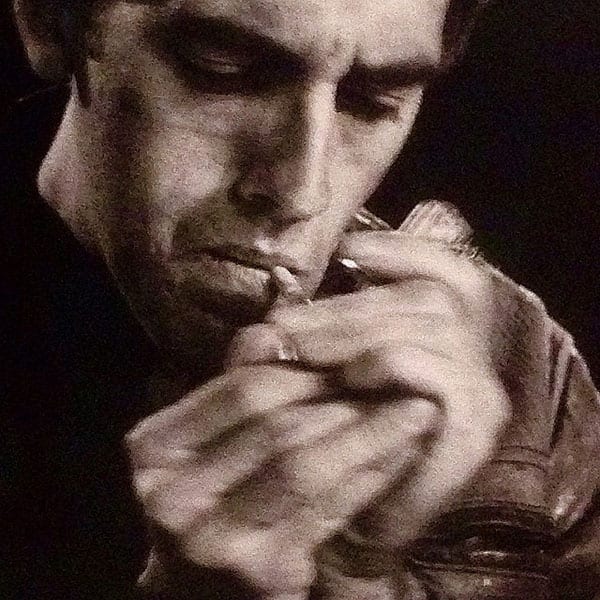
Detail of a Peter Hujar portrait of David Wojnarowicz (David Lighting Up, 1985). Photo: Mark B. Schlemmer.

January 11, 2019; New York Times

After an eight-year ban on funding the Smithsonian, the Andy Warhol Foundation for the Visual Arts has awarded it a grant to support a retrospective exhibit of activist artist Oscar Howe at the Smithsonian’s National Museum of the American Indian. The Foundation’s choice of how to break its own ban, reinforces its original point, not just about censorship in general but about the exclusion of marginalized narratives.

The funding ban has been in place since the National Portrait Gallery bowed to pressure and removed a video by David Wojnarowicz from its 2010 exhibit “Hide/Seek: Difference and Desire in American Portraiture.” The foundation had supported that exhibition and saw the move as an act of “blatant censorship.” The New York Times reports that:

Wojnarowicz’s video came under fire from the Catholic League and members of the House of Representatives for its perceived disrespect to Christianity. One image—of ants crawling on a crucifix—was singled out for criticism. At the time, Martin E. Sullivan, the director of the National Portrait Gallery, said that the aim of the work was to articulate “the reality of the suffering of the AIDS epidemic in Latin American culture,” not to criticize or demean Christianity. Nevertheless, the piece was removed from the exhibition. (Wojnarowicz died at age 37 of AIDS-related complications in 1992.)

ArtForum describes the incident in further detail:

While the institution issued a statement titled “Smithsonian Stands Firmly Behind ‘Hide/Seek’ Exhibition” a month after the show opened, it still opted to pull the video.

Sign up for our free newsletters

Subscribe to NPQ's newsletters to have our top stories delivered directly to your inbox.

By signing up, you agree to our privacy policy and terms of use, and to receive messages from NPQ and our partners.

“We removed it from the exhibition Nov. 30 because the attention it was receiving distracted from the overall exhibition, which includes works by American artists John Singer Sargent, Andy Warhol, Jasper Johns, Annie Leibovitz, and Georgia O’Keeffe.”

Hardly a credible statement under the circumstances, but clearly memorable for its lack of integrity.

At the time, Joel Wachs, president of the Andy Warhol Foundation, demanded that the work be returned. “Such blatant censorship is unconscionable,” he said. “It is inimical to everything the Smithsonian Institution should stand for, and everything the Andy Warhol Foundation does stand for.” When the work was not restored, the foundation board’s board unanimously decided to suspend funding for all Smithsonian museums.

Wachs says the ban has been discussed each year since it was instituted but, until now, the foundation was not convinced its point was made. “We believe that the ban has had its intended effect of promoting freedom of artistic expression at the national level,” Wachs writes in the statement announcing the repeal. “The Smithsonian has also demonstrated a strong track record of highlighting underrepresented artists over the past eight years, which aligns well with the Foundation’s core values.”

“While Wojnarowicz and Howe were very different artists working in different circumstances, both fiercely advocated for the visibility and inclusion of marginalized perspectives in contemporary art discourse,” Wachs says. “Both were driven by a belief that communities should take control of their own narratives, particularly in the face of misguided (and malicious) attempts by others to do it for them.”

The $100,000 grant to the Howe retrospective was announced this week separate from other grants being made by the Foundation. The exhibit it supports includes will include 75 works, some of which have never before been shown publicly.—Ruth McCambridge


Our Voices Are Our Power.

Journalism, nonprofits, and multiracial democracy are under attack. At NPQ, we fight back by sharing stories and essential insights from nonprofit leaders and workers—and we pay every contributor.

Can you help us protect nonprofit voices?

Your support keeps truth alive when it matters most.
Every single dollar makes a difference.

Donate now
logo logo logo logo logo
About the author
Ruth McCambridge

Ruth is Editor Emerita of the Nonprofit Quarterly. Her background includes forty-five years of experience in nonprofits, primarily in organizations that mix grassroots community work with policy change. Beginning in the mid-1980s, Ruth spent a decade at the Boston Foundation, developing and implementing capacity building programs and advocating for grantmaking attention to constituent involvement.

More about: Arts and CultureNonprofit NewsPhilanthropy
See comments

Sidebar-WTC
You might also like
How America’s Independence from England Revolutionized US Philanthropy
Amanda Moniz
The Boardroom Belongs to the Community
Kristin Lincoln
The Protesters Know Something Philanthropy Doesn’t
Bia Vieira
Five Stories of Balance: What 250 Years of American Nonprofits Teach Us About Impermanence
Emily Ball Cicchini
Built for a Time Such as This: How ABFE Used a Tumultuous Time in History to Uplift Its Community
Chelsea Crandall
Despite Barriers, Black-Owned Bookstores Continue Their Legacy of Educating Communities
Rebekah Barber

Upcoming Webinars

Group Created with Sketch.
June 25, 2:00 pm ET

Reframing Organizational Risk

Register
Group Created with Sketch.
July 16, 2:00 pm ET

Readying for the 2026 Midterms

How 501(c)(3)s Can Educate and Advocate During this Election Season

Register

    
You might also like
John Trumbull's painting, Declaration of Independence, depicting the five-man drafting committee of the Declaration of Independence presenting their work to the Congress.
How America’s Independence from England Revolutionized US...
Amanda Moniz
A single yellow rubber duck standing out in front of many identical rubber ducks.
The Boardroom Belongs to the Community
Kristin Lincoln
A Red and White vintage stylized flyer for a 2026 May Day protest, reading “Workers and Immigrants Rights!”
The Protesters Know Something Philanthropy Doesn’t
Bia Vieira

Like what you see?

Subscribe to the NPQ newsletter to have our top stories delivered directly to your inbox.

See our newsletters

By signing up, you agree to our privacy policy and terms of use, and to receive messages from NPQ and our partners.

  • About
  • Advertise
  • Careers
  • Contact
  • Copyright
  • Donate
  • Editorial Policy
  • Funders
  • Media Relations
  • Privacy Policy
  • Submissions

We are using cookies to give you the best experience on our website.


Nonprofit Quarterly | Civic News. Empowering Nonprofits. Advancing Justice.
Powered by  GDPR Cookie Compliance
Privacy Overview

This website uses cookies so that we can provide you with the best user experience possible. Cookie information is stored in your browser and performs functions such as recognising you when you return to our website and helping our team to understand which sections of the website you find most interesting and useful.

Strictly Necessary Cookies

Strictly Necessary Cookie should be enabled at all times so that we can save your preferences for cookie settings.