
There is a story in my family that I have carried the way one carries a key: aware of its weight, uncertain of the door.
I think of it now because the United States is preparing to mark 250 years of its founding promises, and I find myself returning to an older form of civic trust, one my family practiced in Jerusalem long before such language was drafted into national scripture.
What strikes me now, writing in the United States of America as this country prepares to mark 250 years of its founding promises, is…how deeply “American power” has been implicated in a world of broken civic trust.
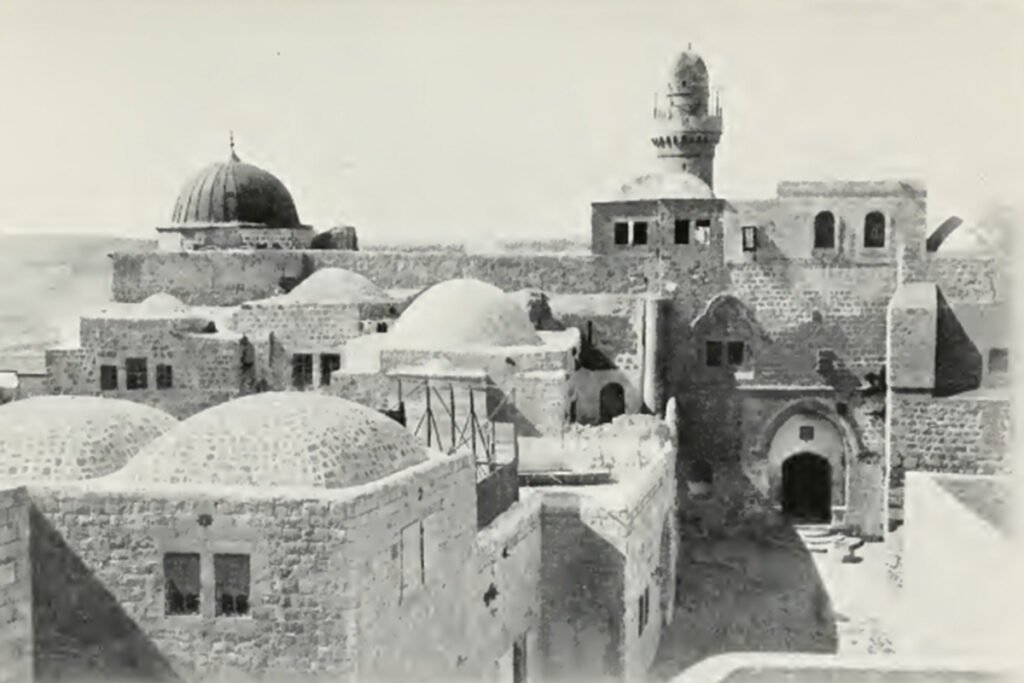
A Sufi sheikh, Ahmad al-Dajani, received a waking vision in the 16th century. The Prophet David appeared to him with the force of a summons, and what he communicated was this: his tomb on Mount Zion had fallen into dispute and neglect. Someone was needed to tend it. Sultan Suleiman the Magnificent, who ruled the Ottoman Empire at its peak of economic and political power and was at that time rebuilding the Walls of Jerusalem, heard of the vision and entrusted Sheikh Ahmad and his descendants with the care of that shrine. For generations, the Dajani Daoudis—my ancestors—served as its custodians, Muslim guardians of a Jewish prophet’s resting place, appointed by an Ottoman sovereign following a Sufi dream.
Then, in 1948, Israel seized the site under the British Mandate and the charge was severed.
I have come to regard this story as a kind of inheritance more binding than property. Custodianship, as my family practiced it, was a responsibility that crossed the lines others were busy drawing, a fidelity to that which belongs to more than one people. The sacred must be tended.
What strikes me now, writing in the United States of America, as this country prepares to mark 250 years of its founding, is how thoroughly the practice of tending the sacred has been erased, and how deeply “American power” has been implicated in a world of broken civic trust.
The vision that appointed Sheikh Ahmad did not arrange itself along the lines our present disputes require. A Muslim man, a Jewish prophet’s tomb, an Ottoman sultan’s decree: what held these together was something older than tolerance, deeper than mere coexistence managed and brokered by committee. The Dajani Daoudis were caretakers of David’s tomb because they had been called to do so.
There is an Egyptian saying I grew up with: we are all guests in this life. The world is borrowed space, held for a time and returned. Arabian hospitality, which I claim by lineage and temperament, grew out of the knowledge that scarcity was real, distances were vast, and to welcome a stranger was an act of the soul before it was a social custom. The guest was sacred because the stranger arrived bearing a claim older than politics.
Yet the art of being a good guest also carries an ethic. To arrive anywhere is to recognize that others are already there, —with their dead, their prayers, their language, their memory. A true guest does not confuse welcome with possession. A true host does not confuse shelter with surrender. Between these forms of humility, human beings sometimes discover a shared world.
This is why my family’s custodianship of David’s tomb continues to trouble and instruct me. It belongs to an order of being in which no one is diminished by honoring what another holds sacred. It suggests that civic life, at its deepest, begins before citizenship and survives beyond sovereignty, in the habits by which human beings make room for one another without erasing what makes them distinct.
A Muslim family tending a Jewish shrine is coexistence practiced as devotion. It asks no one to paper over difference.
Sign up for our free newsletters
Subscribe to NPQ's newsletters to have our top stories delivered directly to your inbox.
By signing up, you agree to our privacy policy and terms of use, and to receive messages from NPQ and our partners.
That calling was transmitted across centuries, and I think of what that transmission requires: someone had to remember, to keep the key even when the door was gone. My grandmother, Rabiha Dajani, who was the first Arab woman to broadcast on Al-Quds Radio in Jerusalem, founding its women’s section, left that city in 1948 at gunpoint and was never allowed to return. My grandfather, Yahya, the composer and singer, had refused large sums to relocate the Palestine Broadcasting Service outside of Jerusalem and died in 1943, before the city was lost. They carried, between them, a civilization’s weight in ordinary acts. My grandmother went on speaking in exile, keeping Arabic on the air wherever she could. That too was custodianship, the tongue tending what the body could no longer reach.
What 1948 ended was more than a political arrangement. It ended a form of stewardship that had held across faiths and centuries. It ended with the knowledge and eventual blessing of the US, which has spent decades since funding and arming the state that made my family’s return impossible—all the while celebrating at home the values of pluralism and democracy that the custodianship of David’s tomb required.
Others have said this more forcefully than I can, people who have lived closer to the consequences. What I can add is the specific texture of what was lost, because I carry it in family memory.
A Muslim family tending a Jewish shrine is coexistence practiced as devotion. It asks no one to paper over difference. Sheikh Ahmad al-Dajani did not become less Muslim by caring for the tomb of David. The Prophet David did not become less revered in Jewish tradition because a Sufi family tended his resting place. What held them together was older than tolerance: what is genuinely sacred exceeds the claims any one tradition can make upon it.
America at 250 has a particular relationship to such questions. Its founding documents speak the language of universal belonging, the language my ancestors practiced without documents. And its foreign policy has spent decades funding the removal of the families who practiced it.
That recognition is harder to achieve than any policy, and no framework can mandate it. What carries it forward is something more like the dream that summoned Sheikh Ahmad: the daily labor of showing up to tend what someone else might consider theirs alone.
The story came to me through my grandmother’s telling, as these things do, in the register of family legend, half-marvel and half-grief. But it has sharpened as I have grown older and watched the landscape it describes turn into rubble and law and contested ground. The tomb on Mount Zion is still there. My family’s charge is not.
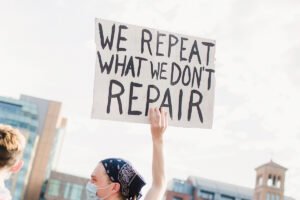
What would it mean to honor that inheritance now? To hold in one’s own practice the recognition that drove it: that the sacred must be tended, and that no single people can exhaust what any prophet means. Perhaps it begins with insisting that such forms of life existed, were real and particular and daily, and that their loss was not inevitable.
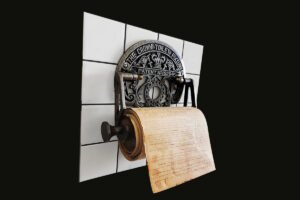
America at 250 has a particular relationship to such questions. Its founding documents speak the language of universal belonging, the language my ancestors practiced without documents. And its foreign policy has spent decades funding the removal of the families who practiced it. That gap is the unresolved question this anniversary is not yet asking of itself, and that it will not resolve by celebrating the founding texts while looking away from what their promises have enabled.
It is not mine to mourn David’s tomb as a personal loss. I never held that charge; it was held by those who came before me and were lost before I was born. What I hold is the story of the caretaking of the tomb, which is a different kind of custody. To write it is to insist that such a form of life was real and was ended by something specific that we should be willing to name.
My inheritance is the key that opens no door I can find. It is a reminder that the door existed, and that someone, across many generations, had the care of it—the sacred as something given to tend, never to possess.