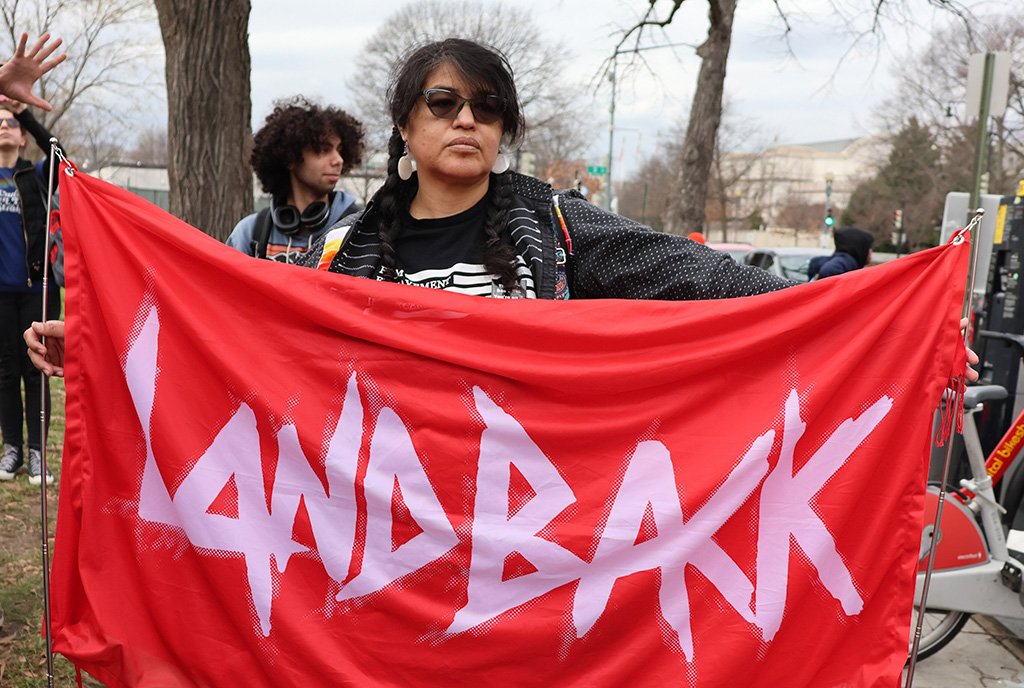

In this column with NPQ, LandBack for the People, NDN Collective builds on their podcast of the same name, sharing stories from Turtle Island and beyond about Indigenous people organizing in community, advocating for social justice, and fighting for the return of Indigenous lands.
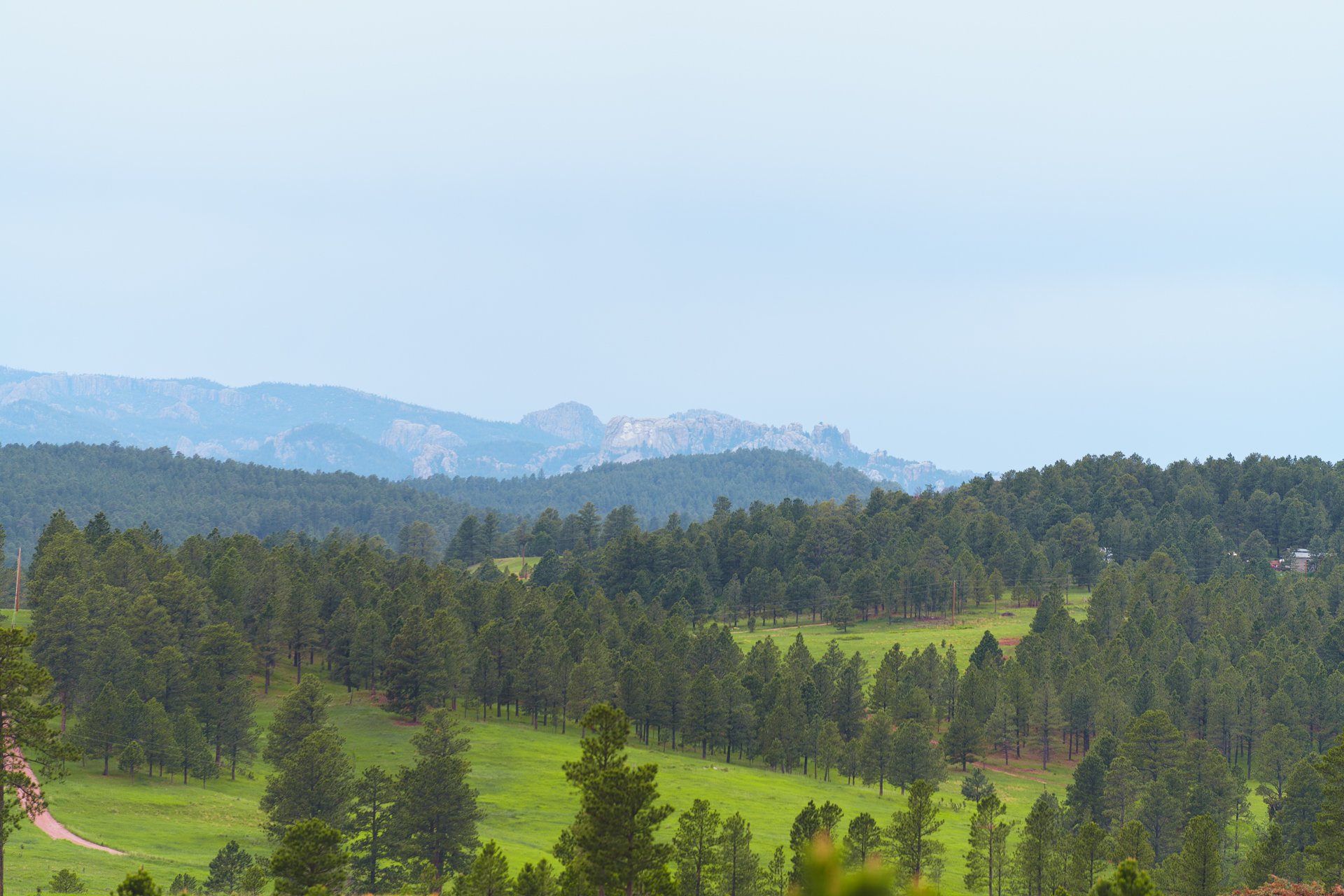
In August, Nick Tilsen spoke with guests on NDN Collective’s LANDBACK For The People podcast about a project NDN Collective is calling the Black Hills Restoration Act, or the Sacred He Sapa Restoration Act for now. This act is being drafted by tribes to ask Congress to relinquish control of federal public lands in the Black Hills back to the Lakota people—amounting to 80 percent of the land in the Black Hills.
The Black Hills Clean Water Alliance recently reported that between September 2025 and July 2026, the number of active mining claims in the Black Hills dropped by 20 percent—which is great news and could reflect the opposition they’ve faced from community members and organizers. About 17 percent of the Black Hills is still currently under mining claims.
In December 2025, an NDN Collective aired an episode of the podcast, “He Sapa LANDBACK,” which featured two special guests: Robert Two Crow, a longtime Lakota educator of Lakota people, champion of the Lakota language, culture bearer and respected leader; and Richard Moves Camp, a spiritual leader and medicine man who came through the American Indian Movement and has worked hard to help Lakota people hold onto our traditional ways of life. NDN Collective’s own Wizipan Garriott and Anissa Martin also joined the conversation. During the episode, the group spoke about how protecting the Black Hills—and getting back the land that is legally owed to us through the Fort Laramie Treaty of 1868—is a fight that has spanned generations.
Since the episode aired, there was a huge win around He Sapa LANDBACK. On June 9, all nine South Dakota tribes passed resolutions supporting the development of legislation to return federal lands in the Black Hills to the Oceti Sakowin (Great Sioux Nation). At the time, Joseph Brings Plenty Sr., District 5 Council Representative for the Cheyenne River Sioux Tribe, said on this historic display of unity: “Crazy Horse set the bar on how to move as Indigenous people, and how important it is to defend the Black Hills. Together, we are strong—we need to be stronger than ever because we are fighting for our existence on our very own land.”
Indigenous organizations, elders, grassroots leaders, and community members have been actively organizing and providing support around proposed legislation to return the Black Hills since 2020, helping Tribal leaders prioritize this proposal as a critical way to protect drinking water for the region, preserve sacred sites, revitalize culture and land, strengthen sovereignty, bolster community wellbeing, and support jobs and economic development.
Sign up for our free newsletters
Subscribe to NPQ's newsletters to have our top stories delivered directly to your inbox.
By signing up, you agree to our privacy policy and terms of use, and to receive messages from NPQ and our partners.
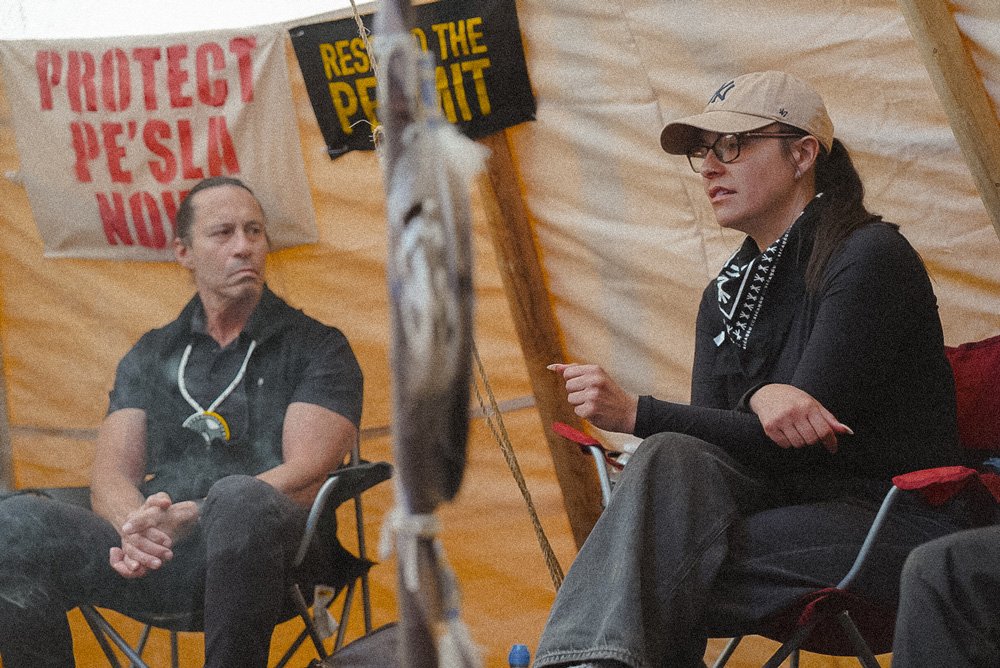
But the fight goes much further back than 2020. During the “He Sapa LANDBACK” episode, the group discussed the history of the Black Hills and what the current landscape looks like. “When I hear the word LANDBACK, it’s a very serious business,” Richard Moves Camp said. “It’s a very serious matter to take in. Everybody should take it serious and include it with prayer. Prayers and all respect for everything that is. Trust Creator, and the people that are working towards it.”
Anissa Martin shared about how critical it is to engage young people in reconnecting to the land, ceremony, and the fight to protect the Black Hills—and how successful and powerful that strategy has been: “LANDBACK is a responsibility. A responsibility for not only to fight for the land, not only to carry on the fight for our ancestors and our elders, but a responsibility to the land and to the water as a relative and as the original caretakers of the land.”
Richard Two Crow spoke to the intergenerational nature of the fight for the Black Hills, saying of youth who may feel like it’s too late to get LANDBACK: “You are Lakota, and it’s not your fault that you lost the language. And it’s not your fault that we live in a world of capitalism. Let’s sit down and talk about a better idea that’s going to give our sovereignty to rebuild this nation that already beat this bigger nation.”
Richard Moves Camp also spoke about gold—the reason the Black Hills were re-stolen from the Lakota people in 1877—and one of the reasons there are so many mining claims in the area now. He said, “We’ve always knew there was gold in the Black Hills, but we respect it as a thing—an object to repair things that are broken, to repair things that are needed to be fixed…We never put it into our consciousness that it [gold] was a God.”
There are a few concrete ways everyone can join the effort to protect and return the Black Hills to its rightful stewards. One is by keeping an eye out for public comment periods for different drilling and mining projects in the area, and submitting comments raising concerns and expressing opposition to protect the Black Hills.
Another—which is particularly relevant for people who live in or near the Black Hills but can be applied anywhere the land is under threat—is asking political candidates if they support the historic, unified tribal strategy to begin working on legislation to return the Black Hills. We have a chance to both educate and put pressure on those running for office—simply asking questions about LANDBACK at town halls, candidate forums, candidate meet and greets can go a long way in setting standards.