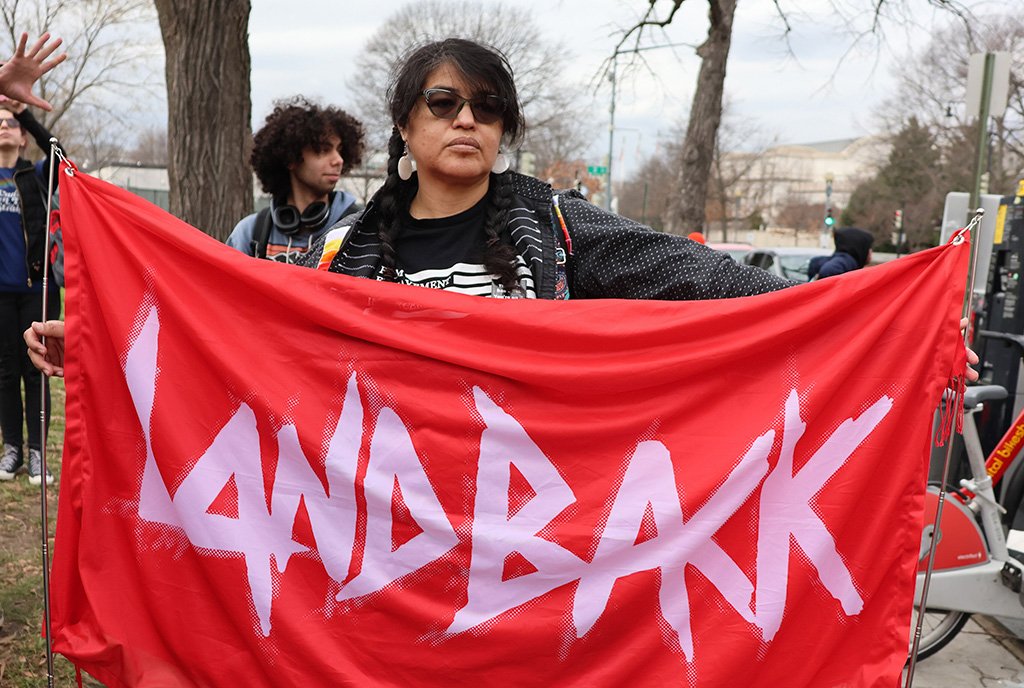
In this column with NPQ, LandBack for the People, NDN Collective builds on its podcast of the same name, sharing stories from Turtle Island and beyond about Indigenous people organizing in community, advocating for social justice, and fighting for the return of Indigenous lands.
Back in early 2026, NDN Collective staff deployed to the Twin Cities to support the organizing efforts defending communities against the cruel ICE occupation. During this time, NDN Collective CEO and founder Nick Tilsen had the opportunity to speak with Twin Cities-based organizer Jason Sole, a formerly incarcerated abolitionist who was granted a unanimous pardon in late 2025.
Jason is a restorative justice trainer, has been a criminal justice educator for over 16 years, and is perhaps best known for his initiative “Humanize My Hoodie,” a movement challenging biases around attire and identity, particularly for young Black men.
Organizing Alongside Legends
Jason started organizing in 2004 after being released from incarceration. He grew up on the South Side of Chicago and describes being surrounded by both a lot of community and also a lot of gangs and threats of violence. He fell in with a gang as a young teenager and ended up getting entangled with the prison system after multiple arrests and eventual three non-violent convictions. Yet Jason knew that he wasn’t disposable like the legal system wanted to make him feel.
“So, it was like I was saying back then, I’m going to do something important for my people,” Jason asserted. “They tried to make me think I was not productive. So for me, it was always a fight to prove I can do something different.”
After getting out of prison, Jason started organizing and enrolled in school, where he found mentorship as a new organizer.
“My advisor was Chuck McDoug. He’s the co-founder of SNCC, the Student Nonviolent Coordinating Committee. These were 15- to 16-year-olds shutting down Woolworths in the South,” Jason reminisced. “So, if he [was] backing me, I don’t care what nobody else got to say on the organizing tip.”
In addition to Chuck’s support, Jason continued to organize alongside Angela Davis and Marian Wright Edelman.
“I got blessed…with amazing organizers,” Jason shared, “I’m talking about people who are legends in organizing. And it was like, for them to give me that type of opening to this…I ain’t trying to let them down.”
Fighting the ICE Occupation in MN
When Nick and Jason spoke, Renée Good was murdered by an ICE agent just eight days before. Jason talked about what it looked like on the streets over the last few weeks, both before and after Good was killed.
“Our ancestors and the elders really prepared us for these moments,” Jason said. “So I don’t mind carrying any role. If I need to be the nurse, if I need to be someone to carry groceries, if I need to be….There is no main role. I think that’s what people are understanding.”
Nick said that, amidst the horrors Minneapolis and other cities across the United States are facing with the rise in state violence, “it’s powerful to watch the people come together in unity, especially against tyranny, especially against what we’re actually witnessing in this moment. And I think that’s what it takes.”
“If we are going to work together, we have to not let our communities’ biases stop us from collective liberation.”
Sign up for our free newsletters
Subscribe to NPQ's newsletters to have our top stories delivered directly to your inbox.
By signing up, you agree to our privacy policy and terms of use, and to receive messages from NPQ and our partners.
Dismantling Anti-Blackness for Collective Liberation
Nick and Jason speak about the emotions and complicated logistics Jason navigated while on probation—how dehumanizing it felt at the time. He described the pressure of standing before the parole board, having to explain his three felonies in 10 minutes, all while humanizing himself to these strangers.
Now with his pardon granted, he described feeling a form of individual liberation in being able to move freely and gaining his rights back. “We’re working towards collective liberation,” Nick acknowledged, “But for you, when you hear liberation, what does that mean?”
Jason describes seeing people liberate themselves first, and that looking like a happy and whole person.
“That’s what I want for everybody, where they don’t feel like they got to call nobody to be liberated or motivated or inspired,” Jason reflects. “They already liberated. They doing it. They living it.”
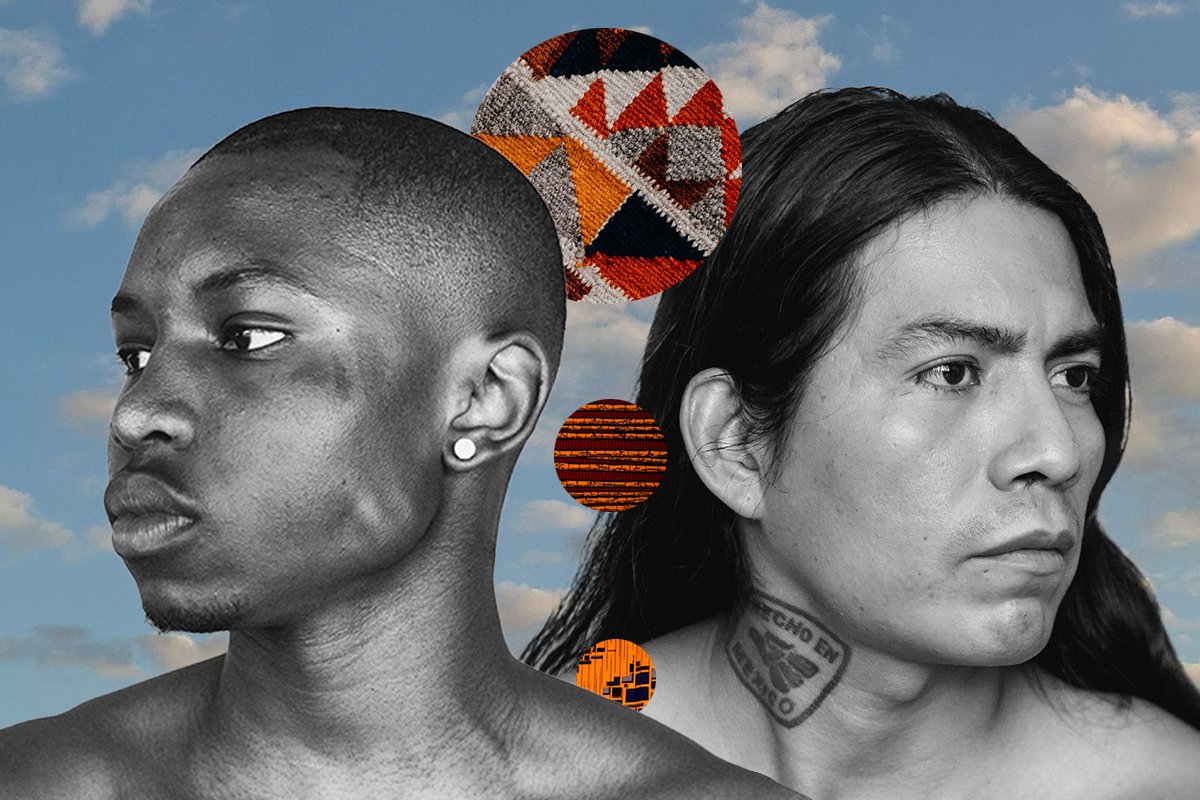
For Black and Indigenous peoples to be liberated, we also have to talk about dismantling systems of oppression like the culture of anti-Blackness that creates barriers that prevent Black and Indigenous folks from working together.
“I’m not letting the skin of what I see interrupt what we can do together. I want to grow in love with people.”
When asked about his message to Indigenous folks on how to dismantle anti-Blackness in Native communities, Jason reinforces the importance of building relationships.
“You spend more time with the people you have the bias with. You know what I mean?” he shares. “If you don’t get a chance to be around people you got the bias against or the thoughts, it’s harder to do it, but you got to lock in and know the struggle when people see darker skin, man.”
To combat anti-Blackness as Indigenous peoples, we have to speak out against anti-Blackness in Indigenous spaces and continue to organize alongside our Black relatives who are facing oppression from the same systems that keep our communities down. We are facing the same struggles, but if we are going to work together, we have to not let our communities’ biases stop us from collective liberation.
Thankfully, we see organizations and movements working towards uplifting the connection between LANDBACK and Black reparations as interconnected struggles. As this country celebrated the 250th Anniversary of the Declaration of Independence—a document written by slave-holding white men that calls Native people “merciless Indian savages,” we saw Black and Indigenous organizers come together to launch the Day 1 Movement and call for a future with Black reparations and LANDBACK.
“So, for me, if we all could understand that darker skin all over, it’s like you got it everywhere amongst every culture across the globe is colorism, anti-Blackness, all of that stuff. I’m not letting the skin of what I see interrupt what we can do together,” Jason said, addressing the intercommunity tensions we face. “I want to grow in love with people.”