In the South Bronx zip code of 10454, which lies within the poorest congressional district in the nation, a thoughtful and considered program is demonstrating how to combat food insecurity.
LEAF—Leading an Ecological and Accessible Food System—is a four-year-old collaboration between Stone Barns Center for Food & Agriculture and Columbia Climate School that combines food distribution with opportunities to learn to grow and cook produce and eat healthfully.
Stone Barns, situated on 80 acres in Tarrytown, New York, endeavors to develop an alternate ecological food system that accounts for environmental and human health and community. To cultivate deeper, sustained impact outside of the farm, the center formed a research consortium with Columbia focused on food and agricultural research related to climate systems.
The group working on LEAF—made up of professors, researchers, scientists, students, registered dietitians, community leaders, farmers, and chefs—was buoyed by strong participant survey results and a 99% retention rate from year one to year two, and felt these stories of impact needed to be told, lead researcher Natalie Greaves-Peters told NPQ. The consortium published a paper in the journal Sustainability in January detailing statistically significant increases in fruit and vegetable consumption, comfort with gardening, and SNAP participation.
While federal budget cuts slash or terminate food access and education programs, LEAF demonstrates that integrated community-focused initiatives can be transformational for participants and our food system.
LEAF’s roots
LEAF was sparked by Stone Barns’ board members visiting the neighborhood of the center’s community education manager, Carolina Saavedra. They learned about the needs of this historically underserved area with a 44% poverty rate, widespread food insecurity, and a mainly Latino and Black population. Stone Barns committed capital to the program alongside other funders.
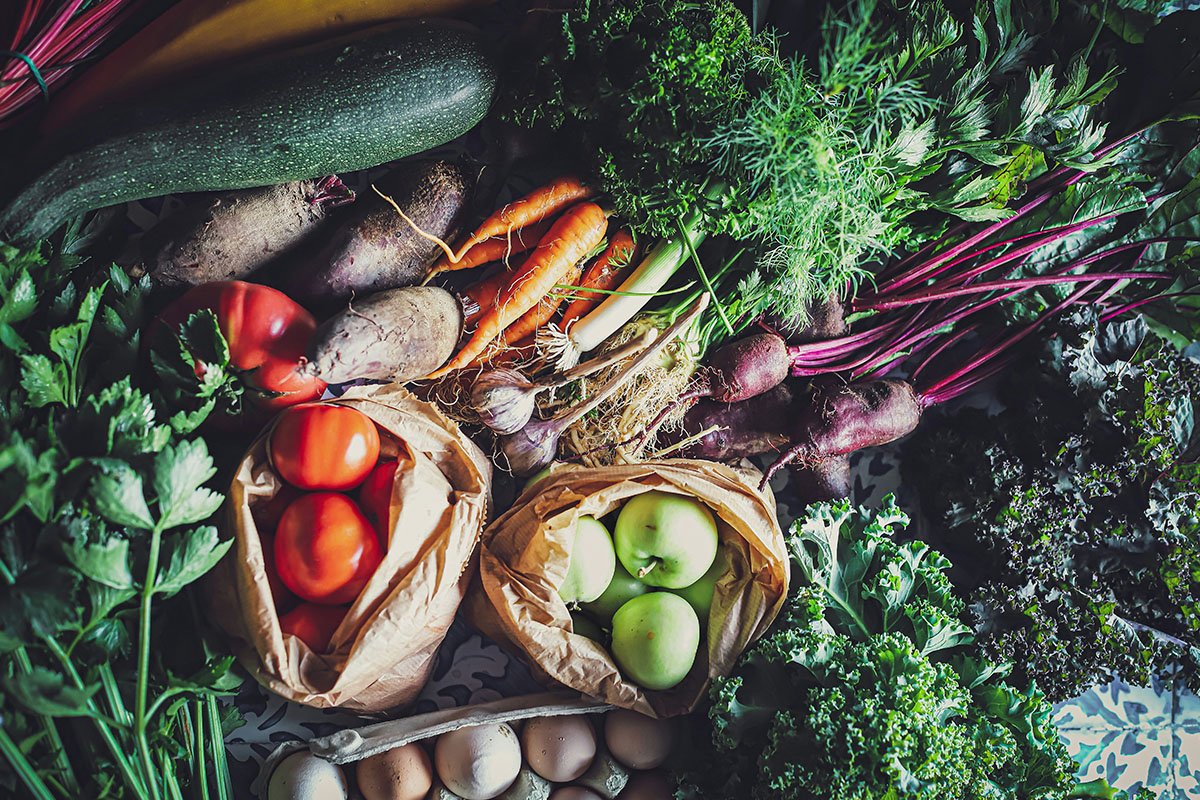
Participants receive a bi-weekly distribution of regeneratively produced food from Stone Barns like eggs, grass-fed beef, onions, and rye berries. They’re also given home gardening kits with seedlings of greens, herbs, and vegetables like lunchbox peppers in April, June, and September, plus bilingual printed and digital growing instructions and nutrition education materials for adults and children. Included are recipes tested at the center’s partner restaurant, the acclaimed Blue Hill at Stone Barns. Additionally, they visit Stone Barns for guided farm tours and activities.
The consortium shaped research around the program, aiming to study shifts in household fruit and vegetable consumption, comfort with and enjoyment of growing food, perceived affordability and access, awareness and use of SNAP and WIC, usual sources for purchasing produce and remaining unmet needs, and contributions to climate-aligned food systems.
“We stand very strong in our belief that eating like this and learning about our food system and connecting is the way that we will be healthier,” said Jason Grauer, executive director at Stone Barns, in an interview with NPQ. “Now we want to prove it.”
A community-based approach
“For us it was very important that the research landed in the realm of community participatory based research,” Saavedra said. She is also a sous chef at La Morada, her family’s mutual aid community kitchen, and a land steward at Bruckner Mott Haven Garden.
Participants [of LEAF] receive a bi-weekly distribution of regeneratively produced food from Stone Barns like eggs, grass-fed beef, onions, and rye berries.
In this approach, the researchers, participants, and community members learn from each other and create a model that works for everyone. Listening and responding to needs, involving established organizations, and encouraging ongoing dialogue built trust. Participants felt seen and heard when Stone Barns grew hot peppers at their request.
Maria Pena, a Bronx community member, learned about LEAF via Upbeat, an afterschool music program her daughter attended. She told NPQ that the personal connections and being treated “with kindness and humanity” make the program different. She doesn’t visit her local food pantry because of how its staff treats clients.
La Morada, WordUp, a bookshop and arts space, and Bruckner Mott Haven and Brook Park community gardens also helped to enroll residents in LEAF. These spaces also host the rotating Thursday food distributions, which is aligned with school pickup times.
Sign up for our free newsletters
Subscribe to NPQ's newsletters to have our top stories delivered directly to your inbox.
By signing up, you agree to our privacy policy and terms of use, and to receive messages from NPQ and our partners.
People take part as they wish. There are no requirements, invasive components, or reprimands for survey responses. This year, 70 new spots were added; returnees rapidly recruited friends and relatives, and 480 households have been served to date. (That includes two years, 2024 and 2025, LEAF ran in Sleepy Hollow, New York; and despite funding cuts, community gardens there still receive seedlings.)
A congenial community has unexpectedly formed. In an active What’s App chat, members offer to pick up shares for others, post pictures of plants growing or dishes made, suggest ways to consume a food without having electricity or gas to prepare it, and exchange information on social services, like the library’s free English classes.
Surprising, significant results
Greaves-Peters, a behavioral nutritionist, initially planned to conduct a secondary analysis of the data collected from LEAF’s first year. Surveys had been administered to a household member three times over the program’s 17 weeks, asking how often respondents ate fruits and vegetables, how they would describe their health, which plants they’d like to receive, and if they used programs like SNAP or needed assistance in applying for such programs.
However, she wound up analyzing data from the first two years. Behavioral changes in the first year were not statistically significant. The data after two years, however, told a notably different story, showing statistically significant changes in fruit and vegetable consumption, comfort in growing food, and in emotional response to gardening.
The behavioral change over time is “extremely important,” said Greaves-Peters. The longer-term data illustrates that a holistic approach and sustained programs offer more impact than one-off interactions. “We can’t think our work is done once we hand food over,” she added.
“We stand very strong in our belief that eating like this and learning about our food system and connecting is the way that we will be healthier,” said Jason Grauer, executive director at Stone Barns.
“Now we eat more vegetables and they {family members} don’t complain,” said Pena. She missed growing food like she had as a child in the Dominican Republic and enjoys learning about new fruits and vegetables. Being provided with a recipe gave her confidence to prepare zucchini, which was unfamiliar to her. “Now my family likes it, but before we didn’t. That kind of small thing is made the difference.”
The effects of gardening on mental health also resonated with Greaves-Peters. “Gardening is not just about planting, growing, eating food,” she said. “There’s a lot of emotions invoked throughout. A lot of frustration up front when you can’t figure it out, but once you’re able to, it’s like you’re soaring.”
Saavedra estimated that 30% of LEAF participants, like Pena, now also grow food in community gardens. She said the results contradict the negative narrative associated with the zip code, noting its high rate of diet-related diseases. “It’s not by choice that people are in this predicament. Because if you gave them the choice, and the land space…they would grow their own food.”
Study expansion
In observational studies like this, results show correlation, not causation. Acknowledging possible response bias because participants receive food and back-to-school supplies, Greaves-Peters explained that initial upfront research is often conducted this way to determine if a more expansive study is warranted.
This year the consortium is expanding its research from a cross-sectional study to a quasi-experimental one that will include survey data, focus groups, interviews, and the reading of participants’ carotenoid levels. Carotenoids are naturally occurring pigments in fruits and vegetables that act as antioxidants; amounts in the body tie directly to fruit and vegetable intake.
They plan to publish the data as open source and hope it will present LEAF as a replicable model for others, encourage “food is medicine” initiatives, strengthen the case for an ecological food system, and perhaps influence government policies to address food insecurity.
“If we have the science to back us up in the co-creation of solutions to combat food insecurity and being the solution to this constant problem around our nation, then our voices would be heard,” said Saavedra.
Deeply engaging folks in growing and eating delicious food and demonstrating its nutritional value and impact is a starting point towards Stone Barns’ goal of transforming the food system, Grauer said. “We want food citizens and healthier food citizens.”