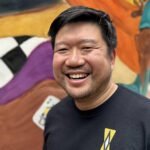
My American story begins in China, where my grandparents were born. They moved to Malaysia in the early 1900s, and that’s where my parents and I were born. Our family moved again to Australia in the late 1980s, and in 2012, I moved to the United States, as Co-Founder of Global Citizen.
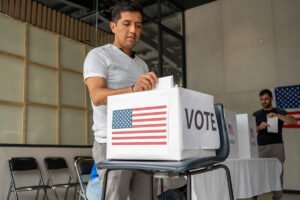
On the night of the 2024 presidential election, I decided to naturalize as a US citizen. It was a civic decision: I wanted to opt into the United States not simply as a place to live, but as an ongoing democratic project. In June 2025, I joined more than 100 people from over 40 countries in taking the Oath of Allegiance.
What stayed with me was not ceremony, but implication: citizenship is participation in a system that is continuously being written.
The question of what active citizenship requires has shaped much of my adult life.
Beyond Participation
At Global Citizen, participation means mobilization. Millions of people take actions that influence governments, corporations, and philanthropies to address extreme poverty and inequality. The work is built on a simple premise: democracy becomes stronger when more people participate.
Citizenship is participation in a system that is continuously being written.
For many years, I believed participation was the central challenge. Over time, I found myself asking: what happens after people participate?
That question led me to co-found The Stories of Us. I have come to believe that while participation remains essential, democracy only becomes stronger when institutions are capable of learning from it.
As the United States marks its 250th anniversary, much of our civic conversation centers on polarization and declining trust. The deeper challenge is structural: our civic institutions are largely built to inform, but not to listen. That imbalance shapes whose experiences become visible, whose voices are trusted, and whose realities influence public life.
Life in the United States does not lack stories. Every community is rich with lived experience. What we lack are institutions designed to listen to these stories, systematically learn from them, and use what they reveal to shape better decisions.
The next generation of civic institutions may be defined by how well they continuously learn from the people they serve.
I believe civic listening is how that learning is possible. I think of it as three connected pillars: (i) helping people be seen; (ii) helping people be heard; and (iii) helping institutions act upon what they hear.
Being Seen
Civic participation begins with being seen. Public space shapes who feels visible, whose experiences are acknowledged, and who belongs within the national story.
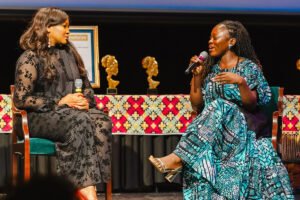
This insight informs our Talking Drums public art initiative. As the exhibition travels from city to city, we commission artists connected to each community. To date, we have commissioned 35 large-scale public works. Across five cities and 13 locations, the exhibition has invited more than 2 million people to encounter stories of democracy, resilience, identity, and belonging.
Visibility creates the conditions for participation. Public art can create places where recognition, dialogue, and repair become possible.
Being Heard
Civic listening cannot depend on one-off acts of participation. If institutions are to learn continuously from lived experience, participation must become radically accessible.
This insight informs our storytelling platform, built on Speech-to-Story technology. Recent advances make it possible to move civic listening from occasional consultation to continuous institutional practice. Many people do not see themselves as writers or have never been invited to share their lived experience. By allowing people to simply speak—beginning in English and Spanish—the platform lowers barriers to participation.
Our ambition is to help civic institutions continuously learn from the people they serve. This includes public libraries, YMCA associations, AARP state offices, Girl Scouts councils, United Ways, organizations such as Liberation Ventures advancing truth-telling and democratic renewal, and countless local partners. Embedded where people live, gather, and belong, these institutions have the trust and reach needed to hear communities.
Our role is not to replace these institutions, but to strengthen them. Technology reduces friction, but trust resides in communities and the institutions that serve them. Together, they make continuous civic listening possible.
Sign up for our free newsletters
Subscribe to NPQ's newsletters to have our top stories delivered directly to your inbox.
By signing up, you agree to our privacy policy and terms of use, and to receive messages from NPQ and our partners.
Being Understood
After twenty years working to expand civic participation, I am convinced that the next democratic challenge is not helping more people speak but helping institutions become better learners.
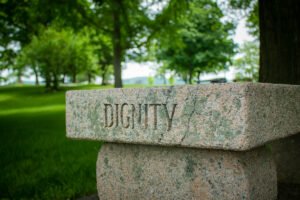
For decades, institutions have relied on quantitative indicators to understand communities: employment, education, income, health outcomes, and demographic data. These measures remain indispensable, but they rarely capture lived experience—or how belonging, dignity, trust, exclusion, aspiration, and hope shape civic life.
Data measures outcomes. Stories reveal the lived realities behind them, giving civic leaders, journalists, and funders a deeper understanding of change as it unfolds.
This insight is now leading us to explore “narrative intelligence:” the possibility that institutions can systematically learn from lived experience alongside traditional data. The goal is not to replace evidence, but to expand what counts as evidence.
If data tells us what is changing, narrative intelligence can help reveal how change is experienced. Instead of waiting for the next survey, election, crisis, or census, institutions could continuously learn from the communities they serve.
Imagine if mayors, city councils, community hospitals, school districts, public libraries, newsrooms, and philanthropic foundations could understand not only what is happening in their communities, but how people are living through it.
Data measures outcomes. Stories reveal the lived realities behind them, giving civic leaders, journalists, and funders a deeper understanding of change as it unfolds.
If institutions learn systematically from lived experience, civic listening becomes infrastructure for better policy, stronger communities, and better decision-making. It also creates the conditions for truth-telling, reconciliation, and democratic renewal.
If the first 250 years of the United States were shaped largely by who had the power to tell the national story, the next 250 years may be shaped by whether our institutions develop the capacity to hear and act on what they learn.
From Commemoration to Civic Listening
The 250th anniversary of US independence will inspire reflection on our national story. I hope it also inspires us to examine the systems through which that story continues to be written.
Seen.
Heard.
Understood.
Together, they define what meaningful participation requires, and what democracy must increasingly be designed to enable.
If the first 250 years of the United States were shaped largely by who had the power to tell the national story, the next 250 years may be shaped by whether our institutions develop the capacity to hear and act on what they learn.
Democracy cannot renew itself unless its institutions continue learning from the people it serves. If citizenship is participation in a system that is continuously being written, then civic listening is how that system continues to learn from the people writing it.
The Stories of Us storytelling platform launched in June 2026 and is currently deploying distributed listening infrastructure through trusted community partners including AARP Michigan, Detroit Public Library, Girl Scouts of Southeastern Michigan, Liberation Ventures, United Way of Southeastern Michigan, and the YMCA of Metropolitan Detroit. The platform supports storytelling in English and Spanish, with additional languages to come.