
Throughout American history, charitable foundations and nonprofits have played an important role in shaping civic life. These institutions support work that strengthens the places we call home, help communities respond to challenges, and build toward the future. As we mark the milestone of 250th year of the United States, it is a critical time for philanthropy to meaningfully and boldly consider how narrative power operates.
Our history is a collection of stories that shape who we are. Stories have the power to change how we see ourselves individually and collectively. Stories can create community and bridge divides. The best stories demonstrate how we can take something unique and specific and make it universal. Stories help us imagine who we want to be.
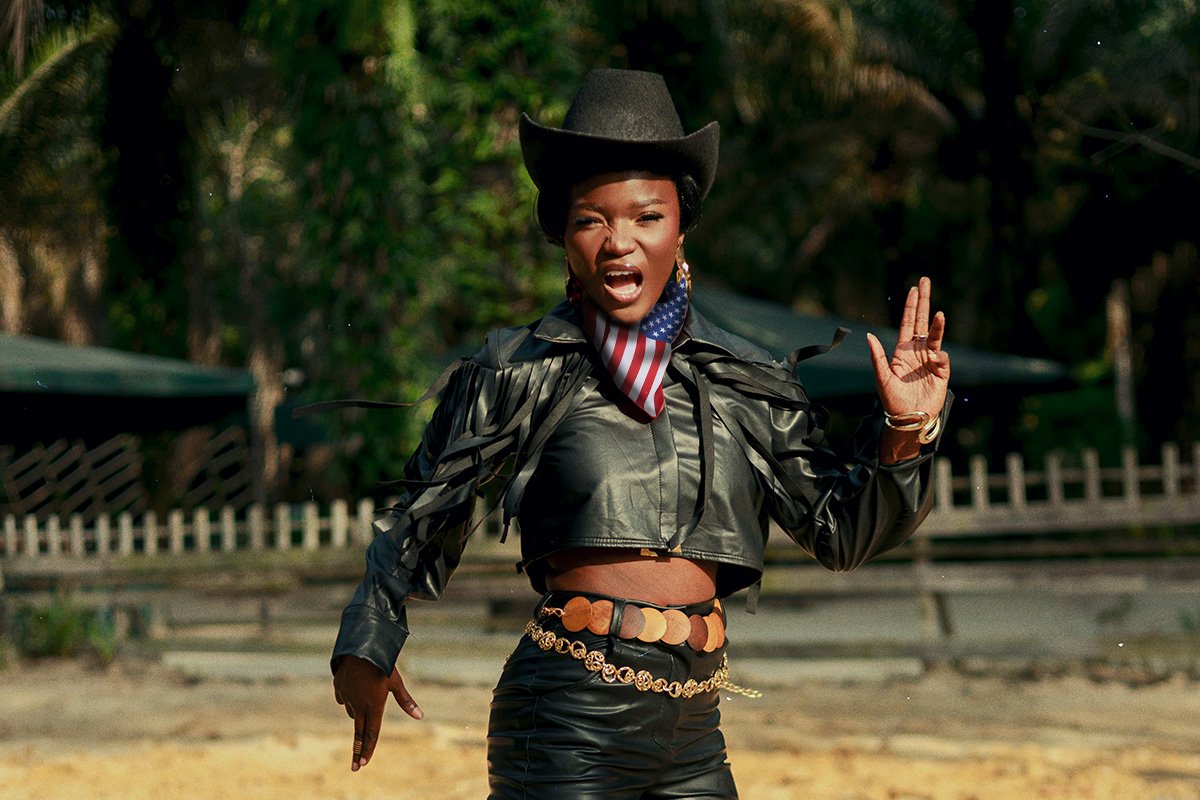
I am reminded of a persuasive case from one of the world’s best visual and sonic storytellers: Beyoncé. She opened her Cowboy Carter concert with stunning iconography of an American flag and a sign that read: “Never seek permission for something that already belongs to you.”
What was beautiful about the Soldier Field concert I attended in Chicago was that Beyoncé created space for everyone to belong. It was a brilliant, unapologetic declaration of humanity’s right to exist and to come as you are, in your cowboy boots and hats, rhinestone bedazzled jeans, prairie dresses, and fringe vests. I have been to a lot of Beyoncé concerts over 20 plus years—going back to the Houston Rodeo. She has always catered to a largely Black and brown audience, with people of color of all shapes, sizes, and genders showing up to pay tribute to their Queen Bey. What felt different about this concertgoing crowd was it attracted families in several formations. I know dads who brought their daughters to the show, both as first-time Beyoncé concertgoers, and parents of transgender kids, with and without their children. It was the largest contingent of aunties, grandmas, and White folks I’ve ever seen at a Beyoncé concert. All were welcome.
I want to practice philanthropy the way Beyoncé puts on a show: with courage and boldness, with unbridled joy, and by creating spaces where everyone sees themselves reflected, all while continuing to transform and adapt over the decades.
It was a powerful vision of the United States. That is the beauty of art, concerts, public gatherings, and convenings: they allow strangers to come together for a shared experience. We gathered as Beyoncé brought her album to life and reflected on what it feels like to be a Black woman, a Black person, living in the United States today.
She opened with “American Requiem.” It’s a song that begins with the lyrics: “Nothin’ really ends. For things to stay the same, they have to change again.” It ends with these lyrics: “Goodbye to what has been. Pretty house that we never settled in. A funeral for fair-weather friends. I am the one to cleanse me of my Father’s sins. American Requiem. Them big ideas are buried here. Amen.”
Amen and amen. Preach, Beyoncé.
I want to practice philanthropy the way Beyoncé puts on a show: with courage and boldness, with unbridled joy, and by creating spaces where everyone sees themselves reflected, all while continuing to transform and adapt over the decades. As we collectively consider who gets to shape the United States, philanthropy has a responsibility to ensure people see themselves represented, in stories where their history is preserved and where they feel like they belong.
At the MacArthur Foundation, where I work, we practice inclusive communications. We are focused on whose voices we lift up, whose stories we share, and whose wisdom and experiences we center. When we communicate, our aim is to be in right relationship with the communities we seek to serve.
We use asset-based language as a tool for framing conversations for collective action and to help reshape narratives and reimagine systems. We emphasize solutions and assets over problems and deficits. When we talk about communities with whom we work, we emphasize their personhood, dignity, and agency, rather than their challenges and disenfranchisement.
Sign up for our free newsletters
Subscribe to NPQ's newsletters to have our top stories delivered directly to your inbox.
By signing up, you agree to our privacy policy and terms of use, and to receive messages from NPQ and our partners.
None of this is intended to ignore historical inequities. However, we will not define people by the challenges they face. We highlight their strengths, aspirations, and contributions to society. We will also demonstrate how inequitable systems, rather than individual actions, created the current conditions that exist.
Language conveys values. Language can be used to either support or challenge the systems we seek to dismantle. We want people to see themselves in the language we use—in our work, at our events, in our grantmaking, and even in our website copy.
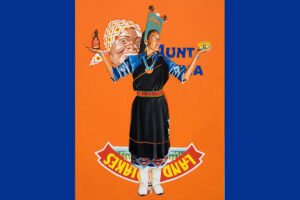
That starts when you walk through the doors of our building. MacArthur’s Chicago headquarters, the Marquette Building, is situated on the lands of the Potawatomi people. But the architecture of the Marquette Building perpetuates a harmful, stereotypical narrative about the Native people. A recent intervention, informed and led by Native leaders, asserts the continued presence, resilience, and vibrancy of Native peoples in Chicago and the Midwest. The title of the intervention is in Potawatomi language and English translation: “Nwi Yathmomen, We will tell our story.”
In the same way that Beyoncé evolves over the years, while staying true to her Houston roots, philanthropy must do the same. We must pivot, adapt, and respond to the moment, while remaining true to our missions.
This is only one way that we have been called to respond as a foundation. More broadly, this moment calls on us to use our institutional and individual voices to be defenders of the truth and to never seek permission for something that already belongs to us—whether it is the American flag or fundamental freedoms, like our Constitutional rights.
Beyoncé reclaimed American symbolism—a bold statement, especially amid an increasingly isolated and polarized country. It was a stark reminder that our sector must also maintain an unwavering commitment to what we all know to be true: the United States belongs to the roughly 343 million people who live here and call it home. It belongs to the people who were born here and the people who migrated here to make a better life for themselves. It belongs to Indigenous and Native people who were stewards of this land and lived, loved, and cared for it until forced out by non-Native settlers. And it belongs to the descendants of those who came on the Mayflower seeking religious freedom and those who were sold and forcibly removed from Africa—enduring the trip aboard floating coffins. It belongs to the descendants of skilled immigrants from China who laid the final 700 miles of the Transcontinental Railroad driving the settlement of the American West. It belongs to the essential workers and small business owners from the Global South who keep our economy running today.
Our country is built on the premise that everyone has a right to express themselves, even when others don’t agree with or like what they say. Any attempt to silence speech—or limit our freedom to give to the causes and communities we care about—weakens our democracy and endangers the very fabric of civic life.
In the same way that Beyoncé evolves over the years, while staying true to her Houston roots, philanthropy must do the same. We must pivot, adapt, and respond to the moment, while remaining true to our missions. Charitable foundations exist to bring people together across backgrounds, geographies, ideologies, and identities.
That is the work of philanthropy—ancestor and descendant work. It is about what we are leaving behind for the next generation. It is about the dreams, visions, and futures we build together. It is about the stories we tell, the space we create, and doing it joyfully. Because making time to seek joy allows you to find lightness when the world feels heavy. It can keep you courageous for the times ahead.
As we continue to celebrate our country’s founding, long after the fireworks and patriotic displays of the Fourth of July, the MacArthur Foundation is committed to unearthing the complexity, the contradictions, and the experiences that make our story whole. In Chicago, we are supporting a range of 250th storytelling on inclusive narratives at a time when the rough edges of our country’s history are being flattened, removed, or erased. Some of these initiatives are as follows:
- Segundo Ruiz Belvis is inviting participants to reinterpret freedom, rights, and belonging through an Afro–Caribbean lens—asking whose histories are centered, whose are erased, and how cultural memory expands the story of the United States.
- The Stories of Us, a national civic organization whose mission is to inspire belonging and connection through storytelling experiences, is transforming public spaces into civic commons for reflection, dialogue, and imagination. Traveling Drums, a large-scale public art exhibition, will illuminate stories about the country’s founding ideals and honor creativity, expression, and traditions of all communities.
- Illinois Humanities is offering a range of ways for people to get involved in America 250 programs and initiatives, including educational resources related to civics and democracy, focused on Chicago and Illinois history. Illinois Voices 250, developed in partnership with the Illinois America 250 Commission and StoryCorps, is inviting Illinoisians to share personal experiences, family histories, and community perspectives exploring themes of democracy, belonging, service, and the future of Illinois.
I invite you to consider: what will the next 250 years look like? What story do we want to tell?