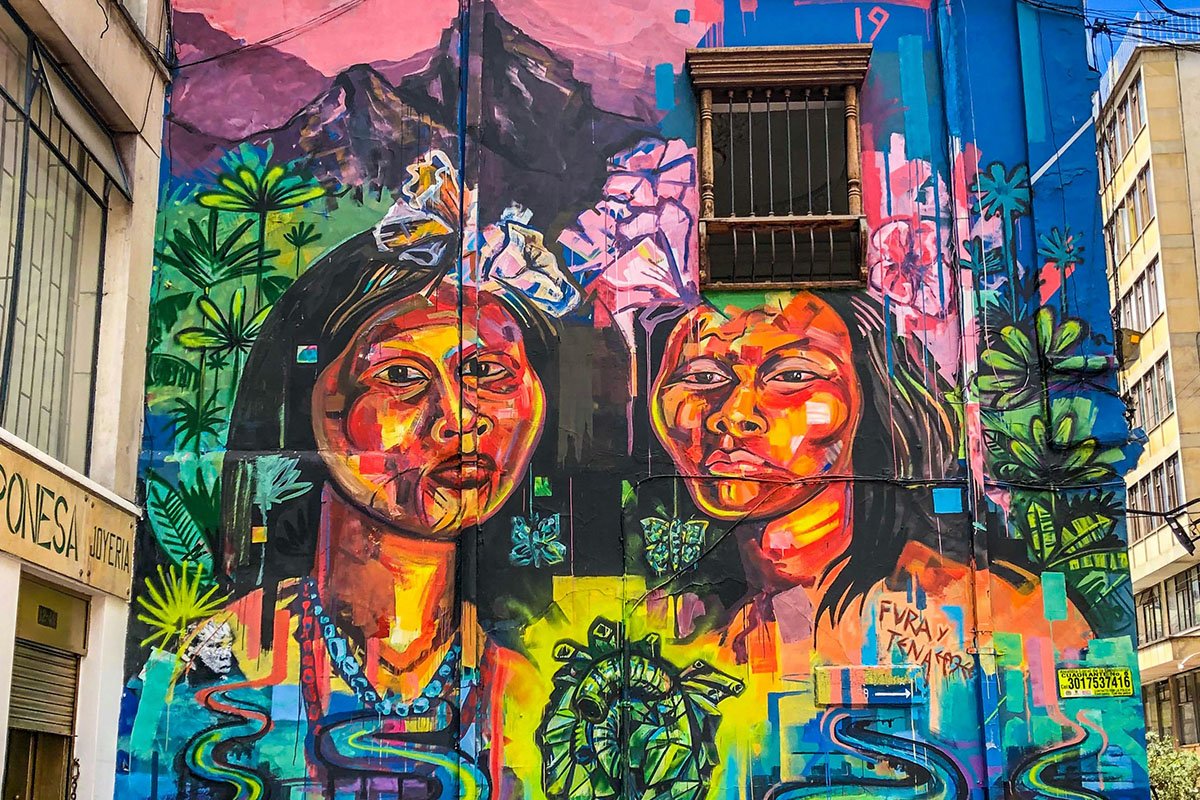
This three-part series, “Searching Mothers: The Untold Story of Latin American Resistance,” focuses on Latin American maternal activism and highlights its transformative potential at both the social and individual levels, even in repressive or authoritarian environments. The first part is set in Colombia during the early 2000s and uses this context to analyze how motherhood—an identity rooted in the domestic and private sphere—transforms into an identification with a collective forged around public political action.
The second part draws a parallel between the case of the Mothers of Plaza de Mayo and the Mothers of Soacha, exploring common issues in their experiences of activism across different contexts: the phenomenon of denialism, stigmatization, and social mobilization through symbolic, bodily, and unconventional practices.
This third and final installment aims primarily to challenge the reductionist and colonizing narrative of Colombia held at the international level. We highlight how collective organization—even when originating from the margins—is capable of destabilizing the dominant discourse.
View Spanish Translation Below / Leer en Español Abajo
When Colombia comes up in conversation, someone unfamiliar with the country will probably mention that it is overrun with crime and drug trafficking. Alternately, someone who has visited might say that it has both beautiful destinations as well as dangerous and unsightly areas. Yet we as Colombians—as those who truly understand the immensity and depth of our territory—are likely to speak to you instead of Colombian berraquera: our relentless struggle against the stigma of narcotics, and above all, our enduring fight to emerge from internal armed conflict, lay down arms, and achieve a land of lasting peace.
For decades, international media and global advisories have constructed a reductionist, deeply sensationalized narrative around Colombia, framing it as an inherently hazardous territory dominated by terrorism, street crime, kidnappings, and homicides. While these surface-level warnings paint a picture of generalized chaos, they obscure a far harsher and more complex reality that cannot be understood through superficial statistics. By reducing the country’s crisis to a mere matter of common delinquency and depoliticized violence, these narratives ultimately transform a population that is itself a victim of internal armed conflict into the sole bearer of blame for a reality they have tirelessly fought to overcome.
This distortion occurs precisely because those with the power and platform of amplification often choose the easy path: simplifying complex structural dynamics and denying systemic atrocities by stigmatizing an entire society. Therefore, it is imperative to shift the perspective entirely. We must cease evaluating a country—and a continent—solely through the lens of its violence, and instead recognize it through its persistent struggle to break free from it.
It is from these historically neglected territories that the true spirit of berraquera emerges: an extraordinary capacity for grassroots activism, communal solidarity, and non-violent resistance.
It is for this very reason that our work does not focus merely on documenting state crimes. Instead, it centers on what truly defines us: the berraquera of mothers who rose against an entire state’s apparatus to declare their truth, undeterred by reprisals, social stigma, or systemic violence. These are the stories and voices that demand our collective attention—not because they represent power, but because they emanate from individuals, whom those in power have historically dismissed as insignificant.
This shift in narrative does not mean denying the reality of insecurity, violence, or deeply rooted social fractures. Rather, it demands that we refuse to settle for a single story or reductionist stigma. After all, the very territory that external advisories caution against visiting is populated by millions of individuals who wake up every single day driven by the enduring hope of building a peaceful nation.
To execute this necessary shift, a humanist paradigm is required—one that redefines Colombia’s transnational identity by genuinely centering its margins. The true hallmark that our country offers the world is neither its trauma nor the sensationalism of its violence, but the radical resilience cultivated in its peripheries.
It is from these historically neglected territories that the true spirit of berraquera emerges: an extraordinary capacity for grassroots activism, communal solidarity, and non-violent resistance. Exporting this legacy means asserting that Colombia’s greatest contribution to global consciousness is not the memory of its oppressors, but the formidable social labor of its communities reclaiming life, dignity, and historical truth from the ashes of conflict.
In a 2025 interview with Ana Páez, the searching mothers of Soacha clarified that the painful victories they have achieved have been the result of tireless, courageous, and resilient work:
“We didn’t achieve anything without working for it. We achieved it because we worked for it, because we fought for it. We’re old women, but look at us, brave and standing tall, truly. It has been painful for us but seeing that the JEP and the Commission practically clarified the facts of what was committed, and seeing their confession that yes, they killed innocent people, well, for us it was a joy, because we truly cleared the names of our children, which is what we wanted, to clear the names of our sons. Now we want the truth, but a truth with dignity”
This activism is reflected in the already reviewed embodied, peaceful, and supportive practices that mothers use as mobilization strategies. The example of the mothers of Plaza de Mayo wearing their children’s diapers as headscarves, the t-shirts with photos of disappeared loved ones, the intervention of boots outside Congress by the mothers of Soacha, or the photographic series that consisted of burying their own bodies, are just some examples of deeply symbolic and non-violent practices that can imbue mobilization with meaning and center victims’ voices in the discourse.
What these practices reflect is that maternal activism’s methodological and human lessons offer a universal model of civil resistance, as these strategies can adapt to different regimes, contexts, and macro-criminal patterns. The mothers’ logic of affection combined with their courage and berraquera can be understood as a true expression of Colombian identity, but also as a shared legacy of Latin-American resistance.
As NPQ’s #WeTheCivic initiative proposes, to truly understand the civic health of a society, global attention must shift from the official discourses of power to the marginalized voices that institutional structures attempt to erase from history through systematic amnesia and legal impunity.
Another key aspect of the methodological lessons learned from maternal activism is that these are groups shaped by deeply rooted and multi-sectoral experiences of violence. Because of this, the group’s intersectional component, born from geographic and economic marginalization, can give its participants the strength and rootedness to continue the struggle and social transformation, even as these individuals endure constant cycles of systematic violence. The very structures of violence that force them to withstand new forms of revictimization also provide the necessary fuel for victims to devise new forms of activism that challenge the system—not only for personal purposes, but for collective benefit. Gradually, this process creates a favorable context for social and discursive transformation.
As NPQ’s #WeTheCivic initiative proposes, to truly understand the civic health of a society, global attention must shift from the official discourses of power to the marginalized voices that institutional structures attempt to erase from history through systematic amnesia and legal impunity. The case of Searching Mothers allows us to closely examine the obstacles to democratic participation, but it also shows us important transformations rooted in activism.
Colombia now knows the Mothers are right, acknowledged with the slogan “Las Cuchas tienen razón.” Theirs has been a relentless, years-long struggle whose truth is today recognized by civil society and state institutions. Therefore, if there is a paramount lesson that Colombia can offer the world, it is radical resilience: the unyielding fight for official recognition of responsibility and for a historical memory that actively combats denialism. Today, these mothers demonstrate that grassroots mobilization possesses the power to break down any wall built upon deceptive and authoritarian narratives.
If anyone around the world ever wishes to truly understand Colombia and grasp the essence of our culture, they should know that the ultimate hallmark of this land is berraquera. May they learn from it to embrace an unquenchable thirst to fight for their own rights. This means understanding that in any context and under any circumstance, raising one’s voice will always be necessary and worth it.
If anyone around the world ever wishes to truly understand Colombia and grasp the essence of our culture, they should know that the ultimate hallmark of this land is berraquera. May they learn from it to embrace an unquenchable thirst to fight for their own rights.
Sign up for our free newsletters
Subscribe to NPQ's newsletters to have our top stories delivered directly to your inbox.
By signing up, you agree to our privacy policy and terms of use, and to receive messages from NPQ and our partners.
These are the voices we seek to amplify, and the narratives truly worth committing to memory. These mothers represent a society that can stand tall before any citizen of the world to teach them that the logic of affection serves as an immense force; one that dispels fear and grants the courage to act against any regime. This Colombian history, which shares profound historical ties with the Argentine experience, reveals a fundamental truth: since its inception, our continent has continually overcome violence and authoritarianism, turning historical struggle into its ultimate lifeline. Yet, from the outside, we are often still viewed as diminished, reduced to superficial narratives of danger and corruption.
This year is a crucial moment to learn from the history of Latin America as one of tireless struggles and resistance, not a land of crime and drug trafficking. Thus, by recentering narratives from the margins, we reclaim the true spirit of this series—Searching Mothers: The Untold Story of Latin American Resistance—by proving that the dignity of our people can never be eclipsed by stigma or state violence.
Las Cuchas Tienen Razón: La Lección Colombiana de Resiliencia Radical
Esta serie de tres partes, titulada “Madres Buscadoras: La Historia no Contada de la Resistencia Latinoamericana,” se centra en el activismo maternal en América Latina y destaca su potencial transformador tanto a nivel social como individual, incluso en entornos represivos o autoritarios. La primera entrega se encuentra enfocada en la Colombia de principios de la década de los 2000 y utiliza este contexto para analizar cómo la maternidad—una identidad arraigada en el ámbito doméstico y privado—se transforma en una identificación colectiva forjada en torno a la acción política pública.
La segunda entrega traza un paralelo entre el caso de las Madres de Plaza de Mayo y las Madres de Soacha, explorando puntos comunes en sus experiencias de activismo a través de contextos diferentes: el negacionismo, la estigmatización y la movilización social mediante prácticas simbólicas, corporales y no convencionales.
Esta tercera y última entrega de esta serie tiene como objetivo principal cuestionar la narrativa reduccionista y colonizadora que se tiene de Colombia a nivel internacional. Se destaca cómo la acción colectiva—incluso cuando se origina desde sectores históricamente marginalizados—es capaz de desestabilizar el discurso dominante.
Cuando surge el tema de Colombia en una conversación, alguien que no conoce el país probablemente mencione que está dominado por el crimen y el tráfico de drogas. En cambio, alguien que lo ha visitado podría decir que cuenta con destinos hermosos, pero también con zonas peligrosas y poco atractivas. Sin embargo, nosotros, como colombianos—los que realmente entendemos la inmensidad y la riqueza de nuestro territorio—te hablaremos de la berraquera colombiana: de nuestra incansable lucha por superar el estigma del narcotráfico y, sobre todo, de nuestro esfuerzo constante por dejar atrás el conflicto armado interno, dejar las armas y construir una tierra de paz duradera.
Durante décadas, los medios de comunicación internacionales y las advertencias de viaje emitidas a nivel global han construido una narrativa reduccionista y profundamente sensacionalista sobre Colombia, presentándola como un territorio inherentemente peligroso, dominado por el terrorismo, la delincuencia común, los secuestros y los homicidios. Si bien estas advertencias superficiales proyectan la imagen de un caos generalizado, también ocultan una realidad mucho más dura y compleja, imposible de comprender a partir de estadísticas aisladas o de percepciones simplificadas. Al reducir la crisis del país a una mera cuestión de delincuencia común y a una violencia despolitizada, estas narrativas terminan responsabilizando a una población que es en sí misma víctima del conflicto armado interno y, que ha luchado incansablemente por superar estas realidades.
Dicha distorsión ocurre precisamente porque quienes tienen el poder y las plataformas de amplificación de estos relatos suelen optar por el camino más fácil: simplificar dinámicas estructurales complejas y negar atrocidades sistémicas mediante la estigmatización de toda una sociedad. Por ello, resulta imprescindible transformar por completo esta perspectiva. Debemos dejar de evaluar a un país—y a todo un continente—exclusivamente a través de la violencia y comenzar a reconocerlo por su persistente lucha por liberarse de ella.
Es precisamente por esto que nuestro trabajo no se enfoca en documentar crímenes de estado. En cambio, se enfoca en lo que realmente nos define: la berraquera de las madres que se alzan en contra de todo el aparato estatal para declarar su verdad, sin dejarse intimidar por las represalias, el estigma social ni la violencia sistémica. Estas son las historias y las voces que exigen nuestra atención colectiva, no porque representen el poder, sino porque provienen de personas a quienes los que tienen el poder han relegado históricamente a la invisibilidad y la insignificancia.
Este cambio de perspectiva no implica negar la realidad de la inseguridad, la violencia o las profundas fracturas sociales que tenemos. Más bien, exige que rechacemos la idea de una sola versión o un estigma reduccionista. Al fin y al cabo, el mismo territorio que las autoridades desaconsejan visitar está habitado por millones de personas que se levantan cada día impulsadas por la esperanza de construir una nación pacífica.
Para llevar a cabo este cambio necesario, se requiere un paradigma humanista que redefina la identidad transnacional de Colombia, centrando genuinamente la atención en sus márgenes. El verdadero sello distintivo que nuestro país ofrece al mundo no reside ni en su trauma ni en el sensacionalismo de su violencia, sino en la resiliencia radical cultivada en sus periferias.
Es de estos territorios históricamente olvidados de donde emerge el verdadero espíritu de la berraquera: una extraordinaria capacidad para el activismo de base, la solidaridad comunitaria y la resistencia no violenta. Exportar este legado significa afirmar que la mayor contribución de Colombia a la conciencia global no es la memoria de sus opresores, sino el formidable trabajo social de sus comunidades que recuperan la vida, la dignidad y la verdad histórica de las cenizas del conflicto.
En una entrevista de 2025 con Ana Páez, las madres buscadoras de Soacha aclararon que las dolorosas victorias que han logrado han sido el resultado de un trabajo incansable, valiente y resiliente:
“Nosotros no nos hemos conseguido algo si no lo hemos trabajado, nos lo hemos conseguido porque lo hemos trabajado, porque lo hemos luchado, viejitas como estamos, pero vea valientes y paradas con las botas bien puestas, de verdad. Ha sido doloroso para nosotros, pero al ver que la JEP y la Comisión, prácticamente nos aclararon los hechos de lo que ha sido cometido y al haber visto esa confesión de ellos de decir sí, nosotros matamos a inocentes pues para nosotras fue una alegría, porque de verdad limpiamos el nombre de nuestros hijos, que era lo que queríamos, limpiar el nombre de nuestros hijos. Ahora queremos una verdad, pero una verdad con dignidad”
Este activismo se refleja en las prácticas corporales, pacíficas y solidarias que las madres utilizan como estrategias de movilización ya analizadas. El ejemplo de las madres de Plaza de Mayo usando los pañales de sus hijos como pañuelos para la cabeza, las camisetas con fotos de sus seres queridos desaparecidos, la intervención con botas frente al Congreso por parte de las madres de Soacha, o la serie fotográfica que consistió en enterrar sus propios cuerpos, son solo algunos ejemplos de prácticas profundamente simbólicas y no violentas que pueden dotar de significado a la movilización y centrar el discurso en las voces de las víctimas.
Estas prácticas reflejan que las lecciones metodológicas y humanas del activismo maternal ofrecen un modelo universal de resistencia civil, ya que estas estrategias pueden adaptarse a diferentes regímenes, contextos y patrones macrocriminales. La lógica del afecto de las madres, combinada con su valentía y espíritu de berraquera, puede entenderse como una auténtica expresión de la identidad colombiana, pero también como un legado compartido de la resistencia latinoamericana.
Otro aspecto clave de las lecciones metodológicas aprendidas del activismo materno es que estos grupos están marcados por experiencias de violencia profundamente arraigadas y multisectoriales. Por ello, el componente interseccional del grupo, derivado de la marginación geográfica y económica, puede brindar a sus participantes la fuerza y el ahínco necesarios para continuar la lucha y la transformación social, incluso cuando estas personas sufren ciclos constantes de violencia sistemática. Las mismas estructuras de violencia que las obligan a soportar nuevas formas de revictimización, también les proporcionan el impulso necesario para idear nuevas formas de activismo que desafíen al sistema, no solo con fines personales, sino también para el beneficio colectivo. Gradualmente, este proceso crea un contexto favorable para la transformación social y discursiva.
Como propone la iniciativa #WeTheCivic de NPQ, para comprender verdaderamente la salud cívica de una sociedad, la atención mundial debe desplazarse de los discursos oficiales del poder a las voces marginalizadas que las estructuras institucionales intentan borrar de la historia mediante la amnesia sistemática y la impunidad legal. El caso de las madres buscadoras nos permite examinar de cerca los obstáculos a la participación democrática, pero también nos muestra importantes transformaciones que tienen su origen en el activismo.
Colombia ahora sabe que las Madres tienen razón, como lo demuestra el lema “Las Cuchas tienen razón”. La suya ha sido una lucha incansable que se ha extendido durante años y cuya verdad hoy es reconocida por la sociedad civil y las instituciones estatales. Por lo tanto, si hay una lección fundamental que Colombia puede ofrecer al mundo, es la resiliencia radical: la lucha inquebrantable por el reconocimiento oficial de la responsabilidad y por una memoria histórica que combata activamente la negación. Hoy, estas madres demuestran que la movilización popular tiene el poder de derribar cualquier muro construido sobre narrativas engañosas y autoritarias.
Si alguien en el mundo desea comprender verdaderamente a Colombia y captar la esencia de nuestra cultura, debe saber que el símbolo por excelencia de esta tierra es la berraquera. Que aprendan de ella a cultivar una sed insaciable de luchar por sus derechos. Esto significa comprender que, en cualquier contexto y bajo cualquier circunstancia, alzar la voz siempre será necesario y valdrá la pena.
Estas son las voces que buscamos amplificar, y las historias que realmente merecen ser grabadas en la memoria. Estas madres representan una sociedad que puede presentarse ante cualquier ciudadano del mundo para enseñarle que la lógica del afecto constituye una fuerza inmensa; una que disipa el miedo y otorga el valor para actuar contra cualquier régimen. Esta historia colombiana, que comparte profundos lazos históricos con la experiencia argentina, revela una verdad fundamental: desde sus inicios, nuestro continente ha superado continuamente la violencia y el autoritarismo, convirtiendo la lucha histórica en su último sustento. Sin embargo, desde fuera, a menudo se nos sigue viendo como seres debilitados, reducidos a relatos superficiales de peligro y corrupción.
Este año es un momento crucial para asociar a la historia de Latinoamérica con un legado de luchas y resistencias incansables, y no con una tierra de crimen y narcotráfico. Así, al recuperar las narrativas marginalizadas, reivindicamos el verdadero espíritu de esta serie—Madres Buscadoras: La Historia No Contada de la Resistencia Latinoamericana—al demostrar que la dignidad de nuestro pueblo jamás podrá ser eclipsada por el estigma o la violencia estatal.