In April, Virginia voters approved a new congressional map drawn by Democrats hoping to balance out last year’s gerrymandering in Texas. Virginia’s redistricting fight was powered by a broad nonprofit coalition that helped push through a temporary map change and, for a brief moment, suggested Democrats could regain up to four House of Representative seats.
A few of the best-known national actors behind this effort included:
- Brennan Center for Justice, which provided legal analysis, public education, and national policy support for Virginia’s redistricting and broader fair-maps efforts.
- Common Cause, especially Common Cause Virginia, which organized grassroots groups to push anti-gerrymandering reform and public engagement around map fairness.
- NAACP, which was part of the broader constellation of civil rights groups engaged in protecting fair representation in Virginia redistricting debates.
However, shortly after the referendum vote, the legal and political scene changed abruptly. First, Virginia’s Supreme Court declared the new map null and void on May 8, in a 4 to 3 decision. Then, the US Supreme Court issued a decision on Louisiana v. Callais, weakening voters’ ability to challenge discriminatory maps under Section 2 of the Voting Rights Act (52 U.S.C. § 1030).
Nevertheless, this fight showed that civic organizations can shape political power before district lines harden for another decade, and how legal expertise, grassroots trust, and public education can work together when the stakes are high.
The Weakening of Voter Rights
Before Callais, you did not need to prove discriminatory intent to challenge maps. It prohibited gerrymandering practices that showed an unequal opportunity to participate or procedures that discriminate on the basis of race, color, or other factors. After Callais, advocates are left with fewer federal voting rights protections.
“They asked us how we felt about it. We gave our response in the form of a vote, the people spoke, and the judge struck down our voices.”
In essence, the Supreme Court’s decision weakened the practical force of the Voting Rights Act in redistricting disputes, making it harder to challenge discriminatory maps once they are drawn. Since the decision came down, Southern states have moved quickly to exploit that opening: Tennessee approved a new map aimed at eliminating the state’s only Democratic seat; Florida advanced a redraw expected to net more Republican seats; and Louisiana, South Carolina, Alabama, and Mississippi all became part of an accelerating redistricting push.
Congressman Steve Cohen (TN-D) warned that the ruling dilutes the Voting Rights Act’s guarantee that minority voters can elect representatives of their choosing and argued that any changes to the Act should come from Congress, not the courts. Kevin Morris wrote in an analysis for the Brennan Center that the Court’s trajectory showed a “bankrupt and sad vision of democracy.”
The gerrymandering fight thus becomes a compressed political window, which should matter to nonprofits since public education and alliance-building require time. If advocacy groups wait until after a map passes, they may already be too late. As Alliance for Justice, a legal nonprofit, wrote in February, “In the voter assistance realm alone, dozens of states are considering bills that would make it harder for community groups to help people register to vote and cast a ballot.”
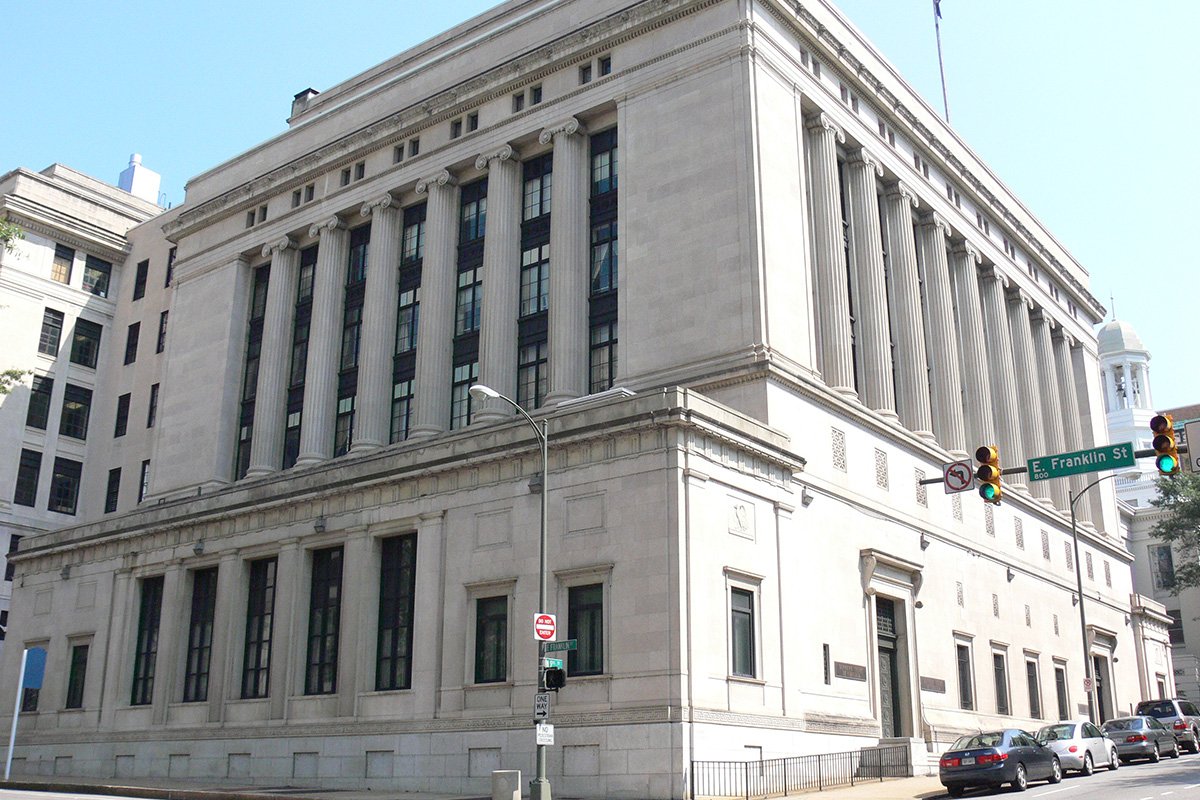
Virginia’s Supreme Court ruling that the redistricting vote did not count because the state did not follow the proper constitutional procedure, kept Virginia’s old congressional map in place for the 2026 election, even though voters had already approved the map change. That reversal landed in a much harsher national environment than the one Virginia voters thought they were entering.
Following the court’s decision, Virginia Democrats and the state’s attorney general appealed to the SCOTUS in an effort to put the newly drawn electoral map in effect, claiming that the Virginia Supreme Court was, as NPR reported, “‘deeply mistaken’ in its decision on ‘critical issues of federal law with profound practical importance to the Nation,’” and that the decision “overrode the will of the people.” In the end, the SCOTUS sided with Republican legislators, who claimed it would be wrong for the Court to weigh in on state-level politics.
For nonprofits, winning the public argument is no longer enough. Organizations also must secure the procedural and legal grounds under those victories.
Sign up for our free newsletters
Subscribe to NPQ's newsletters to have our top stories delivered directly to your inbox.
By signing up, you agree to our privacy policy and terms of use, and to receive messages from NPQ and our partners.
The ruling hit Black Virginians particularly hard, who make up 18 percent of the population and had overwhelmingly backed the amendment. Research showed strong support among Black precincts and a statewide pattern in which Black voters were central to the referendum’s passage. The court’s decision did more than preserve an old map, it erased a voting victory many Virginians saw as a chance to strengthen representation and push back against years of map manipulation.
The anger in the state has been palpable. Many voters expressed shock at having a confirmed referendum win overturned. In an interview with WDBJ, Virginia Tech graduate student Makayla Smith said voters were ignored. “They asked us how we felt about it. We gave our response in the form of a vote, the people spoke, and the judge struck down our voices. So it brings the question, do our votes actually matter? Do our voices count?,” she said.
Redistricting and the Question of Democratic Legitimacy
Heather Cox Richardson, a well-known historian and author of Democracy Awakening: Notes on the State of America, pointed out on her YouTube channel that this is not only about whether Black Americans get to elect politicians they want. While important, the Callais ruling is about the permanent control of the United States of America by a radical minority. She framed the stakes broadly, arguing that these disputes are not simply about voting rights, but about whether political power can become structurally locked in, undemocratically, by a right wing wealthy minority. Whether one agrees with that interpretation or not, it reflects how deeply redistricting has become tied to questions about democratic legitimacy itself.
Although now null, Virginia’s short-lived victory still matters because it exposed both the power and the limits of nonprofit-led coalitions in the voting rights arena. The pro-redistricting coalition succeeded by translating a complex issue into a narrative voters could understand: Who gets represented, whose voices count, and how maps shape access to power and resources. That message, combined with years of organizing, made the issue comprehensible enough to win at the ballot box. For nonprofits, the lesson is that winning the argument is no longer enough; they also have to secure the procedural and legal ground beneath it.
It also revealed how easily untraceable political spending can overwhelm public debate. In our digital-dominant world, with the proliferation of generative AI and deepfakes, media literacy matters more than ever. Voters are flooded with misleading mailers, partisan narratives, and dark-money advertising. Nonprofits, in turn, are organizing while also trying to protect the information environment that makes democracy possible.
As a result, Virginia voters were often confused. For instance, former President Barack Obama appeared in both a 2026 ad for redistricting and a misleading video against redistricting from 2017. Groups like Media Literacy Now help by teaching people how to evaluate claims, recognize credible sources, and recognize emotional manipulation before it distorts civic decision-making. That work is not peripheral to redistricting—it is one of the few defenses left as court remedies narrow and political messaging becomes more sophisticated.
Virginia showed that organized civic power can still win at the ballot box, but court decisions showed how easily those wins can be erased.
For nonprofits, winning the public argument is no longer enough. Organizations also must secure the procedural and legal grounds under those victories. Media literacy, legal preparedness, and rapid coalition-building have become inseparable from civic engagement work. And supporting the work to get out the vote is more important than ever to help legitimize the processes necessary to uphold our democracy.
The Risk for Nonprofits
Hawaii’s S.B. 2471, which will take effect in 2027, represents an unusually bold attempt to curb corporate political spending. Drawing on a legal theory developed by the Center for American Progress, lawmakers argue that because corporations are created and empowered by the state, Hawaii can condition those powers—including limiting certain types of election-related spending. This could impact both corporations and nonprofits that spend funds fighting redistricting laws.
As always, fundraising continues to be a challenge—and as political nonprofits dominate the headlines, donors may struggle to distinguish between mission-driven work and election spending. That makes it more important than ever for service organizations to clearly communicate what they do, why unrestricted support matters, and how their work benefits communities rather than campaigns. If the public starts treating all nonprofits as part of the same political machinery, ordinary organizations will pay the price. The redistricting bonanza has intensified that confusion because so much of the money moving through these fights is being routed through entities the public cannot easily see.
Virginia showed that organized civic power can still win at the ballot box, but court decisions showed how easily those wins can be erased. Callais showed that federal courts are no longer a reliable backstop. The Southern redistricting surge over the past couple of weeks shows that states are moving quickly to convert that legal opening into a hard political advantage. And Hawaii’s S.B. 2471 shows that some states are beginning to look for structural ways to curb the influence of money before it further corrupts the process.
For nonprofits, the answer is not to retreat. It is speed, clarity, and coalition. They need to educate early, organize broadly, protect donor trust, and help the public become more media literate so voters can recognize when a redistricting fight is about representation—and when it is being sold as something else. The window for action is narrowing, but it is still open for organizations that are prepared to move now.