 FROM THE ARCHIVES
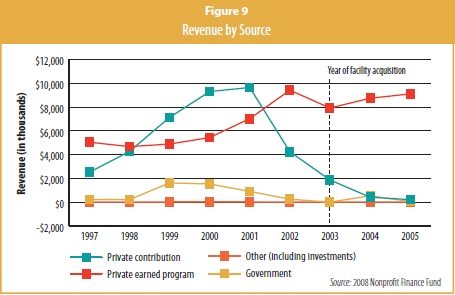
If two sources of funding are good, are three sources better?


FROM THE ARCHIVES
If two sources of funding are good, are three sources better?
We all need our critical observers to be good leaders. Enter the executive coach, an intervention that can be enormously useful in any size organization.
One doesn’t need to spin conspiracy theories about the Clintons to suggest that they might want to be careful about their financial and philanthropic connections.
Last month, Obama released a list of every — every! — earmark he had requested, successfully or not, in the federal budgets for Fiscal Years 2006 and 2007. In contrast, Hillary Clinton has not released her earmarks list, nor has she disclosed the names of contributors to her family’s and husband’s foundations or released her tax returns.
[April 15, 2008] In the subprime mortgage foreclosure fiasco, nonprofit organizations have stood out as relative successes compared to their counterparts in the for-profit financial sector and among federal government agencies. Every review I’ve seen of the affordable housing inventories of nonprofit community development corporations (CDCs) indicates minimal subprime mortgage foreclosure problems. Unlike the housing
Any organization that has burned through four CEOs in ten years and has been constantly criticized by legislators, the press, and the public for mishandling funds, misrepresentations in fundraising, and failure to perform its job effectively is an organization with serious problems—problems that cannot be solved by replacing top managers. Nor can an organization in
[April 9, 2008] This year is the 40th anniversary of the release of the Kerner Commission report. The Kerner Commission was officially the National Advisory Commission on Civil Disorders, chaired by the governor of Illinois, Otto Kerner. Nonprofits ought to think about the importance of this occasion for the sector, how far our society has
[April 8, 2008] One never knows quite how much to make of research that depends on self-reported surveys (i.e. what people say they think, say, or do as opposed to empirically verifiable and measurable statements or actions). And there are numerous other concerns as well. Does the survey represent a good cross section of the
Cohen Report | With billions in disposal income and a fertile mind for financial innovation, Pickens casts an increasingly large shadow over personal and corporate philanthropy. But is the impressive Pickens largesse matched with an equally impressive approach to innovative or ethical practice?
Cohen Report | In this issue of CR we were struck by one of the national nonprofit infrastructure organizations honoring T. Boone Pickens for his charitable endeavors. But who is Boone Pickens?
NPQ Spr 08 | The Nonprofit Quarterly understands, then, why the topic of leadership transition is of such interest to our readers. A leader’s departure is a pivotal moment in any organization’s life — that is why we have chosen leadership transition as the theme of our Spring edition.
Daring to go where others fear to tread, a California congressman asks tough questions about whether nonprofits provide what taxpayers expect to get for their money.