Does squeezing Connecticut’s nonprofit safety net undermine service delivery?
Withdrawn Capital Improvement Funds Worry Connecticut Nonprofits




Does squeezing Connecticut’s nonprofit safety net undermine service delivery?

Community activists may need to throw out many of the old ways of thinking about public-private collaborations in favor of more fluidity and agility. This article suggests the notion of collaborative windows of opportunity is more important (and potentially fleeting) than we may have previously assumed.
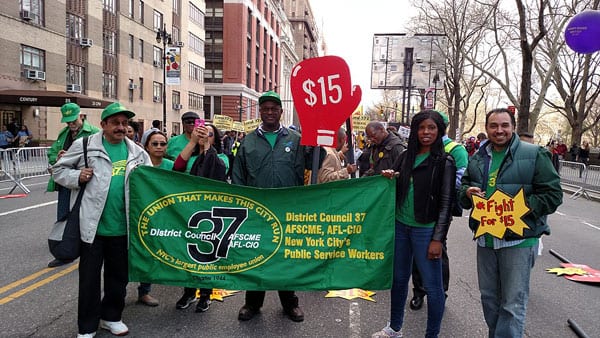
EveryStep, an Iowa nonprofit providing direct care to vulnerable people, shows leadership and wisdom, declaring it will no longer pay less than a livable wage to its dedicated workforce.

After a seven-day strike, Oakland teachers reach a four-year agreement with the city’s school district. As in Los Angeles, the contract includes a provision asking the school board to join their L.A. counterparts in calling for a statewide charter school moratorium.

Reasons why “special ed” doesn’t benefit students with disabilities abound; solutions do not.

Apparently, the ghost of Harper Lee is causing much angst for community theaters as they are threatened with legal action.

A recent national study reveals a growing interest in high school journalism programs in spite of continuing attacks against the media and job cuts at news outlets nationwide.

In an environment full of uncertainty, where significant advances can best be made through networks and partnership, leadership demands a higher level of self-awareness. Here, the great Meg Wheatley walks us through some practical questions nonprofit leaders should keep top of mind as we face the tumult.

A new study finds what it calls “movement capture,” when private funders use their influence to redirect the focus and energy of social movements.

By putting inclusivity at the forefront of discussions, and by ensuring that oft-unheard voices are heard, nonprofits can fully embrace and fulfill their charge as key stewards of an emerging inclusive economic development philosophy that values everyone.

In the Adirondacks, more than 10,000 business owners are nearing retirement. A local economic development nonprofit has created a new center to fill that gap.

The Honolulu Authority for Rapid Transit is the subject of a federal grand jury investigation after a $1.55 billion project swelled to $9.2 billion and suggestions that staff of a private engineering firm were given key roles, including budget oversight.