What happens every time social justice work is halted because it was funded as a gesture rather than a commitment to continuity? What is the cost of that stoppage?
In 2026, as this country prepares to mark 250 years since the signing of the Declaration of Independence, I find myself reflecting on monuments of a different kind—ones built with promise and then quietly abandoned. I should know. I spent nearly three years making Latino history visible inside the National Park System. That system then made me, and the work, invisible inside its own.
That is where the story ends, yet the experience of retrenchment and erasure is not unique to me—it is a pattern of behavior present within philanthropy. To understand that pattern, you must understand the moves that sets it in motion. Here, I offer my experience for insight into how it can unfold.
In 2026, as this country prepares to mark 250 years since the signing of the Declaration of Independence, I find myself reflecting on monuments of a different kind—ones built with promise and then quietly abandoned.
The Appointment
In 2011, I was introduced to the National Park Foundation. At the time, the Secretary of the Interior, Ken Salazar, had just created the American Latino Heritage Fund within the foundation, in his role as its Chair. The Fund’s mission was clear: to ensure that the American story being told through our national parks included the full breadth of Latino history. The story of people that were here since before the country’s founding.
It was a powerful moment. A genuine opportunity to make visible what had long been erased.
Salazar had also commissioned American Latinos and the Making of the United States, a theme study that identified Latino historic places across the country and provided a framework for monument and park recognition through the National Park Service’s Cultural Resources Office.
It was a powerful moment. A genuine opportunity to make visible what had long been erased.
My placement in the role, as executive director, was serendipitous at best. I had gone into a conversation on a Monday thinking they needed communications support for the Fund’s launch—not knowing they were looking for someone to lead it. By Wednesday, I was offered the role of founding executive director, and I said yes. Of course, I said yes! I was young, energized, deeply committed, and also, very ambitious. By Friday I was on a plane to a fundraising event in Miami, ready to dive into the work.
Real Work, Borrowed Ground
The work of the Fund was real. Beautiful. And rewarding on so many levels. I worked with colleagues inside the Department of Interior, the National Park Service and the Obama Administration.
As such, we worked to ensure the theme study documented the full breadth of Latino contribution to this country: the wars Latinos fought and died in, the science they advanced, the sports they transformed, the food and culture woven into the country’s identity from the inside out, the intellectual traditions stretching back centuries before the founding. It also identified dozens of additional historic sites and provided a framework for their recognition.
The work of the Fund was real. Beautiful. And rewarding on so many levels.
In the summer of 2012, in partnership with Hispanicize, we supported the American Latino Heritage Road Trip: five of the nation’s top Latino social media influencers on four regional journeys—spanning the Northwest, West, Southwest, Northeast, Mid-Atlantic, and the South. During their trips, they documented Latino history embedded in the National Park System, surfacing it for communities who had never been told it was theirs.
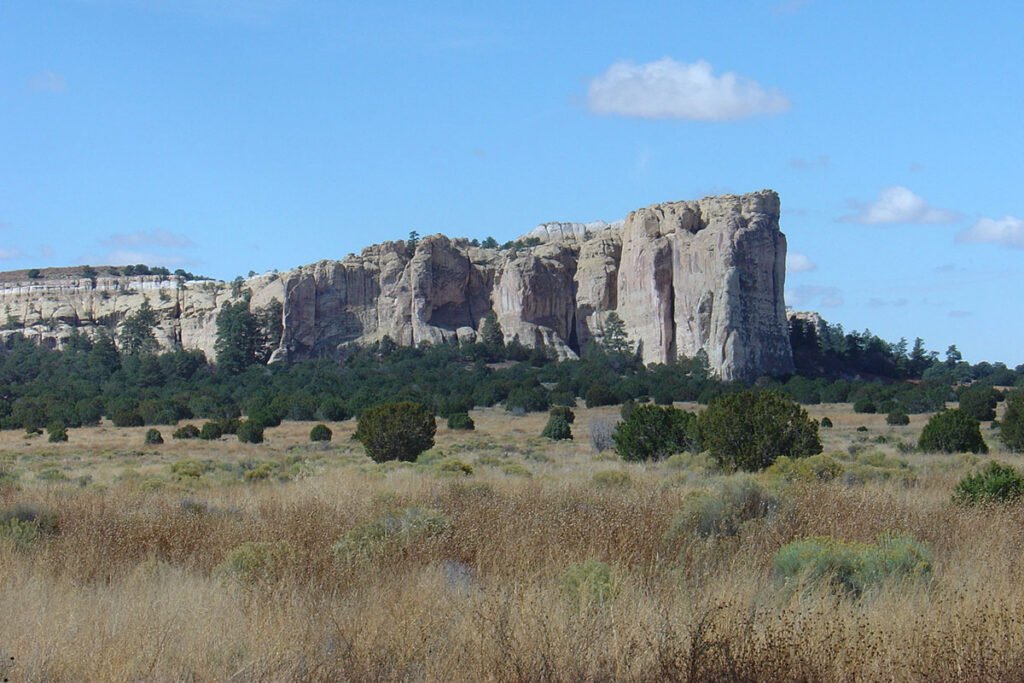
We followed their journey as they visited historic sites such as the Cabrillo National Monument in California, honoring Juan Rodriguez Cabrillo, the first European to set foot on the West Coast; Tumacacori National Historical Park in Arizona; Palo Alto Battlefield National Historical Park in Texas; San Antonio Missions; Gulf Islands National Seashore in Florida; De Soto National Memorial; and El Morro National Monument in New Mexico.
At the 2013 UnidosUS conference in Las Vegas, we brought Latino history and historic preservation directly into the largest Latino civil rights gathering in the country by hosting a panel featuring Dolores Huerta and Yale historian Dr. Stephen Pitti. We also supported a youth summit that brought Latino students, teachers, and mentors to Yakima Valley and Mount Rainier National Park. And we hosted Futuro Talks: Latino Power Symposium at the Organization of American States in Washington, D.C., which convened influential Latino leaders to connect civic power to the politics of who gets to tell America’s story.
These efforts shared a single intent: Latino history does not begin at the border. It is in the parks. It always has been.
That year, we also launched the American Latino Expedition, as a culmination of that vision. As part of this journey, elected Latino social media leaders traveled to national parks, documented their connection to Latino heritage, and shared that story with hundreds of thousands of followers. Olympic National Park surfaced the legacy of Juan de Fuca, a Greek navigator sailing under Spanish commission whose 1592 voyage led to the naming of the strait that now bears his name, credited by the NPS as possibly the first European to sight the Olympic Peninsula. Mesa Verde pressed deeper into ancestral territory, asking Latino visitors to recognize the Ancestral Puebloans, whose descendants include the Hopi, the Zuni, and the nineteen Pueblos of New Mexico, not as a separate indigenous story but as part of a continuum that flows through mestizo identity to this day. At Lake Powell, Rainbow Bridge National Monument stood as testament to a landscape woven through with indigenous and Spanish-colonial presence long before it was designated, managed, or named by the federal government.
As I reflect, I’ve learned that a fund inside a foundation is not an institution; therefore, independence is strained.
Three landmarks chosen for designation, because together they told a coherent story about who Latinos are in this country and always have been: the Cesar Chavez National Monument in California; Diego Rivera’s Detroit Industry Murals, testament to immigrant genius at the heart of American industry; and the home of Concha Meléndez in San Juan, Puerto Rico, honoring a literary scholar who spent her life preserving the Spanish-language intellectual tradition of the Americas.
All of this work was completed in under two years, not as symbolic gestures but the foundation of something that was meant to endure. This was the beginning of a much larger effort: ongoing historic landmark nominations, community-driven stewardship programs, long-term funding streams, and deep integration of Latino history across the entire National Park System.
The Work Was Real and Built to Endure. The Structure Was Not.
The Fund was created at a time when Latino heritage and Latino voters were both top of mind. The 2012 presidential election cycle was in full swing. Our history was useful—and so it was leveraged, but ultimately in service of a timeline that was never ours.
What looked like an investment functioned as extraction—a pattern many of us in the social sector are all too familiar with.
Sign up for our free newsletters
Subscribe to NPQ's newsletters to have our top stories delivered directly to your inbox.
By signing up, you agree to our privacy policy and terms of use, and to receive messages from NPQ and our partners.
As I reflect, I’ve learned that a fund inside a foundation is not an institution; therefore, independence is strained. When a fund remains housed within a foundation, the fund’s structure—whether by deliberate design or institutional convenience—serves a specific containment function, existing at the discretion of the parent foundation. In such cases, the fund’s lifeline is dependent on the parent foundation’s willingness to sustain it beyond the moment that created it. And that decision-making largely depends on whether the aims of the fund continues to align with the institution’s priorities. A system does not need malicious intent to produce the results that it does. It only needs incentives that make sustainability inconvenient once the moment passes.
What looked like an investment functioned as extraction—a pattern many of us in the social sector are all too familiar with.
It starts when someone in power sees your capacity as leverage along with your community’s cultural capital, and your ability to make a moment legible to people they cannot reach. As a result, they activate all of it for a purpose that is only partially yours, yet wholly in service of their own. You are given a platform, a title, and access to rooms you could not have entered alone. But you are not given what you would need to outlast the moment that needed you. The appointment feels like a beginning. The platform feels like infrastructure. The access feels like belonging. The believing is part of what makes you useful.
Abandoned in Place
After the 2012 elections passed, the limelight faded. Secretary Salazar resigned in January 2013. His successor, secretary Jewell came in during a time when political attention shifted toward the National Park Service’s 100th centennial and courting Millennials through outdoor recreation. As such, the qualities that had made me useful—the tenacity, the deep community relationships, the ability to move fast and build coalitions—were now inconvenient.
To try to preserve the deep collaborative work underway, I pushed to formalize the American Latino Heritage Fund’s structure, with hopes to create enough public accountability that its disappearance would require an explanation. I could not move fast enough. What followed was deliberate: The National Park Foundation brought in someone specifically tasked with winding down both the American Latino Heritage Fund and its older sister fund, the African American Experience Fund. They succeeded. By Spring of 2014, I realized I lost my ability to function in the role as I once did under the purview of Secretary Salazar. The work of the American Latino Heritage Fund had been stymied. And I left the Fund, and DC, by summer of 2014.
Four years later, in January 2018, nearly the entire National Park System Advisory Board resigned in protest after Interior Secretary Ryan Zinke refused to meet with them as required by law—effectively shutting down the federal mechanism for designating new historic landmarks. The bipartisan board comprised of academic scientists and former elected officials was established in 1935 to advise the National Park Service director and interior secretary on matters related to the national park administration and its programs. Among those who walked out was historian Stephen Pitti, who had stood on our stage at UnidosUS just years before.
Without the Advisory Board, no new Latino historic landmarks could be designated, leaving the roadmap the theme study had created—and its champions—with no clear path forward.
The vision that once powered the Fund’s efforts was stunted while the operating logic of sustaining the work only when convenient persisted across political administrations. Under Obama, the work was created, leveraged for an election cycle, and quietly wound down. Under Trump’s first term, the mechanism for designating new landmarks was shut down entirely alongside the resignation of most of the National Park System advisory board members. Under Biden, the Fund’s accomplishments were recycled as celebration without any restoration of the infrastructure that made them possible.
What the System Cannot Hold
Visibility without infrastructure is fragile. Strong infrastructure can only be built by reconciling with the truths that shape our full history—yet systemic injustice continues to impede that work.
Under executive order, the Trump administration has directed the National Park Service to remove from parks, websites, and gift shops any content deemed “equity-related.” Exhibits on slavery have been dismantled. Signs acknowledging the dispossession of Native peoples have been taken down. The theme study we commissioned—the most comprehensive scholarly reckoning with Latino contributions to American history ever undertaken within the federal system—sits unactivated. Its roadmap gathers dust while the administration moves systematically to narrow what the national park system is permitted to say about who built this country.
If America 250 becomes another monument-before-the-election, another round of visibility without infrastructure, appointment without investment, recognition without redistribution, we will have participated in our own instrumentalization again.
Continuity: The Work that Remains
The Declaration this country will celebrate in 2026 promised liberty and justice for all while withholding the infrastructure to make it real for everyone it named. Latino history today is still deployed the same way: erased by one set of political actors, selectively celebrated by another. Neither constitutes a transfer of real power.
Power is not proximity. Proximity feels like power from the inside. But it is borrowed. It belongs to whoever granted it. When the political wind shifts, proximity evaporates, and what was built inside it becomes available for someone else to claim, rebrand, or dissolve.
History treated as monument serves the moment that needs it. History treated as living inheritance serves the community across generations. The system prefers the monument. We need the inheritance.
If America 250 becomes another monument-before-the-election, another round of visibility without infrastructure, appointment without investment, recognition without redistribution, we will have participated in our own instrumentalization again.
The discipline this work requires is not the discipline of monuments. It is the discipline of continuity.
What the Fund experienced was power deliberately misallocated. Durable power would have meant an endowed program accountable not to the donor cycle or the election calendar, but to the community whose story it carries.
Our communities need the kind of continuity that does not depend on who is in the White House. The kind of continuity that builds a generation who know their own history before someone else decides which version to enshrine.
The work of the Fund was real. What it was built inside was a mirage, the appearance of investment and the architecture of continuity, without either. That is where this story ends. The next one must begin differently.