logo logo
Fund the truth. #Wethecivic giving banner
Donate
    • Membership
    • Donate
  • Social Justice
    • Racial Justice
    • Climate Justice
    • Disability Justice
    • Economic Justice
    • Food Justice
    • Health Justice
    • Immigration
    • LGBTQ+
  • Civic News
  • Nonprofit Leadership
    • Board Governance
    • Equity-Centered Management
    • Finances
    • Fundraising
    • Human Resources
    • Organizational Culture
    • Philanthropy
    • Power Dynamics
    • Strategic Planning
    • Technology
  • Columns
    • Ask Rhea!
    • Ask a Nonprofit Expert
    • Gathering in Support of Democracy
    • Hope in the Dark
    • Humans of Nonprofits
    • Inside the States
    • In Defense of Civil Society
    • The Myth of Heroic Leadership
    • The New Harvest Project
    • Notes from the Frontlines
    • Notes from the Long Arc
    • Reimagining Philanthropy
    • The Unexpected Value of Volunteers
    • We Stood Up
  • Newsletters
  • NPQ Online Events
    • Premium Webinars
    • Learn Out Loud
    • Partner Events
    • On Demand
  • Leading Edge Membership

Free to Speak, but Who Is Talking—The ED, The Board, or the Nonprofit Itself?

Marian Conway
January 30, 2018

January 26, 2018; New York Times

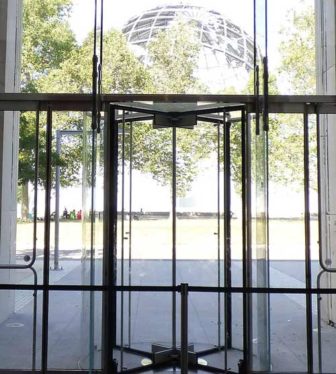
The Queens Museum of Art lives in a large building built for the 1939 New York World’s Fair on what was also the 1964–65 World’s Fair grounds in Flushing Meadows, Queens, within sight of the huge Unisphere landmark. As a community, Flushing is diverse: 67 percent Asian, 14 percent Latinx, 11 percent white, and 4 percent Black. It’s also a well-educated community, with 90 percent of the community ranging between having some college to graduate degrees. The museum’s mission statement says, in part:

The Queens Museum presents artistic and educational programs and exhibitions that directly relate to the contemporary urban life of its constituents while maintaining the highest standards of professional, intellectual, and ethical responsibility.

On the 501c3’s most recent Form 990, it listed income of $4.8 million with assets of $42 million.

The museum’s executive director, Laura Raicovich, announced on Friday that she was stepping down after serving three years. Raicovich has been walking the thin line between general policy support and specific advocacy in a very public way for her entire term. Last year, she closed the museum on Inauguration Day, to her board’s chagrin. (The museum suggested to the public that they make protest posters and banners on that day.) That summer, Raicovich cancelled and then reinstated an event sponsored by the Israeli government after the museum was accused of anti-Semitism. (There was an investigation, although the results have not been made public, and two officials from NYC demanded she step down.) And more recently, as part of a proposed collaboration with other organizations, Raicovich recently asked the board if the museum could become a sanctuary space to bring in social services for immigrants. She said, “It was made very clear to me that that was not something that was of interest.”

“There are so many big things that art and culture have to contend with that are so wrong in the world,” Raicovich said in a telephone interview with Robin Pogrebin of the New York Times. “That’s where my focus and energy need to be, and at the end of the day, I just felt that my vision and that of the board weren’t in enough alignment to get that done.”

Sign up for our free newsletters

Subscribe to NPQ's newsletters to have our top stories delivered directly to your inbox.

By signing up, you agree to our privacy policy and terms of use, and to receive messages from NPQ and our partners.

Racovich believes that advocacy plays a role in her position. She has tweeted her support for DACA and held events in people’s homes for members of the museum’s immigrant audience who were afraid to come back to the museum after the election of Donald Trump. Her Twitter page identifies her employer.

The museum’s board was complimentary in the announcement of Raicovich’s departure, pointing out that she had doubled the museum’s capacity to fundraise. The board chair, Mark J. Coleman, provided a statement announcing the immediate search for a replacement: “Laura brought a vitality and dynamism to her work, and was fearless in exploring new ideas and perspectives through art.”

“I’m very proud of what I was able to accomplish at the Queens Museum,” Raicovich said this week, “but I feel like I’ve had three successful years; it’s time to go to the next level and do something else and continue to focus in a way that maybe can’t be accomplished there.”

The Queens Museum of Art is not the only organization with an executive director who has faced decisions in which political conflicts have led to resignations. The executive director of the Walker Art Center in Minneapolis, Olga Viso, left after Dakota tribal leaders protested the exhibition of Sam Durant’s work, which was suggestive of the gallows.

There are multiple layers in the decision-making process when it comes to policy position statements, besides applicable state and federal nonprofit laws. When executive directors speak, it is important that they make it clear on whose behalf are they speaking: themselves, the community their nonprofit organization serves, or the organization and its board?—Marian Conway

Correction: An earlier version of this article referenced an article from the New York Times addressing the departure of the inaugural director of theInstitute of Contemporary Art at Virginia Commonwealth University. After communication from a representative of the ICA, that reference has been removed.


Our Voices Are Our Power.

Journalism, nonprofits, and multiracial democracy are under attack. At NPQ, we fight back by sharing stories and essential insights from nonprofit leaders and workers—and we pay every contributor.

Can you help us protect nonprofit voices?

Your support keeps truth alive when it matters most.
Every single dollar makes a difference.

Donate now
logo logo logo logo logo
About the author
Marian Conway

Marian Conway, the executive director of the NY Community Bank Foundation, has a Masters in Interdisciplinary Studies, Writing and a Ph.D. in Public Policy, Nonprofit Management. She has discovered that her job and education have made her a popular person with nonprofits and a prime candidate for their boards. Marian keeps things in perspective, not allowing all that to go to her head, but it is difficult to say no to a challenge, especially participating in change, in remaking a board. She is currently on eleven boards of various sizes and has learned to say no.

More about: Arts and CultureBoard GovernanceEquity-Centered ManagementNonprofit AdvocacyNonprofit News
See comments

Sidebar-WTC
You might also like
When Disruption Hits: Making Hidden Risks Visible to Meet the Moment and Move Our Missions Forward
Dax-Devlon Ross
The Boardroom Belongs to the Community
Kristin Lincoln
Boards Aren’t Broken—They’re Recruiting Exactly What They’re Built For
Daniel Student
Five Stories of Balance: What 250 Years of American Nonprofits Teach Us About Impermanence
Emily Ball Cicchini
Every Nonprofit Is a Climate Organization Now, Whether It Recognizes It or Not
Zane McNeill
How Nonprofits Helped Win Virginia’s Redistricting—and What It Means in a Post-Callais Landscape
Ann Lehman

Upcoming Webinars

Group Created with Sketch.
July 16, 2:00 pm ET

Readying for the 2026 Midterms

How 501(c)(3)s Can Educate and Advocate During this Election Season

Register
Group Created with Sketch.
August 13, 2:00 pm ET

Building Narrative Power for Equity and Solidarity

Register

    
You might also like
A series of five paper airplanes that start as a crumpled piece of paper and gradually straighten out to a flight-worthy paper airplane.
When Disruption Hits: Making Hidden Risks Visible to Meet...
Dax-Devlon Ross
A single yellow rubber duck standing out in front of many identical rubber ducks.
The Boardroom Belongs to the Community
Kristin Lincoln
Boards Aren’t Broken—They’re Recruiting Exactly What...
Daniel Student

Like what you see?

Subscribe to the NPQ newsletter to have our top stories delivered directly to your inbox.

See our newsletters

By signing up, you agree to our privacy policy and terms of use, and to receive messages from NPQ and our partners.

  • About
  • Advertise
  • Careers
  • Contact
  • Copyright
  • Donate
  • Funders
  • Editorial Policy
  • Media Relations
  • Privacy Policy
  • Submissions

We are using cookies to give you the best experience on our website.


Nonprofit Quarterly | Civic News. Empowering Nonprofits. Advancing Justice.
Powered by  GDPR Cookie Compliance
Privacy Overview

This website uses cookies so that we can provide you with the best user experience possible. Cookie information is stored in your browser and performs functions such as recognising you when you return to our website and helping our team to understand which sections of the website you find most interesting and useful.

Strictly Necessary Cookies

Strictly Necessary Cookie should be enabled at all times so that we can save your preferences for cookie settings.