logo logo
Fund the truth. #Wethecivic giving banner
Donate
    • Membership
    • Donate
  • Social Justice
    • Racial Justice
    • Climate Justice
    • Disability Justice
    • Economic Justice
    • Food Justice
    • Health Justice
    • Immigration
    • LGBTQ+
  • Civic News
  • Nonprofit Leadership
    • Board Governance
    • Equity-Centered Management
    • Finances
    • Fundraising
    • Human Resources
    • Organizational Culture
    • Philanthropy
    • Power Dynamics
    • Strategic Planning
    • Technology
  • Columns
    • Ask Rhea!
    • Ask a Nonprofit Expert
    • Gathering in Support of Democracy
    • Hope in the Dark
    • Humans of Nonprofits
    • Inside the States
    • In Defense of Civil Society
    • The Myth of Heroic Leadership
    • The New Harvest Project
    • Notes from the Frontlines
    • Notes from the Long Arc
    • Reimagining Philanthropy
    • The Unexpected Value of Volunteers
    • We Stood Up
  • Newsletters
  • NPQ Online Events
    • Premium Webinars
    • Learn Out Loud
    • Partner Events
    • On Demand
  • Leading Edge Membership

Unraveling Development: Your Donors’ Emotional Needs

Simone Joyaux
July 28, 2009

Top priority: Pay attention to the emotional needs of your donors.

Emotions are the decision-makers. Emotions trigger your decision about where to give gifts and whether to eat chicken or steak for dinner.

Neuroscience (thanks to MRIs) and psychological research prove it. Just ask Drs. Antoine Bechara and Dr. Antonio Damasio.

The direct mail industry, which spends millions on research, has identified seven emotions that move mountains of cash larger than the Himalayas. Here they are.

  • Anger (“This is wrong! Do something!”)
  • Exclusivity (“Me? You want me to join your special group of donors?”)
  • Flattery (“You’re absolutely right. I am special because I keep giving to you.”)
  • Greed (“I want more theatre in the community and giving to you makes sure great theatre stays.”)
  • Guilt (“I know polar bears are drowning because of my car and my poor recycling skills. I’ll feel better when I give to that environmental group.”)
  • Salvation (“My gifts make change and make the world a better place.”)

Let me illustrate these emotions for you.

In 2001, I founded the Women’s Fund of Rhode Island (WFRI). WFRI works to level the playing field for women and girls. Why did I found the Women’s Fund?

Because I’m angry that social injustice is a dominant force in the United States. Women are still paid less than men – for the same work. Women represent more than 50 percent of the U.S. population and a paltry portion of elected officials. In fact, the U.S. ranks 82nd in the world for the number of women in the national legislature, e.g., the U.S. Congress.

Sign up for our free newsletters

Subscribe to NPQ's newsletters to have our top stories delivered directly to your inbox.

By signing up, you agree to our privacy policy and terms of use, and to receive messages from NPQ and our partners.

I’m afraid of living in a community and world where so many people – women and people of color and gays and lesbians and those who are less affluent – are excluded.. I feel guilty because while I’m disadvantaged as a woman, I am a well-educated, heterosexual, white, affluent woman. I win on all counts except gender.

I’m flattered to be part of the exclusive group of women and men who fight for social justice in Rhode Island. I’m proud to be the founder of the Women’s Fund. And I believe that my work in philanthropy – both as a volunteer and a professional – is the reason why I exist. My passion for philanthropy is my salvation.

Think about one of your most meaningful gifts. What feelings prompted you to give? Talk with your donors. Ask them why they give and you’ll hear their interests and feelings.

Now take a look at your solicitation letters and your newsletters and all of your materials. Are the emotions there? If not, add some heart.

It’s your job to stroke the emotions of your donors and prospects. You trigger their emotions through the stories you tell and the accomplishments you produce.

Learn more in Tom Ahern’s books and free e-news.

Our Voices Are Our Power.

Journalism, nonprofits, and multiracial democracy are under attack. At NPQ, we fight back by sharing stories and essential insights from nonprofit leaders and workers—and we pay every contributor.

Can you help us protect nonprofit voices?

Your support keeps truth alive when it matters most.
Every single dollar makes a difference.

Donate now
logo logo logo logo logo
About the author
Simone Joyaux

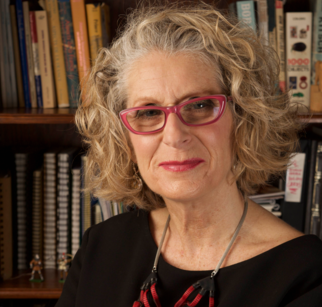
Simone P. Joyaux, ACFRE is recognized internationally as an expert in fund development, board and organizational development, strategic planning, and management. She is the founder and director of Joyaux Associates.

More about: FundraisingOpinionPhilanthropy
See comments

Sidebar-WTC
You might also like
Should the Board Be Involved in Setting the Annual Budget?
Jan Masaoka
Philanthropy for a Multiracial Democracy: How Investing in Pluralism Can Open the Aperture for Democracy Funders
Farai Chideya, Lyell Sakaue and Liz Jain
A Letter of Gratitude to Kim Klein and Stephanie Roth
angélique nguyễn green
Fundraising as Democracy: Honoring a Legacy, Claiming Our Moment
angélique nguyễn green
How Can Conservation Programs Better Connect to Farmers?
Jaycie Thomsen
The Mid-Year Gut Check: Are You on Track or In Denial?
Rhea Wong

Upcoming Webinars

Group Created with Sketch.
July 16, 2:00 pm ET

Readying for the 2026 Midterms

How 501(c)(3)s Can Educate and Advocate During this Election Season

Register
Group Created with Sketch.
August 13, 2:00 pm ET

Building Narrative Power for Equity and Solidarity

Register

    
You might also like
A board meeting takes place with a diverse group of board members sitting around a conference table in an office. There are papers with charts spread around the table.
Should the Board Be Involved in Setting the Annual Budget?
Jan Masaoka
Philanthropy for a Multiracial Democracy: How Investing in...
Farai Chideya, Lyell Sakaue and Liz Jain
A stylized black and white portrait of Kim Klein and Stephanie Roth, set against torn paper in lavender and mint green with small red accents.
A Letter of Gratitude to Kim Klein and Stephanie Roth
angélique nguyễn green

Like what you see?

Subscribe to the NPQ newsletter to have our top stories delivered directly to your inbox.

See our newsletters

By signing up, you agree to our privacy policy and terms of use, and to receive messages from NPQ and our partners.

  • About
  • Advertise
  • Careers
  • Contact
  • Copyright
  • Donate
  • Funders
  • Editorial Policy
  • Media Relations
  • Privacy Policy
  • Submissions

We are using cookies to give you the best experience on our website.


Nonprofit Quarterly | Civic News. Empowering Nonprofits. Advancing Justice.
Powered by  GDPR Cookie Compliance
Privacy Overview

This website uses cookies so that we can provide you with the best user experience possible. Cookie information is stored in your browser and performs functions such as recognising you when you return to our website and helping our team to understand which sections of the website you find most interesting and useful.

Strictly Necessary Cookies

Strictly Necessary Cookie should be enabled at all times so that we can save your preferences for cookie settings.