logo logo
Donate
    • Membership
    • Donate
  • Social Justice
    • Racial Justice
    • Climate Justice
    • Disability Justice
    • Economic Justice
    • Food Justice
    • Health Justice
    • Immigration
    • LGBTQ+
  • Civic News
  • Nonprofit Leadership
    • Board Governance
    • Equity-Centered Management
    • Finances
    • Fundraising
    • Human Resources
    • Organizational Culture
    • Philanthropy
    • Power Dynamics
    • Strategic Planning
    • Technology
  • Columns
    • Ask Rhea!
    • Ask a Nonprofit Expert
    • Gathering in Support of Democracy
    • Hope in the Dark
    • Humans of Nonprofits
    • Inside the States
    • In Defense of Civil Society
    • The Myth of Heroic Leadership
    • Notes from the Frontlines
    • Notes from the Long Arc
    • Reimagining Philanthropy
    • The Unexpected Value of Volunteers
    • We Stood Up
  • Newsletters
  • NPQ Online Events
    • Learn Out Loud
    • Leading Edge Webinars
    • Partner Events
    • On Demand
  • Leading Edge Membership

Powerful Philanthropist Steps Down—sort of—from SF Fine Arts Museums

Ruth McCambridge
July 27, 2016
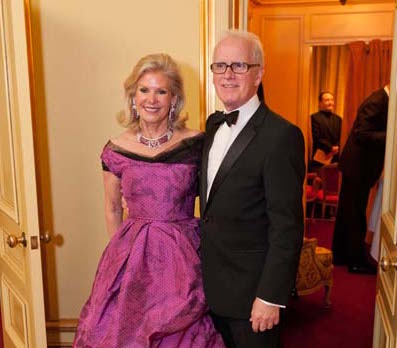
Dede Wilsey, Helgi Tomasson
San Francisco Ballet 2011 Opening Night Gala – Dede Wilsey, Helgi Tomasson / Viva Vivanista

July 25, 2016; New York Times

When the headlines screamed that Dede Wilsey was stepping down from her role as head of the board and CEO of the Fine Arts Museums of San Francisco, we could hardly believe it. Wilsey, who—to judge from photographs—arguably has a better formalwear wardrobe than anyone we’ve ever written about, has been making headlines for a while for her tendency to treat the museums’ assets as fully under her control. In 2014, she ordered almost a half-million dollars in severance for a former employee and husband of another employee known to do her plenty of favors. Presumably, in her mind, as board chair and CEO, she had that right, only presenting the board with the required resolution to sign after the fact.

Did we forget to mention that the Fine Arts Museums have a special provision that allows the board president to hold that office for life? In a 2013 article in Muckety, Wilsey was described as “something of a potentate,” as “having too much clout,” and at one and the same time the museums’ “savior and potential destroyer.”

Sign up for our free newsletters

Subscribe to NPQ's newsletters to have our top stories delivered directly to your inbox.

By signing up, you agree to our privacy policy and terms of use, and to receive messages from NPQ and our partners.

But then came the palace revolt. The DeYoung Museum’s CFO, Maria Gutierrez, accused the socialite of neglecting to get board approval before that severance package was cut despite telling her that she had it, thus placing Gutierrez in the bad position of cutting an unauthorized check. In return for her good citizenship, Gutierrez was immediately placed on leave. But the story does not end there, of course; Gutierrez has just been awarded a $2 million settlement on top of a severance package in return for her agreement not to bring a wrongful termination suit.

In the usual unsatisfying way of these statements about resignations in the midst of scandal, Fine Arts Museums spokesperson Ken Garcia told the San Francisco Chronicle that “after several years of serving as president and CEO, and with a competent director of museums in place, [Wilsey] believes it will serve the museums better for her to now focus on other areas where her skills and expertise will have a positive impact.”

The attorney general, who is still in the middle of an investigation into the situation, suggests that that the “for-life” provision for board leadership be removed. Nevertheless, Dede Wilsey isn’t really going anywhere; she remains on the board.—Ruth McCambridge


The work isn’t done. Neither is our commitment.

The challenges facing nonprofits aren’t going away. Neither can the journalism that informs, connects, and amplifies the sector.

Help NPQ keep this work free and accessible.

Give Today
logo logo logo logo logo
About the author
Ruth McCambridge

Ruth is Editor Emerita of the Nonprofit Quarterly. Her background includes forty-five years of experience in nonprofits, primarily in organizations that mix grassroots community work with policy change. Beginning in the mid-1980s, Ruth spent a decade at the Boston Foundation, developing and implementing capacity building programs and advocating for grantmaking attention to constituent involvement.

More about: Arts and CultureBoard GovernanceEquity-Centered ManagementNonprofit NewsScandals
See comments

Stuffing-1
You might also like
Why the good offers seem to go to others
Rhea Wong
The case for co-governance for public education
James Haslam, Leigh Kennedy, Mike Matsuda and Mike Woodward
Can a deck of cards interrupt bias in grantmaking?
Devyn Taylor
What the Met museum’s union victory reveals about nonprofit governance
Jason Collins
The Community Keeping African Cinema in Silicon Valley
Camilla Richardson
Nonprofit Boards Are Failing the Sector. Here’s How to Fix Them.
Aparna Rae

Upcoming Webinars

Group Created with Sketch.
December 3, 2:00 pm ET

After the Midterms

What’s Next for Nonprofits?

Register
Group Created with Sketch.
January 28, 2:00 pm ET

Democratic Staff Structures

Weaving Shared Leadership and Union Practice in Nonprofits

Register
You might also like
A woman of color looks into the camera with a serious expression. She is sandwiched by a white female and Asian female coworker.
Why the good offers seem to go to others
Rhea Wong
A Black, bald man (aprent) with glasses sits at a desk with a child with curly hair across from a brunette woman (teacher) with glasses. The three are in a brightly lit classroom.
The case for co-governance for public education
James Haslam, Leigh Kennedy, Mike Matsuda and Mike Woodward
“Flippin’ Logics Cards” identify eight “dominant logics,” or recurring assumptions and ways of thinking that can shape how reviewers interpret an application.
Can a deck of cards interrupt bias in grantmaking?
Devyn Taylor

Like what you see?

Subscribe to the NPQ newsletter to have our top stories delivered directly to your inbox.

See our newsletters

By signing up, you agree to our privacy policy and terms of use, and to receive messages from NPQ and our partners.

  • About
  • Advertise
  • Careers
  • Contact
  • Copyright
  • Donate
  • Funders
  • Editorial Policy
  • Media Relations
  • Privacy Policy
  • Submissions

We are using cookies to give you the best experience on our website.


Nonprofit Quarterly | Civic News. Empowering Nonprofits. Advancing Justice.
Powered by  GDPR Cookie Compliance
Privacy Overview

This website uses cookies so that we can provide you with the best user experience possible. Cookie information is stored in your browser and performs functions such as recognising you when you return to our website and helping our team to understand which sections of the website you find most interesting and useful.

Strictly Necessary Cookies

Strictly Necessary Cookie should be enabled at all times so that we can save your preferences for cookie settings.