In the 2026 midterm elections in the United States, nonprofit organizations are facing challenges as campaign financing has become a central issue. Opaque funding and new state-level donor privacy laws threaten both citizen participation and public trust in the electoral process.
Nonprofit organizations like OpenSecrets and Transparency International US have publicly expressed concern about the impact of dark money on elections and the new legislative pressures surrounding donor privacy. As Brennan Center for Justice reported, in the 2024 election cycle, dark money spending reached a historic record of $1.9 billion, which “has eroded accountability and Americans’ trust in the political process.”
Meanwhile, Transparency International US, argued that donor disclosure is essential for democratic integrity. As Justice Kennedy wrote in the 2010 Citizens United v. FEC decision, disclosure: “ensures voters are fully informed,” while the US Supreme Court acknowledged that in exceptional cases privacy must be protected to prevent harassment.
These statements highlight the paradox nonprofits face, demanding transparency in the political system while defending the confidentiality of their supporters.
Dark Money
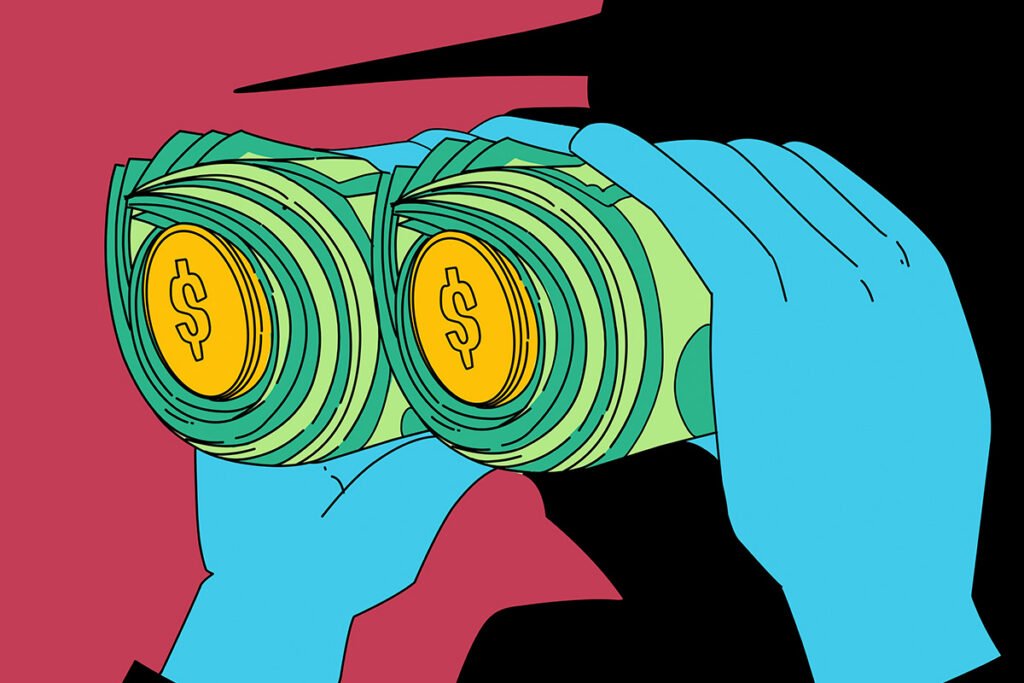
Organizations specializing in democratic governance, such as the Brennan Center for Justice, highlight that dark money spending has reached record levels in recent electoral cycles. The term dark money refers specifically to resources flowing into the political system through organizations that are not required to disclose the identity of their donors.
In practice, this means that large sums of money can influence campaigns and public decisions without citizens having access to information about who is financing those efforts. Billions of dollars are poured into campaigns without revealing the origin of those funds. This phenomenon undermines transparency and makes it difficult for voters to know who is truly behind candidates and ballot measures.
“The democracy community here has most recently rallied behind a pro-democracy bill called the Freedom to Vote Act, and the Freedom to Vote Act does a whole bunch of things to strengthen democracy, but it’s got a big chapter in there on campaign finance reform,” Scott Greytak, deputy executive director at Transparency International US, said to NPQ.
He explained that the bill’s central aim is to reinforce political equality under the principle of one person, one vote. To achieve this, it seeks to amplify the voices of small donors through public financing programs—where taxpayer funds provide candidates with a baseline budget—and matching systems like those in New York City and Washington, D.C., which multiply small contributions several times over.
These mechanisms, Greytak noted, are designed to give ordinary citizens a fairer chance to run for office, countering the dominance of wealthy individuals who can self-finance their campaigns.
“When there is no full transparency or disclosure, citizens are asked to participate in elections without complete information about the candidates.”
How Nonprofits are Responding
Since the Citizens United v. FEC ruling in 2010, the landscape of campaign finance in the United States has been fundamentally reshaped. The US Supreme Court’s 5–4 decision held that restrictions on independent political spending by corporations and unions violated the First Amendment’s protection of free speech.
By striking down limits established in the Bipartisan Campaign Reform Act, the Court effectively allowed these entities to spend unlimited amounts on political advertising and advocacy, as long as they did not coordinate directly with candidates. This ruling overturned earlier precedents and paved the way for the rise of Super PACs, which can raise and spend vast sums from wealthy donors and organizations.
As a result, billions of dollars in dark money—those funds whose sources are not disclosed—have streamed into elections, amplifying the influence of a small number of powerful interests and raising concerns about transparency, accountability, and the balance of democratic representation.
Growing public awareness could become a driving force for reform.
“Some of the ways that nonprofit organizations are confronting the influence of big money is through disclosure. That is why we try to pass transparency laws that would require those organizations to disclose—even in [an] ad itself—who their main funders are, how much they contributed, and, when they file reports with the government about those expenditures, who all of their major donors are,” Greytak said.
In conversation with NPQ, Brendan Glavin, director of insights at OpenSecrets, stated that the lack of transparency in campaign financing continues to undermine public trust in democratic processes. As he explained: “When there is no full transparency or disclosure, citizens are asked to participate in elections without complete information about the candidates—who supports them, where the funding comes from, what the motivations of their backers are, and what financial benefits they might gain.”
Sign up for our free newsletters
Subscribe to NPQ's newsletters to have our top stories delivered directly to your inbox.
By signing up, you agree to our privacy policy and terms of use, and to receive messages from NPQ and our partners.
In such circumstances, voters are left with little basis for informed decisions. The result, he warned, is an erosion of trust.
Asked about the future of campaign finance regulation, Glavin admitted that significant changes are unlikely in the short term. Yet he expressed cautious optimism: “There is more understanding and more information. We may not know exactly who some of these donors are—this dark money—but people increasingly recognize its presence and understand that it’s a problem,” he said.
And according to Glavin, growing public awareness could become a driving force for reform. “The more awareness we have, the greater the pressure will be to make changes. Over time, I’m optimistic we’ll achieve more transparency.”
Glavin also emphasized that campaign finance has historically followed cycles. Regulations are introduced, actors find ways to circumvent them, new rules are enacted, and the cycle repeats.
Tension Between Transparency and Privacy
At the same time, legislative pressure against nonprofits is intensifying. Bills have been introduced in 38 states that would require nonprofits to disclose the identity of their donors.
Such requirements could have a chilling effect: exposing donors to harassment or political retaliation and, consequently, discouraging civic engagement.
A report by the People United for Privacy Foundation confirms that this legislative wave extends nationwide. Among the most notable proposals are those in Arizona, which promote an “original source disclosure” model to force the revelation of the primary source of funds, and those in Montana, which seek to restrict the political participation of corporations and nonprofits.
These initiatives are presented as efforts to guarantee greater transparency, but organizations warn they could discourage civic participation. In contrast, states such as Nevada and North Carolina have chosen to strengthen donor privacy protections, passing laws that shield the identity of those who support civic causes.
This landscape reflects an ongoing political and legal battle in which the tension between transparency and privacy has become one of the central issues of the 2026 midterm elections. Supporters of disclosure argue that accountability requires knowing who finances political causes. Yet nonprofits warn that such requirements could have a chilling effect: exposing donors to harassment or political retaliation and, consequently, discouraging civic engagement.
Brian Miller, executive director of Nonprofit Vote, explained to NPQ that nonprofit organizations dedicated to monitoring electoral transparency and promoting civic participation face unique challenges under evolving state-level legislation.
Miller stressed that the vast majority of nonprofits engaged in voter education and registration operate under the 501c3 designation, which strictly prohibits partisan activity, and he cautioned against conflating these organizations with other types of nonprofits. “It’s really important that we separate out and not group the vast majority of nonprofits in with the kinds of nonprofits that a lot of these rules are being directed at,” he said.
According to him, recent legislation in states such as Arizona targets 501c4 organizations—which differ fundamentally from 501c3s. “To my understanding, all those rules are directed at 501c4 nonprofits, and 501c4s are a very different animal because they can endorse and oppose candidates for public office within limits,” he said.
These groups may allocate a portion of their budgets to political activity, though it cannot be their primary purpose.
The measures in states like Arizona are primarily designed to require disclosure of expenditures and donors within the 501(c)(4) and PAC sphere. Such efforts reflect a legitimate public interest; since campaign finance laws already mandate the publication of contributions to candidates, parties, and campaigns, this information is made publicly available precisely to ensure a degree of transparency in the democratic process.
In a context of growing political polarization and expanding digital spending on platforms with weaker transparency rules, nonprofit organizations must face the dual challenge of innovating in their monitoring methods while resisting pressures that could undermine their independence.