Nonprofit Quarterly (NPQ) has partnered with Counterstream Media to co-publish Peace & Riot’s latest issue—a collection of more than 20 voices exploring climate leadership on the frontlines, in communities, and in the culture. Read the full Peace & Riot issue here.
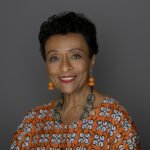
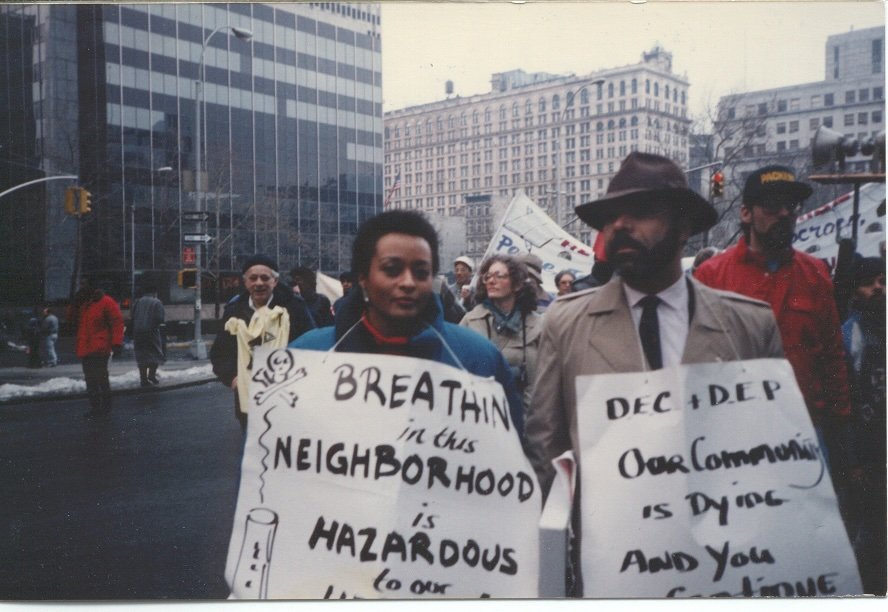
In the summer of 1986, New York City sited the North River Sewage Treatment Plant in West Harlem—a primarily lower-income, Black and brown neighborhood—after a wealthier, whiter neighborhood successfully said ‘no’ to it in their backyard. In a powerful act of democracy, a group of locals convened and together said enough, by way of their bodies blocking traffic on West Side Highway on Martin Luther King Jr. Day in 1988. Peggy Shepard was one of them.
That protest became the foundation for WE ACT for Environmental Justice, which Shepard co-founded with Vernice Miller-Travis and the late Chuck Sutton. Shepard, along with her fellow organizers at WE ACT, honed a strategy that would become one of the defining strategies of the Environmental Justice Movement: find the immediate harm, prove the impact, organize frontline communities, and use every tool and tactic available until the harm is remedied and justice is restored.
Peggy Shepard is an “OG” in the Environmental Justice Movement, and after nearly four decades in the trenches of these fights at the city, state, and federal level, she’s still just as committed. I felt her commitment to be like a fire that burns on to keep her people’s right to self-determination in the face of systemic injustice alive.
In that same spirit of self-determination, WE ACT is currently renovating a brownstone to house the WE ACT Environmental Justice Center, which will support its educational and movement-building initiatives. And it recently launched WE ACT 4 Change, a 501(c)(4) organization, to better support their political allies. Our conversation reminded me that our self-determination has never been, and will never be, freely offered: it must be continuously fought for, defended, and enshrined.
This conversation has been edited for length and clarity.
Nikayla Jefferson: The story of your work is one of a long and fierce commitment to the movement for environmental justice. Through wins and setbacks, ups and downs, you’ve remained such an abiding defender of our right to clean air, to clean water, to a livable community. When you think back on your life, was there a moment when this commitment to environmental justice really arose in you?
Peggy Shepard: I think that kind of commitment is something that is nurtured. Prior to getting into politics in the 80s, I was a journalist. I worked at the Indianapolis News as a reporter. Then I moved to New York and was working for Time Life Books. And then I started freelancing and working at magazines. During that time, I started to have more agency in terms of what we should be writing about.
But once you begin working in politics, it’s very different. When I joined the Jesse Jackson campaign, I was meeting with all kinds of folks in the village. I got to hear about neighborhood issues, understand neighborhood issues. Living in New York or living in a city, that’s one kind of life. But really being involved in neighborhood and community life—what happens and how it happens and why it happens—is very difficult. It’s a whole different level of engagement with your community environment, with community residents, and with the policies that shape the lives of people who live there.
After the Jesse Jackson campaign was over, Bill Lynch, the campaign manager, said, “Do you want to be out front with your ideas? Or behind the scenes?”
He suggested I run as a Democratic District leader in West Harlem, which is a party position. It’s elected, and it’s not paid. It allows you to open an official Democratic club and have members. And so that’s what I did. Bill knew that the Central Harlem people, the Charles Rangels, you know, the Percy Suttons—the established old guard—were going to want to fight. I mean, they don’t want some young person they don’t know coming in, right? And so he put me together with a young man named Chuck Sutton, who was Percy Sutton’s nephew. He felt that putting me together with Chuck would help protect me to a certain degree. And so we ran as male and female Democratic District leaders, and we won. We started a Democratic club with members. We held our meetings in a large public housing project in West Harlem. We began to work on housing issues.
“Once you are in sync with the built environment—when it’s more than just where you put the key in the door and stay, but where you have neighbors and work to do, where you’re concerned about the trees on the block and the air quality—that changes your relationship.”
But then the city was going to reopen the Marine Transfer Station in our neighborhood, which meant that all of Manhattan would once again be bringing their garbage up to West Harlem and shipping it down the Hudson River to a landfill on Staten Island. So we would be accepting all the garbage along with the pollution from the diesel garbage trucks. We organized the community to ensure that the West 135th Street Marine Transfer Station would remain closed, and that every neighborhood had to take responsibility for its own garbage.
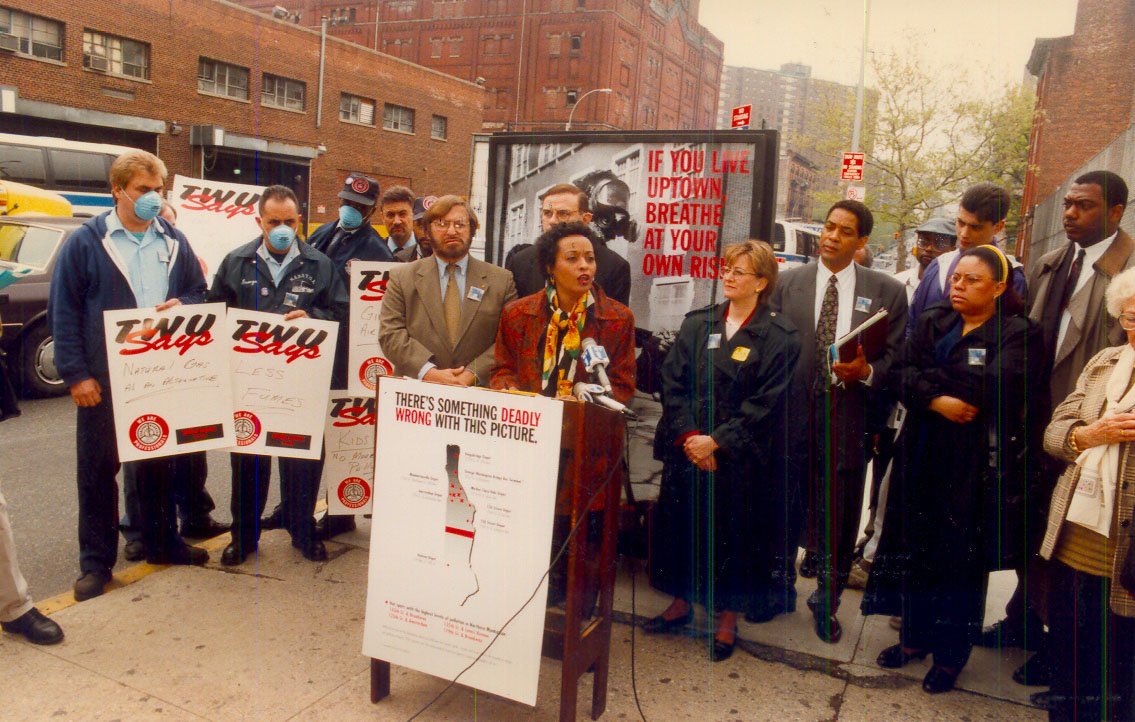
We also looked at the fact that, out of the seven bus depots in Manhattan, six were in Northern Manhattan. So that meant we had thousands of diesel buses driving up and down our streets. And if you know anything about New York, you know that buses are how people really get around! Every few minutes, there’s a bus. And every morning they’d be idling in front of these bus depots, most of which were across from residential buildings.
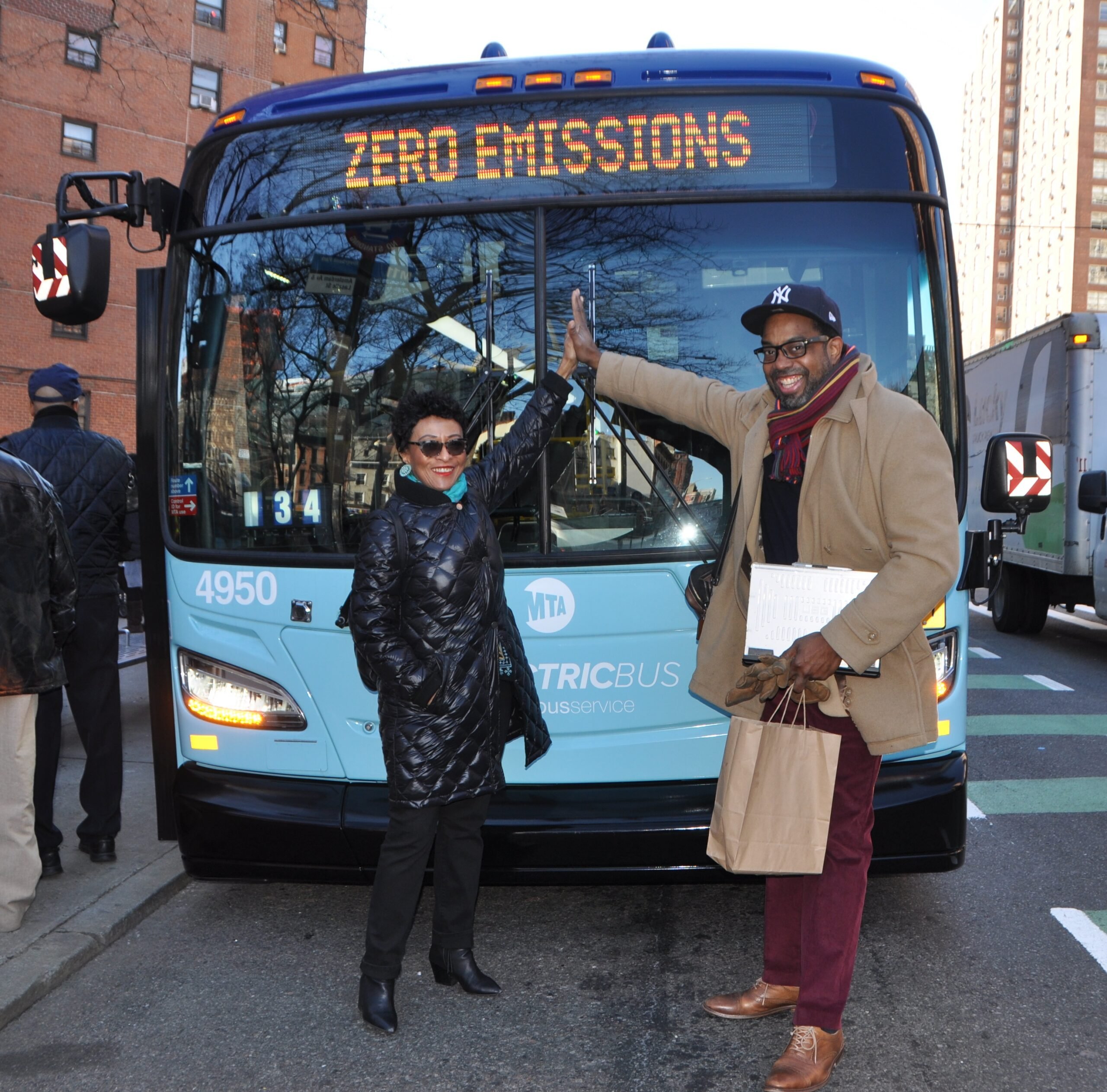
We began to work on the issue of closing some of the bus depots. Eventually, we filed a Title VI Complaint against the Metropolitan Transportation Authority. That was a civil rights lawsuit, and we won. They closed one depot—and we managed to get one transformed into the first LEEDS-rated bus depot in North America. Thanks to our Dirty Diesel campaign, every bus is hybrid—and now they are starting to roll out all-electric buses. So those were some of our earlier battles.
Nikayla Jefferson: Hearing your arc here, I’m also hearing a parallel story about your heart. I hear in your story how a love for these places, for West Harlem, really grew and bloomed across time. Is that right?
Peggy Shepard: Once you are in sync with the built environment—when it’s more than just where you put the key in the door and stay, but where you have neighbors and work to do, where you’re concerned about the trees on the block and the air quality—that changes your relationship. Especially when you’ve got a public health statistic that shows that it’s mostly Black people and Black kids with asthma.
I’ve got to mention as well that my father is a doctor. I grew up thinking about health. All to say, I think you begin to have an affection for place when you realize that the health of your environment and your neighborhood and your neighbors impacts your life and who you are.
Nikayla Jefferson: As part of preparing for our interview, I was reading the 17 Principles of Environmental Justice from 1991. The first one—Environmental justice affirms the sacredness of Mother Earth, ecological unity and the interdependence of all species, and the right to be free from ecological destruction—really underscores the truth of interdependence. And I hear you speak to that truth.
Peggy Shepard: I’m trying to think now, because you’re mentioning the principles and I was there. So I ran in 1980, I started WE ACT in 1988. And in 1991, we had the First National People of Color Environmental Leadership Summit, and the EPA started the Environmental Justice Advisory Board in 1993. I was appointed to that, and it was a board of all environmental justice people.
“It definitely changes your life a lot. Because now you’ve partnered with something bigger than yourself.”
With that kind of work, you’re meeting people from all over the country you’ve never met. We’re doing the same kind of work, but it’s slightly different because the issues change from community to community. And so being a part of the EPA’s Environmental Justice Advisory Board was really a central force. Because now you’re able to work together and to think together.
After we developed the Principles of Environmental Justice at the Leadership Summit in 1991, we went home with a renewed commitment. I always say renewed commitment because it’s different when it’s not just you. You go back feeling stronger, because now you know that this wasn’t just some one-off thing in a community. Everybody’s experiencing it. You know these people, they’re interesting, they’re innovative, and it creates a whole new part of your life.
Nikayla Jefferson: It sounds like a community.
Peggy Shepard: It definitely changes your life a lot. Because now you’ve partnered with something bigger than yourself. You know, you started out talking about movement. Well, movement is made up of diverse voices and perspectives, and it’s not just about you, but together you’re stronger.
Nikayla Jefferson: Thank you for sharing that. I feel really privileged to hear so much of the history of the Environmental Justice Movement in this country from someone who was there. So thank you for that.
I want to transition to the present. The national Environmental Justice Movement really has been on a wild ride these past few years. We’ve had these major historic wins, and then these devastating, cruel setbacks. So I’m curious to hear, given your movement wisdom and experience, how is your heart and mind making sense of these last few years?
Sign up for our free newsletters
Subscribe to NPQ's newsletters to have our top stories delivered directly to your inbox.
By signing up, you agree to our privacy policy and terms of use, and to receive messages from NPQ and our partners.
Peggy Shepard: Once you’ve been engaged in electoral politics, you realize that shit can happen. You know, we’re in a bad place. And it means we’ve got to all pull together. We’ve got to stay strong, and we’ve gotta start developing a strategy for what we’re going to do when he’s out. How do we get some of these protections back? It can’t wait another ten years to happen.
And it’s not just about getting things back. We also need to improve upon past problems. So there’s a real opportunity to be better, which means, in part, pulling together. One way to do that is to bridge the work of white environmentalists and that of the Environmental Justice Movement. I’m on a number of boards for large white national environmental groups. And why is it important? Because it gives you the opportunity to know what other groups are doing, to know who’s doing what.
I don’t know that that makes me any different than any of my other colleagues, but, you know, I’m intent on being a strong environmental justice organization that is sustained over the generations. That requires building a business, a nonprofit business. And to do that, you not only need to have movement cred and neighborhood bonds, but also a willingness to work and have agency at a national level. That’s why we established a Federal Policy Office in Washington, DC in 2012.
Nikayla Jefferson: I want to pivot to the future now. From your perspective, where does the Environmental Justice Movement go from here?
Peggy Shepard: We’ve got to come together around strategy. How do we get the EPA and Department of Transportation to focus on the issues that matter to our communities? Who are some of the people we need to be supporting to move into leadership?
I think we’re now at a stronger point in the movement where we can come together and say, okay, WE ACT is gonna take on this, and Bev and Bob, you’re going to take on this, so that we can utilize the limited resources we have in the best way. Everything can’t be addressed at once. So what are the priorities that we’ve got to get done?
Nikayla Jefferson: How does democracy fit into this for you? What’s the relationship between environmental injustice and democracy?
Peggy Shepard: If you can vote, you have a say. You have an experience to relate. And to me, that’s democracy. It’s important to ensure that our voices are represented and that our people are in the room. We need to be able to reach out to our communities to ensure that we know what their needs are.
We also need to adapt. We have AI, we have new things happening, which means that we have to think about strategies and programs to deal with issues that we haven’t had to deal with before.
“Democracy doesn’t actually happen at a big level. Democracy happens on the block. It happens in neighborhoods.”
Democracy doesn’t actually happen at a big level. Democracy happens on the block. It happens in neighborhoods. For instance, the first thing we would do in terms of developing a strategy after Trump is have community meetings. I mean, that’s the first thing that I would do before I start meeting with other environmental justice groups. I would find out what people in my neighborhood, in Harlem, in New York City, are feeling.
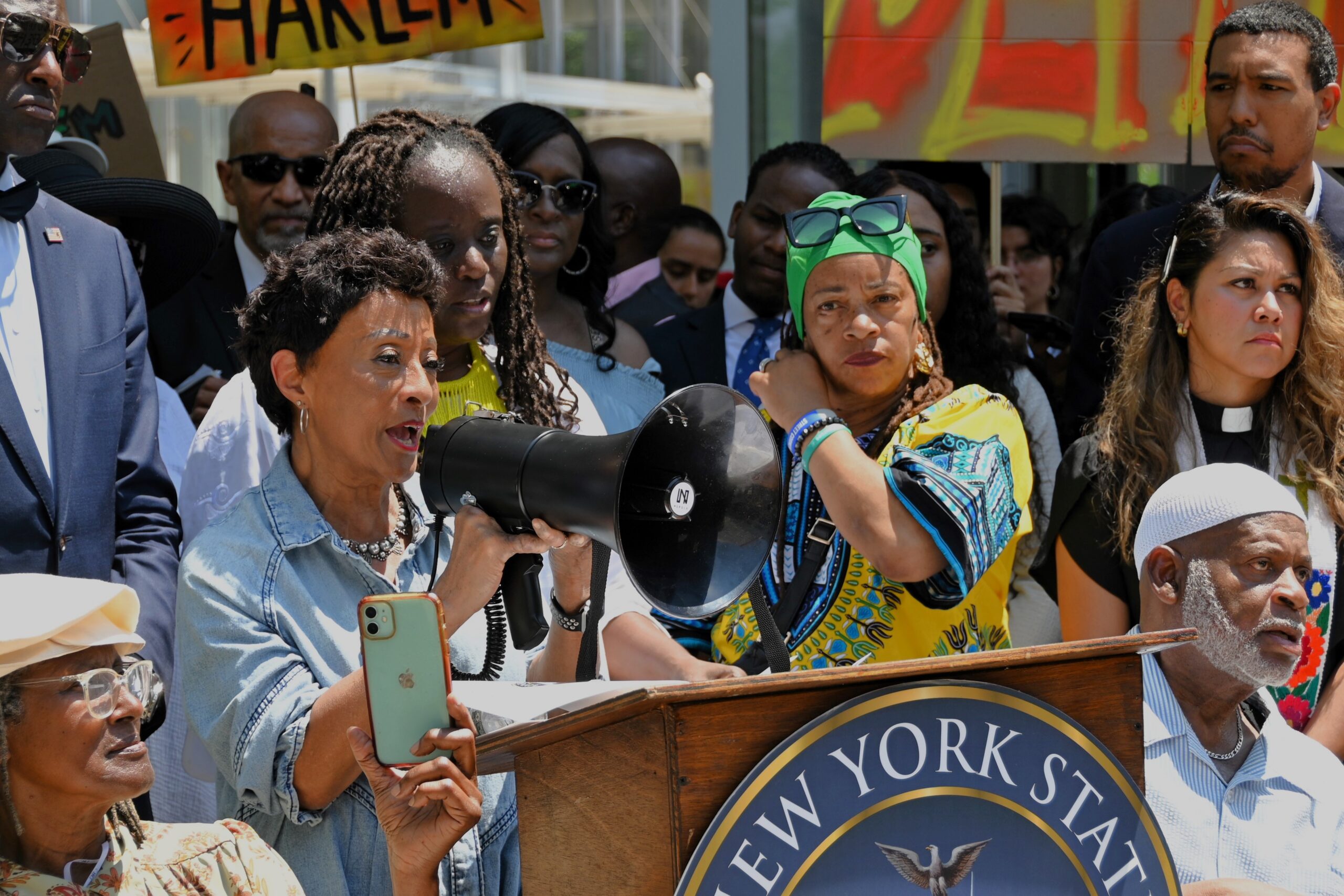
To me, that’s where democracy happens. It happens at the community and neighborhood level. And you start with those voices and those concerns. I mean, the Environmental Defense Fund and the Natural Resources Defense Council aren’t sitting around thinking about the Marine Transfer Station in Harlem. They’re thinking about whether the overall national air quality is better. And that’s a good thing to think about. But there’s only some of us who are thinking about what happens across the street, where the air quality may not have improved along with the national average.
And that’s how we have created democracy with a small “d” at the community level. By raising those voices and giving those voices priority at the city and national level, we can build a better democracy block-by-block.
Nikayla Jefferson: I feel like so much of the conversation is around democracy in the biggest sense, so I really appreciate you turning our attention to the way that democracy can be practiced in our day-to-day lives.
Peggy Shepard: Thank you. Think about all those small decisions that your city council or your state is making. They’re all boring and they cover a million issues of sewers and whatever. But all of those small and impactful decisions require opinions. It requires people coming and telling their elected officials, you need to do this. That’s democracy. It’s hundreds and hundreds of policies, many of them supported by regular people.
Nikayla Jefferson: So when I ask, where do we go from here, I hear you saying, start with where you are.
Peggy Shepard: We’ve got to start with the neighborhood, if you’re talking about environmental justice. We’re going to start with what’s happening across the street.
And I mean, environmental justice is about people of color. We already know that people of color, because of racism, are living in some of the most impacted, distressed, and disenfranchised communities. So if we’re making decisions about communities without including the folks in those communities, there is no democracy. One of the goals of the Environmental Justice Movement should be to include and elevate their voices.
Nikayla Jefferson: Oh, I love this. I just want to snap, snap, and snap.
Peggy Shepard: When you go knock on somebody’s door—that person may not be the person who’s coming out to all the rallies. They might not know that their voice could be heard until somebody knocks on their door and asks them what do you need?
“We all have a vote, we all have an opinion, and some people—because of racism, because of poverty—they don’t think they have anything that’s worth being said or that anybody wants to hear it. And so there’s got to be those of us who are knocking on those doors, pulling them out and saying, what do you need?”
We all have a vote, we all have an opinion, and some people—because of racism, because of poverty—they don’t think they have anything that’s worth being said or that anybody wants to hear it. And so there’s got to be those of us who are knocking on those doors, pulling them out and saying, what do you need?
Nikayla Jefferson: I hear the heartbreak of that and I hear the love of it too.
Peggy Shepard: I mean, why would you have kids in Harlem dying three times the rate as a kid living downtown? Or swimming in waters that are polluted or still have lead in their home? So, as we talk about the future, we have to think about what we’ve lost. Because now we know what didn’t work. And understanding what we could’ve done differently helps us move forward with greater clarity and focus.
I don’t know what’s left to say, but I think I’ve been very lucky to have had the opportunity to work with so many committed, wonderful people around the country. If I hadn’t engaged in the Environmental Justice Movement, that never would have happened. I might not have had the impact in my community. I just feel very lucky to have had the opportunities to do this kind of work.
Nikayla Jefferson: I really appreciate the gratitude that you’re leaving us on. The work is really lucky to have you.