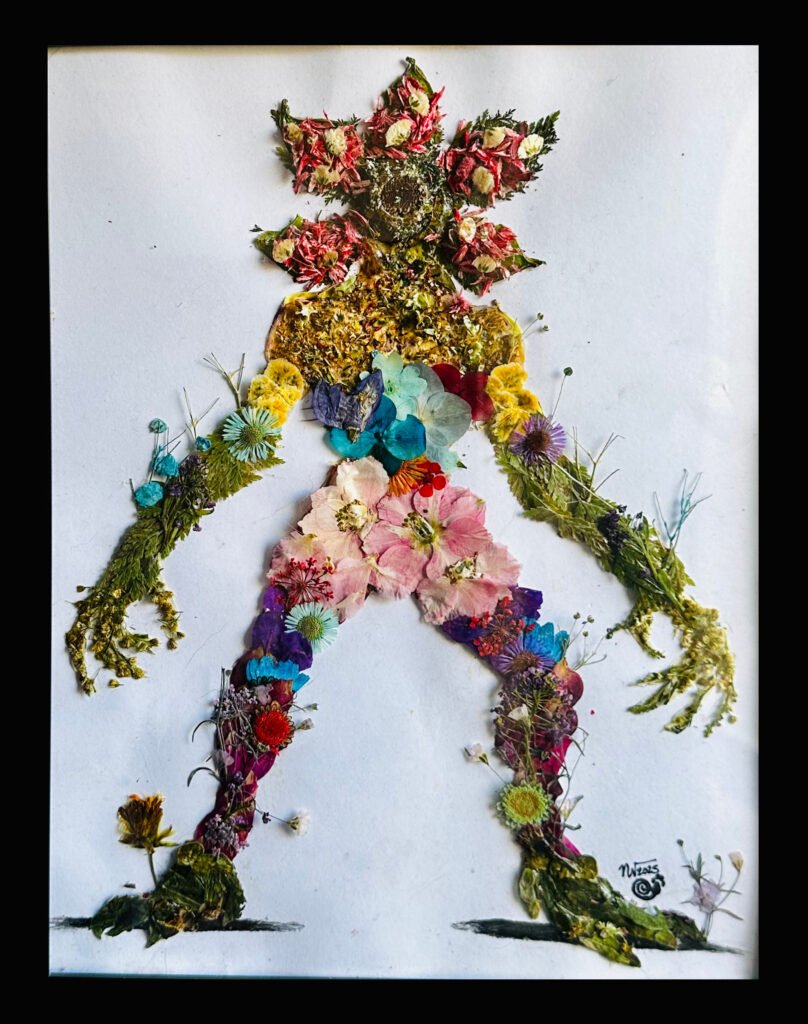
Flowers in the Bones emerged from reflections on grief, illness, love, and the communities that sustain us through uncertainty. Created through oshibana, the Japanese art of pressed flowers, the piece holds the tension between fragility and endurance. The preserved flowers become a record of what has been carried, lost, and loved.
Flowers in the Bones honors the people who have carried me, the people I carry in return, and the possibility that love itself can be a civic practice.
What remains when systems, credentials, and promises fail to hold us? Again and again, I return to the same answer: people. Village. Care. The quiet acts of devotion that help us survive.
Sign up for our free newsletters
Subscribe to NPQ's newsletters to have our top stories delivered directly to your inbox.
By signing up, you agree to our privacy policy and terms of use, and to receive messages from NPQ and our partners.
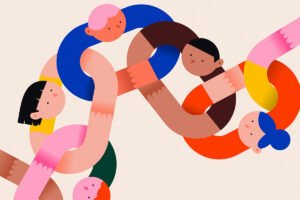
For me, this work highlights a version of “America” that is often overlooked. It is the story of mutual aid, chosen family, disability community, friendship, and interdependence. It is the story of people finding ways to care for one another despite grief, isolation, violence, and uncertainty.
The flowers represent those relationships. Tender, imperfect, and resilient. They remind me that survival is rarely an individual achievement. We bloom because others help keep us alive. Flowers in the Bones honors the people who have carried me, the people I carry in return, and the possibility that love itself can be a civic practice.