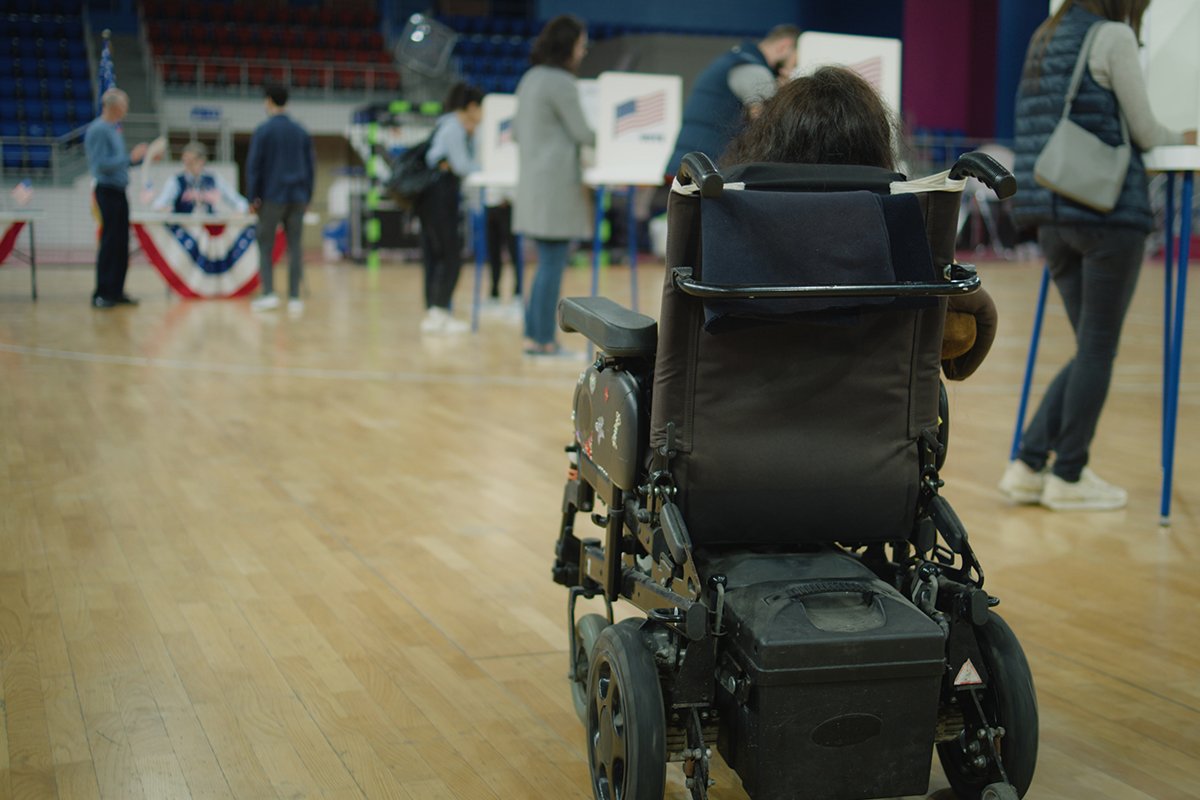
As the United States celebrates its 250th anniversary, Americans will once again hear the familiar stories about the nation’s foundations. It will highlight the Founding Fathers, the constitutional conventions, Congress, the courts, and the institutions that helped shape the nation. Yet a crucial part of that democratic story will remain overlooked.
It’s unfortunate to say that many of the democratic freedoms Americans celebrate today did not survive because state institutions consistently protected them. Rather, they survived because generations of Black Americans built, defended, and sustained democratic life when the nation itself failed to do so. From abolition and Reconstruction to the civil rights movement and beyond, Black communities repeatedly organized the institutions that transformed democratic ideals into lived realities.
Democracy has always depended more on the engagement of the people it serves to progress and uphold the policies that allow for a healthy, thriving society.
For more than two centuries, Black churches have functioned as civic infrastructures of democratic survival. Before terms such as “community development,” “social impact,” “civic engagement,” and even “nonprofit” entered the American vocabulary, Black congregations were feeding families, funding schools, organizing mutual aid networks, supporting labor struggles, providing healthcare, sheltering vulnerable community members, and teaching the skills necessary for political participation in their communities.
If democracy is measured by elections but also whether people possess the resources, relationships, and collective power necessary to participate in public life, then Black churches have been among America’s most consequential democratic institutions.
This history matters. It corrects the historical record, and it challenges how we think about democracy itself, which is too often associated with government institutions alone. But democracy has always depended more on the engagement of the people it serves to progress and uphold the policies that allow for a healthy, thriving society.
Democracy After Emancipation
The end of slavery did not deliver freedom in any meaningful institutional sense. Formerly enslaved people entered a society that offered legal emancipation but little economic security, political protection, or social support. Federal promises were unevenly enforced, while Reconstruction faced relentless resistance from White supremacists. In response, Black communities built their own institutions, and at the center of this effort stood the Black church.
Harvard historian Professor Evelyn Brooks Higginbotham, one of the leading scholars of African American religious history, argues that Black churches became far more than places of worship. While they affirmed the “oneness and equality of humanity,” they also became the civic spaces where Black Americans gathered to deliberate, organize, and imagine a more democratic future. In a society that systematically excluded Black people from schools, libraries, banks, hospitals, polling places, and countless other public institutions, churches became sites of both protest and institution building. With what Higginbotham describes as a “cautionary hope” in America’s democratic promise, Black congregations founded schools, businesses, newspapers, and anti-slavery and anti-racist organizations that enabled communities not merely to survive exclusion but to reshape the nation’s democratic life.
Churches became schools, political meeting halls, employment networks, mutual aid societies, credit associations, and community centers. They were among the few spaces where Black Americans could organize independently of White control and develop the collective capacity for political action.
During Reconstruction, Black churches helped mobilize newly emancipated citizens into political life. Between 1868 and 1876, more than 2,000 Black Americans held public office across the South. Many emerged from church leadership networks where they had already developed experience in public speaking, administration, fundraising, and coalition building.
Historians have described Reconstruction as America’s first experiment in interracial democracy. In many ways that experiment depended not only on constitutional amendments and federal legislation but also on the institutions Black communities built to exercise their newly won rights.
By the late nineteenth century, Black churches had become some of the largest Black-owned institutions in the United States. Denominations such as the African Methodist Episcopal Church and the National Baptist Convention built schools, colleges, orphanages, publishing houses, charitable organizations, and social service networks that reached millions.
When sociologist W. E. B. Du Bois described the Black church as “the social center of Negro life in the United States” in his seminal book, The Souls of Black Folks, he was describing an institution that functioned as the backbone of its community. For example, when governments failed to provide services, churches organized them. When violence threatened political participation, churches coordinated resistance, and when economic exclusion restricted opportunity, churches created alternative support systems.
In many ways, the Black church became the nation’s first large-scale community development organization and nonprofit ecosystem decades before the modern nonprofit sector formally existed.
The Freedom Infrastructure of the Civil Rights Era
The civil rights movement is often remembered through iconic leaders and landmark legislation. Less attention is paid to the infrastructure that made those successes possible. Successful movements require institutions capable of mobilizing people, money, information, trust, and long-term commitment, and the Black churches supplied all of these.
The Montgomery Bus Boycott offers one of the clearest examples of this. Yet this model of church-led civic action did not begin in Montgomery. Higginbotham points to an earlier transportation boycott in 1850s New York, when the Reverend James W. C. Pennington and the First Colored Presbyterian Church organized resistance after a Black woman was forcibly removed from a streetcar. A century before Montgomery, Black churches were already defending equal access to public life through collective action.
Its success depended on churches coordinating an alternative transportation system, managing a year-long fundraising operation, and sustaining volunteer labor and community morale under sustained legal and physical intimidation.
Sign up for our free newsletters
Subscribe to NPQ's newsletters to have our top stories delivered directly to your inbox.
By signing up, you agree to our privacy policy and terms of use, and to receive messages from NPQ and our partners.
Churches also functioned as leadership pipelines. Before Black Americans could vote freely, congregations offered opportunities to chair committees, manage budgets, mediate conflicts, run campaigns, and build coalitions across difference. Many ministers, lawyers, and organizers were shaped first in church governance structures that demanded these skills.
Across the South, churches hosted voter registration drives, freedom schools, mutual aid initiatives, and community organizing efforts. During Freedom Summer, many churches became centers of civic education and democratic participation despite intimidation and violence.
The rights Americans now view as fundamental, including voting protections, equal access to public accommodations, and expanded political representation, were secured through movements that relied heavily on the infrastructure that Black church provided.
For generations, Black churches functioned as schools of democracy, where civic engagement was encouraged and refined. Eventually, what was cultivated in those spaces was borrowed and applied to what we know today as the nonprofit sector, particularly those organizations that advocate for equity and justice for all who reside within the United States.
The Institutions We Celebrate and the Ones We Forget
That infrastructure did not dissolve when the legislation passed . Today, Black churches remain among the most active community development institutions in the neighborhoods where they operate. Research by the National Congress for Community Economic Development and subsequent studies have documented congregations running affordable housing developments, operating federally qualified health centers, anchoring workforce development programs, and administering financial literacy initiatives.
American democracy has depended on organizations willing to provide care when governments would not.
During the COVID-19 pandemic, Black churches mobilized food distribution, vaccine outreach, and emergency financial assistance at a scale that public health infrastructure could not replicate in those communities. They did it quickly because the trust was already there—and because the organizational capacity had never been dismantled.
The nonprofit sector has a term for organizations that hold community trust, provide flexible wraparound services, maintain long term institutional presence, and step in when government retreats. It calls them anchor institutions. By this definition, Black churches have been anchor institutions for two centuries.
For funders and nonprofit leaders, this raises a direct question: If these institutions have demonstrated organizational resilience, community trust, and civic impact across two hundred years of American history, what would it mean to resource them accordingly?
The contradiction at the heart of America’s 250th anniversary is difficult to ignore. The nation celebrates democratic triumph while many of the institutions that sustained democratic participation remain underfunded, politically marginalized, and largely absent from public memory. America’s democratic infrastructure was never built primarily by government institutions; it was built by community institutions, and Black churches remain one of the clearest examples.
Churches are often discussed primarily as religious organizations rather than civic organizations, and in that way, their contributions are frequently depoliticized and reduced to questions of faith. That framing obscures an essential reality: American democracy has depended on organizations willing to provide care when governments would not.
That reality remains visible today. Black churches continue to rank among the most trusted institutions within Black communities and remain significant sites of voter mobilization, disaster response, charitable giving, community development, and social service delivery.
The question now is whether or not philanthropy will fund them, trust them, and learn from them.
The history of Black churches reveals a lesson that extends far beyond religion. Higginbotham argues that the history of Black churches is ultimately a history of “cautious hope” communities that believed in the democratic promise of the United States while building the institutions necessary to survive its failures. That lesson remains just as relevant as the nation commemorates its 250th year. Democracy is not maintained primarily through constitutions or moments of national celebration. It is maintained through everyday acts of collective care.
As the United States reflects on 250 years of democratic history, perhaps the most important question is not how democracy was founded. It is how democracy survived. The nonprofit sector spends considerable energy searching for models of civic resilience. Those models already exist. They have existed for two centuries, in congregations that fed, organized, educated, and mobilized communities that government abandoned.
The question now is whether or not philanthropy will fund them, trust them, and learn from them.