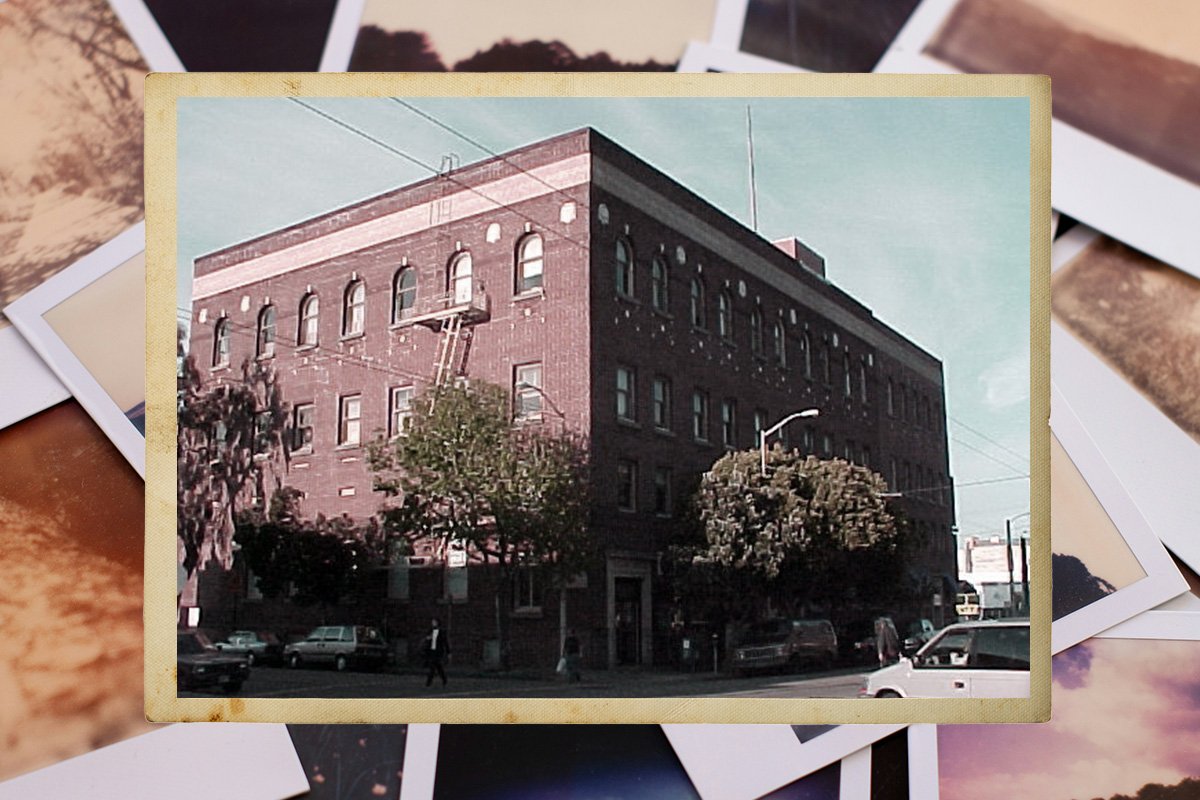
Located on 16th Street at Capp is a seemingly normal-looking red brick-laid building that has been sold for the second time this decade. The San Francisco Labor Temple, also known as the Redstone Building, is a Mission District landmark built more than a century ago with rich historical ties to labor unions, nonprofits, community groups, activists, and artists. The recent sale of the building comes after an unsuccessful effort by nonprofits and the community to purchase it.
But the sale of this building represents more than just the loss of a beloved building. The sale of the Redstone building represents a broader challenge that communities across the nation face: what happens when nonprofits and civic organizations can no longer retain ownership of the very spaces that make civic life possible? As commercial property prices continue to rise, mission-driven organizations are left having to compete with private investors for scarce real estate.
The story of Redstone is more than one of preservation. It raises questions about whether civil society has the tools to retain ownership of the physical spaces that enable democratic participation.
Why Redstone Matters
Built in 1914 by the San Francisco Labor Council, the SF Labor Temple held its grand opening on February 27, 1915. During its peak era in the 1940s and 1950s, the building was home to 20 employees and was the organizing hub for more than 130 unions. At one point, a 1916 Union Directory listed 54 unions that used the building for their meetings, including wagon drivers, butchers, blacksmiths, cigar makers, sail makers, janitors, and more. Designed to support workers, the building also provided social amenities like billiard tables, medical care, family spaces, and reading rooms.
The story of Redstone is more than one of preservation. It raises questions about whether civil society has the tools to retain ownership of the physical spaces that enable democratic participation.
The temple garnered a place in the spotlight for its role in the 1934 San Francisco General Strike, during which labor leaders coordinated citywide work stoppages from that building. The effort from these leaders resulted in improved workers’ rights. But Redstone didn’t stay a central hub for unions. By 1968, the influence of labor unions had begun declining, and the Labor Council sold the building with only 10 unions remaining. The building was renamed the Redstone and slowly transitioned into a community hub with tenants in the arts and nonprofit spaces.
The building is home to an ambitious labor mural project organized by the Clarion Alley Mural Project, funded by a grant from the Creative Work Fund. It features murals on labor themes like the 1934 general strike, the organization of Chinese garment workers, and the career of Dow Wilson of Painters Local 4.
In 2019, during the first modern sale, the affordable housing developer Mission Economic Development Agency (MEDA) tried to purchase the building to preserve the historic arts and social services hub. MEDA spokesperson Christopher Gil had said at the time that the goal was to “preserve the three-story landmark as a permanent center for cultural resources, while maintaining affordable rents for all current tenants.” However, the property was sold to Lakeside Investments despite a community rally and petition. The buyer had renovated portions of the building into office space but was unsuccessful.
This year, the building was sold to a private group of investors tied to San Francisco-based Graymark Capital for $7.1 million.
Sign up for our free newsletters
Subscribe to NPQ's newsletters to have our top stories delivered directly to your inbox.
By signing up, you agree to our privacy policy and terms of use, and to receive messages from NPQ and our partners.
The Growing Ownership Problem for Civil Society
Redstone’s story is not entirely unique. Across the nation, commercial property prices are climbing, and private equity now owns a larger share in the real estate sector. For example, commercial real estate investment activity is expected to increase by 16 percent in 2026 to $562 billion. This means nonprofits are competing with private buyers for the spaces they once occupied. The tenants of Redstone experienced this firsthand.
Andrew Smith, CEO of the Lab, a nonprofit artist-centered space that occupies about 7,000 square feet in the Redstone and was part of the community effort to purchase the building, revealed the trouble with competing against private buyers.
This means nonprofits are competing with private buyers for the spaces they once occupied. The tenants of Redstone experienced this firsthand.
“We put in a total of three letters of intent for the building, and none were accepted,” Smith said in a San Francisco Chronicle article. Smith said that groups offered a price that was “fair market value.” He said the trouble was that the seller wanted to close faster and believed a private buyer could do so. This is the trouble that many organizations face. They might have the means to fundraise operating funds, but very few have the capital needed to retain ownership of their spaces. For example, a Portland nonprofit had to sell its six-acre Parkview campus to a for-profit buyer because it struggled to pay creditors. While slightly different from Redstone, this challenge is felt by nonprofits across the country.
Civic Space Is Infrastructure, Not Overhead
Nonprofit facilities are often viewed as expenses to be managed, but they are really assets that need to be protected. These buildings, like Redstone, create places where relationships are built, coalitions are formed, and residents can participate in civic life. A building like Redstone operates as civic infrastructure in the same way that a library or town hall does. Sociologist Eric Klinenberg argues that civic infrastructure or physical spaces like Redstone shape a community’s capacity for democratic participation. A study from New York University’s Institute for Public Knowledge and Gehl Studio echoes this perspective that public community spaces help communities thrive. As Klinenberg notes, “Too many cities and towns treat social infrastructure as a luxury, when in fact it is essential for community, democracy, and civic health.”
For nonprofits to succeed in keeping their physical spaces, they should recognize that ownership is an investment in mission delivery.
While private investors might be treating civil infrastructure as an expense, others are rethinking how real estate is approached. For example, the Community Arts Stabilization Trust (CAST) worked alongside MEDA to explore pathways to community ownership. The mission of organizations like MEDA and CAST is to show that real estate can be a tool for preserving the ecosystems of nonprofit organizations.
What the Sector Can Learn
Redstone is unlikely to be the last case unless the nonprofit sector starts treating ownership as part of its mission. The sale of the historic building underscores the need for proactive approaches that enable nonprofits to compete with private investors long before a property goes to market. Because nonprofits lack access to standard private equity capital, they’ll need to take a different approach, such as partnering with organizations like CAST that specialize in preserving nonprofit spaces in the real estate market. Nonprofits can start looking at integrating property ownership into their financial strategies. One example of a nonprofit doing this is Africatown Community Land Trust. For nonprofits to succeed in keeping their physical spaces, they should recognize that ownership is an investment in mission delivery.
The loss of the Red Stone Labor Temple is not just a landmark San Francisco story. It’s a reminder that when nonprofits lose their physical spaces, the communities also lose the places where civic life takes root. As it becomes harder for nonprofits to access real estate alongside private investors, it is clear that preserving spaces requires new financing models and a deeper understanding of property as civic infrastructure.