logo logo
Fund the truth. #Wethecivic giving banner
Donate
    • Membership
    • Donate
  • Social Justice
    • Racial Justice
    • Climate Justice
    • Disability Justice
    • Economic Justice
    • Food Justice
    • Health Justice
    • Immigration
    • LGBTQ+
  • Civic News
  • Nonprofit Leadership
    • Board Governance
    • Equity-Centered Management
    • Finances
    • Fundraising
    • Human Resources
    • Organizational Culture
    • Philanthropy
    • Power Dynamics
    • Strategic Planning
    • Technology
  • Columns
    • Ask Rhea!
    • Ask a Nonprofit Expert
    • Gathering in Support of Democracy
    • Hope in the Dark
    • Humans of Nonprofits
    • Inside the States
    • In Defense of Civil Society
    • The Myth of Heroic Leadership
    • The New Harvest Project
    • Notes from the Frontlines
    • Notes from the Long Arc
    • Reimagining Philanthropy
    • The Unexpected Value of Volunteers
    • We Stood Up
  • Newsletters
  • NPQ Online Events
    • Premium Webinars
    • Learn Out Loud
    • Partner Events
    • On Demand
  • Leading Edge Membership

Charities Should Disclose How They Invest Their Assets for Social Responsibility

Rick Cohen
May 29, 2014

Investment

May 28, 2014; The Guardian

The headlines last year about Comic Relief weren’t very funny when it became known that the charity fundraising show tried to squelch a BBC Panorama episode that revealed Comic Relief’s investments in guns, alcohol, and tobacco companies. The BBC initially killed the episode at the reported behest of Comic Relief, but the uproar was enough to get the program aired after all and to force a response from Comic Relief, which said that it would like to make more socially responsible investments, but wanted better guidance from the UK’s Charities Commission.

After an internal investigation, Comic Relief in the end generated a new ethical investment policy, but Asheem Singh, the director of public policy at the Association of Chief Executives of Voluntary Organizations (ACEVO), asks, “What about the rest of the UK’s charities and social enterprises? Are they confident that they know how their organizations invest their reserves, their deposits or their pension funds? […] Are many charities investing in alcohol, arms or tobacco?”

Sign up for our free newsletters

Subscribe to NPQ's newsletters to have our top stories delivered directly to your inbox.

By signing up, you agree to our privacy policy and terms of use, and to receive messages from NPQ and our partners.

While acknowledging the concerns of some that charities should try to get solid returns on their investments, Singh says, “It’s clear that, in an age of global capitalism, investments in good causes—or at least not in bad ones—are a key part of a charitable mission.” He notes that the Charity Commission has published a guidance document acknowledging that ethical investment can be part of a charity’s overall investment portfolio.

There are obvious complexities for nonprofit administrators here, ranging from the knowledge and expertise that one must have to make sound, ethical investment decisions, and the difficulty of making judgments about the social impacts of specific investment options. Nonetheless, the Comic Relief issue—precipitated by a Comic Relief trustee, Duncan Bannatyne, who discovered that his charity was parking its reserves with gun, alcohol, and tobacco makers and distributors—is quite relevant to U.S. charities, regardless of their size.

  • In the U.S., there are efforts, as reported here, to get large nonprofits such as universities to divest from fossil fuel firms, private prison operators, companies with bad labor rights track records, and firms that do business with Israel’s occupation of the West Bank. It is entirely legitimate to ask what charities of all kinds, not just colleges and universities, do with the investment of their reserves and fund balances. We would guess that many nonprofits might be surprised and nonplussed by what they might find about their own investments.
  • Some nonprofit advocates fret that by pursuing a regime of socially responsible investment, charities are risking a strong return on investments that could be used to further their charitable missions. To the contrary, there has been a significant growth of social investment funds whose returns sacrifice little if anything when compared to other conventional investments, much less guns, alcohol, and tobacco. The list includes Calvert, Domini, Pax, Parnassus, and several others.
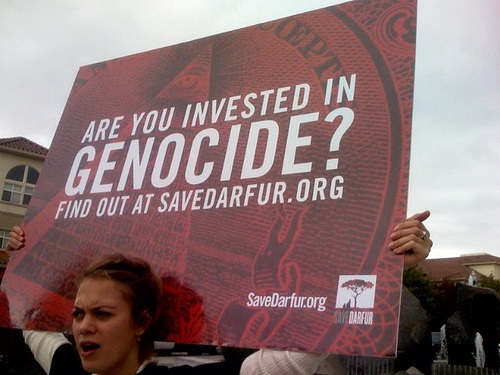
  • It is next to impossible to research the investments of most charities based on the chaotic, incoherent, meant-to-deter presentation of investments on Form 990s. While GuideStar is able to present much information about nonprofit revenues and expenditures and the Foundation Center presents good information about foundation grants and increasingly about PRIs, there’s no good source that compiles and sorts information in an accessible manner about how nonprofits, big or small, invest their charitable assets. It’s time to make that information open to reasonable review by the those members of the public who might be concerned whether charitable assets are being devoted to less than charitable investment priorities.

It’s not a joke for Comic Relief or U.S. charities. The issue of how nonprofits in the U.S. deploy their investment assets is studiously ignored in most commentaries on charity ethics, responsibility, and accountability. It’s worth serious discussion here in Nonprofit Quarterly and in meetings and convenings of operating nonprofits and grantmaking foundations.—Rick Cohen


Our Voices Are Our Power.

Journalism, nonprofits, and multiracial democracy are under attack. At NPQ, we fight back by sharing stories and essential insights from nonprofit leaders and workers—and we pay every contributor.

Can you help us protect nonprofit voices?

Your support keeps truth alive when it matters most.
Every single dollar makes a difference.

Donate now
logo logo logo logo logo
About the author
Rick Cohen

Rick joined NPQ in 2006, after almost eight years as the executive director of the National Committee for Responsive Philanthropy (NCRP). Before that he played various roles as a community worker and advisor to others doing community work. He also worked in government. Cohen pursued investigative and analytical articles, advocated for increased philanthropic giving and access for disenfranchised constituencies, and promoted increased philanthropic and nonprofit accountability.

More about: AccountabilityEquity-Centered ManagementFinancial ManagementNonprofit NewsPhilanthropySocial Enterprise
See comments

Sidebar-WTC
You might also like
“Change, Not Charity”: The Rise of Progressive Philanthropy
David Callahan
The Myth of Heroic Leadership Is a Justice Issue
Brooke Richie-Babbage
Philanthropy for a Multiracial Democracy: How Investing in Pluralism Can Open the Aperture for Democracy Funders
Farai Chideya, Lyell Sakaue and Liz Jain
When Disruption Hits: Making Hidden Risks Visible to Meet the Moment and Move Our Missions Forward
Dax-Devlon Ross
How Can Conservation Programs Better Connect to Farmers?
Jaycie Thomsen
How America’s Independence from England Revolutionized US Philanthropy
Amanda Moniz

Upcoming Webinars

Group Created with Sketch.
July 16, 2:00 pm ET

Readying for the 2026 Midterms

How 501(c)(3)s Can Educate and Advocate During this Election Season

Register
Group Created with Sketch.
August 13, 2:00 pm ET

Building Narrative Power for Equity and Solidarity

Register

    
You might also like
A sign on the side of a building reading, “Let’s Change”
“Change, Not Charity”: The Rise of Progressive...
David Callahan
A lone red rubber duck, positioned in front of a mass of yellow rubber ducks.
The Myth of Heroic Leadership Is a Justice Issue
Brooke Richie-Babbage
Philanthropy for a Multiracial Democracy: How Investing in...
Farai Chideya, Lyell Sakaue and Liz Jain

Like what you see?

Subscribe to the NPQ newsletter to have our top stories delivered directly to your inbox.

See our newsletters

By signing up, you agree to our privacy policy and terms of use, and to receive messages from NPQ and our partners.

  • About
  • Advertise
  • Careers
  • Contact
  • Copyright
  • Donate
  • Funders
  • Editorial Policy
  • Media Relations
  • Privacy Policy
  • Submissions

We are using cookies to give you the best experience on our website.


Nonprofit Quarterly | Civic News. Empowering Nonprofits. Advancing Justice.
Powered by  GDPR Cookie Compliance
Privacy Overview

This website uses cookies so that we can provide you with the best user experience possible. Cookie information is stored in your browser and performs functions such as recognising you when you return to our website and helping our team to understand which sections of the website you find most interesting and useful.

Strictly Necessary Cookies

Strictly Necessary Cookie should be enabled at all times so that we can save your preferences for cookie settings.