Over the past several years, repair has become one of philanthropy’s defining ideas. Foundations are investing in healing initiatives, nonprofit organizations are developing restorative frameworks, and civic institutions are asking what it will take to repair the harms that have shaped communities across generations. The shift is significant because it reflects a growing recognition that justice cannot end with acknowledging harm. If we are serious about building a more equitable future, we must also confront what it means to repair the relationships, institutions, and conditions that harm has fractured. Yet beneath many of these conversations is an assumption that deserves closer examination, as though repair is something we have yet to invent, as though communities have been waiting for institutions to discover the model that will finally make healing possible.
For Black women that assumption has never reflected reality, because repair has long been an everyday practice rather than an emerging framework. Long before philanthropy adopted the language of repair, Black women were building systems that enabled communities to navigate instability when institutions either excluded them or failed them altogether. Throughout US history, Black women organized mutual aid societies, established schools and educational networks, founded civic organizations, preserved family and community histories, redistributed resources, and created spaces where people could grieve, organize, learn, celebrate, and imagine together.1 These efforts did not emerge because Black women possessed an extraordinary capacity for sacrifice or because care somehow came naturally to them. Instead, they emerged because communities repeatedly encountered institutions that were either unwilling or unable to meet their needs, which necessitated the creation of systems capable of carrying what formal structures would not.

The history of Black women’s organizing illustrates this point well. According to Paula Giddings, during the late nineteenth and early twentieth centuries, Black women’s clubs established schools, libraries, settlement houses, childcare initiatives, voter education campaigns, and mutual aid networks at a time when segregation systematically denied Black communities access to public resources. Their work was rooted in a simple but profound understanding: communities could not afford to wait for institutions to become equitable before responding to immediate needs. They built what was missing, strengthened what already existed, and created structures capable of carrying generations forward. Although they would not have described their work using today’s language of repair, that is precisely what they were practicing. They were repairing the consequences of exclusion while creating conditions under which Black communities could continue to learn, organize, and flourish.
Therefore, the question is not whether cultures of repair exist but why the people who have been building them for generations remain consistently overlooked, underfunded, and misunderstood. Part of the answer lies in how we define infrastructure. When most people hear the word, they imagine roads, bridges, hospitals, schools, transportation systems, or broadband networks because these are the investments societies intentionally build, maintain, and fund. Infrastructure is associated with permanence, public value, and collective dependence. Yet communities also rely upon infrastructures that cannot be measured in miles of pavement or square feet of construction. Sociologist Eric Klinenberg argues in his book Palaces for the People that communities depend just as deeply on what he calls social infrastructure: the relationships, organizations, and shared spaces that determine whether people can connect, solve problems together, and respond collectively during moments of crisis. Black communities have long understood this principle in practice, knowing that while roads help people move, relationships help people survive.2
Community Building Starts in… Well, Communities
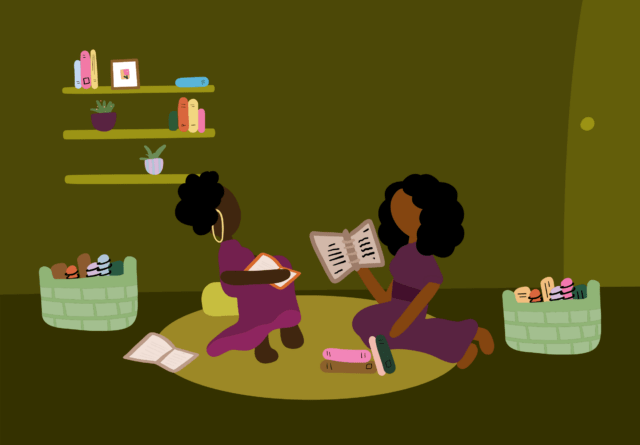
If you ask almost any Black woman where she first learned what community looked like, she is unlikely to begin with a government agency, a nonprofit organization, or a grant-funded initiative. She is far more likely to tell you about a grandmother’s kitchen where neighbors gathered after church, a beauty salon where information traveled faster than the evening news, a church basement where families organized around problems no one else seemed interested in solving, or an elder whose stories filled in the gaps left by textbooks and official archives. Those spaces taught people how to belong to one another. They became places where responsibility was shared rather than individualized, where knowledge moved across generations, and where communities learned that their greatest source of stability often came from one another long before outside institutions arrived. We often attribute this work to care, volunteerism, or community engagement, but those descriptions dramatically understate what is actually taking place because these are not simply acts of generosity; instead, they are systems that absorb institutional failure while making collective life possible.
That failure of recognition becomes especially visible when we turn to cultural work. Storytelling is often treated as something that happens after the important work is finished, as though organizing, advocacy, policy campaigns, and movement building come first, while archives, oral histories, exhibitions, films, and community storytelling simply preserve what has already happened. Black communities have rarely had the luxury of separating those things because storytelling has never simply documented movements. It has protected histories that institutions ignored, preserved community knowledge before it disappeared, created language for experiences that had long gone unnamed, and helped communities understand themselves beyond the violence they endured. Scholars of community archives argue that archives are not neutral repositories of historical material but places where communities preserve their own histories, shape collective memory, and challenge dominant narratives about whose lives are considered worthy of remembrance. Rather than existing alongside repair, culture work has long been one of the ways community repair has been practiced.
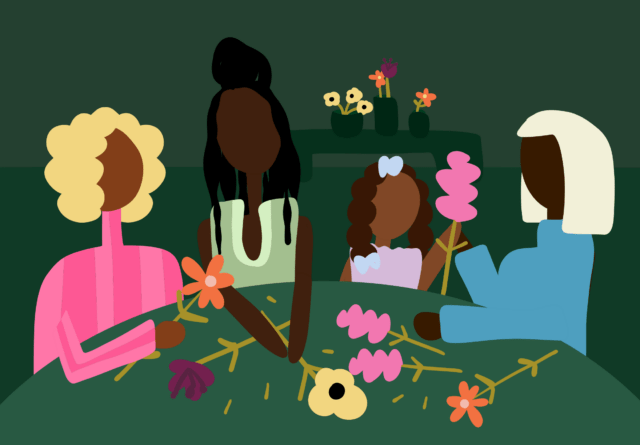
The significance of that distinction extends well beyond the archive itself, because harm is rarely confined to what has been physically taken. Harm also lives in what has been forgotten, distorted, erased, or deemed unworthy of preservation. Entire communities have experienced the loss of photographs, family records, neighborhood histories, oral traditions, and cultural memory because institutions decided those stories were not worth collecting or protecting. Black women have spent generations resisting that disappearance by becoming archivists in the broadest sense of the word. Some preserved family photographs inside albums and shoeboxes that eventually became the only surviving record of entire branches of a family. Others recorded the stories of elders before they were lost, documented neighborhoods before redevelopment erased them, or created books, exhibitions, films, and community archives that ensured future generations inherited something more substantial than fragments. These practices do far more than preserve the past. They repair ruptures caused by historical neglect, while ensuring that future generations inherit histories of possibility rather than only histories of loss.
One example can be found in Colombia through the work of Black women leaders within the Proceso de Comunidades Negras (Process of Black Comunities) and its Sistema Integral de Protección y Cuidado de la Vida y los Territorios (Comprehensive System for the Protection and Care of Life and Territories), known as SIPVIDA-PCN. For decades, PCN organized to advance the territorial, cultural, and collective rights of Afro-Colombian communities, contributing to the advocacy that ultimately led to Law 70 of 1993, which recognized Afro-Colombians as a distinct people with collective cultural and territorial rights. As significant as those victories were, Black women within the movement have worked to ensure that their own experiences, leadership, and safety receive greater visibility. Through their organizing, they have expanded PCN’s work to more explicitly address the rights and realities of Black women and girls while remaining firmly committed to the broader struggle for Black liberation. Their leadership reflects a belief that liberation is strengthened, not weakened, when movements evolve to hold the realities of the people who sustain them.
Sign up for our free newsletters
Subscribe to NPQ's newsletters to have our top stories delivered directly to your inbox.
By signing up, you agree to our privacy policy and terms of use, and to receive messages from NPQ and our partners.
What makes SIPVIDA-PCN so compelling is not simply that it exists, but that it illustrates a broader principle about repair. Repair is often imagined as beginning after something has broken, when in reality, it frequently begins the moment communities recognize that existing structures are incapable of fully holding their lives. The response is not always to replace those structures, more often, it is to expand and strengthen them, and build what is missing so that more people can belong within them.
Investing on Cultural Labor
These examples ask us to recognize that cultures of repair should also change the questions philanthropy asks, because too often, funding conversations begin with innovation. Grant guidelines ask organizations to propose the next transformative framework, the next scalable model, or the next groundbreaking solution, even though communities are rarely beginning from nothing. They are building upon generations of knowledge, relationships, organizing traditions, cultural practices, and institutions that have already demonstrated an extraordinary capacity to sustain people through harm. The search for novelty can unintentionally obscure the infrastructures communities have spent decades, and often centuries, building, refining, and trusting because those systems do not always appear innovative to people who have only recently begun paying attention.
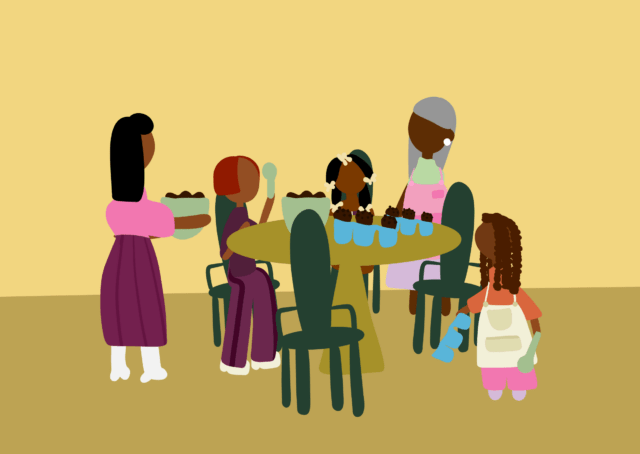
In addition, it’s important to recognize that focusing on alternative resourcing offers a different place to begin. Rather than asking communities what they intend to create next, it asks what they have already built, what relationships they have already cultivated, and what systems have already earned the trust of the people they serve. That shift requires more than changing grant guidelines. It requires redefining what counts as expertise and recognizing that community knowledge, cultural labor, storytelling, organizing, and memory work are not supplemental to social change but among the conditions that make it possible. If philanthropy is willing to recognize these practices as infrastructure rather than charity, it can begin investing in the systems communities already trust, rather than continually asking them to prove their value through new language, new frameworks, or new pilot projects.
Perhaps the future of repair will not be determined by the next framework philanthropy funds but by whether institutions are finally willing to recognize that Black women have spent generations building the very infrastructures they have been searching for all along. If the central question facing philanthropy is how to build a culture of repair, then Black women have already offered part of the answer. The cultures of repair philanthropy are not waiting to be invented; they have been built, sustained, and carried forward for generations, asking not to be discovered but to be recognized, resourced, and trusted.
Notes:
- Patricia Hill Collins, Black Feminist Thought: Knowledge, Consciousness, and the Politics of Empowerment, 2nd ed. (Routledge, 2000); Paula Giddings, When and Where I Enter: The Impact of Black Women on Race and Sex In America (W. Morrow, 1984); Martha S. Jones, Vanguard: How Black Women Broke Barriers, Won the Vote, and Insisted on Equality For All (Basic Books, 2000); bell hooks, Yearning: Race, Gender, and Cultural Politics (South End Press, 1990).
- Eric Klinenberg, Palaces for the People: How Social Infrastructure Can Help Fight Inequality, Polarization, and the Decline of Civic Life (Crown, 2018).