logo logo
Fund the truth. #Wethecivic giving banner
Donate
    • Membership
    • Donate
  • Social Justice
    • Racial Justice
    • Climate Justice
    • Disability Justice
    • Economic Justice
    • Food Justice
    • Health Justice
    • Immigration
    • LGBTQ+
  • Civic News
  • Nonprofit Leadership
    • Board Governance
    • Equity-Centered Management
    • Finances
    • Fundraising
    • Human Resources
    • Organizational Culture
    • Philanthropy
    • Power Dynamics
    • Strategic Planning
    • Technology
  • Columns
    • Ask Rhea!
    • Ask a Nonprofit Expert
    • Gathering in Support of Democracy
    • Hope in the Dark
    • Humans of Nonprofits
    • Inside the States
    • In Defense of Civil Society
    • The Myth of Heroic Leadership
    • The New Harvest Project
    • Notes from the Frontlines
    • Notes from the Long Arc
    • Reimagining Philanthropy
    • The Unexpected Value of Volunteers
    • We Stood Up
  • Newsletters
  • NPQ Online Events
    • Premium Webinars
    • Learn Out Loud
    • Partner Events
    • On Demand
  • Leading Edge Membership

Study: Racism-Fueled Electoral Victory—The Challenge to Nonprofits and Philanthropy

Martin Levine
April 20, 2017

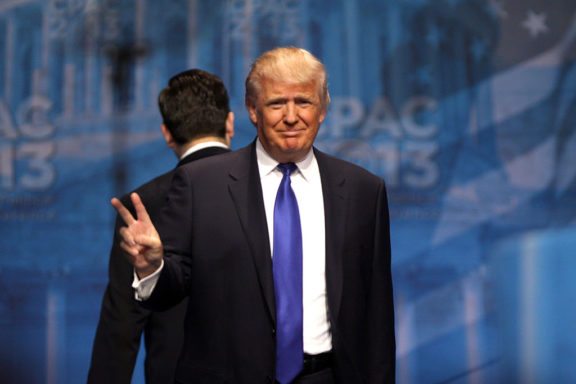
By Gage Skidmore from Peoria, AZ, United States of America (Donald Trump) [CC BY-SA 2.0], via Wikimedia Commons
April 17, 2017; Washington Post, “The Monkey Cage”

Just hours after Donald Trump was declared the winner of the 2016 presidential election, the search for the reasons we were so surprised was well underway. What forces were at work in our society that had gone so unnoticed that the results were so surprising? Attention quickly fell upon the angst of white, working-class voters who felt left behind and left out. Five months of research into the 2016 election leads to a more nuanced and disturbing understanding: Worker disenfranchisement was a factor, but less important than the growing racial animosity among those white voters.

The American National Election Study has been conducted following every presidential election since 1948. According Ohio State Political Science Professor Thomas Wood, ANES provides an “incredibly rich, publicly funded data source [that] allows us to put elections into historical perspective, examining how much each factor affected the vote in 2016 compared with other recent elections.” Its 80-minute interviews gather information about attitudes and motivations that might otherwise not be available and allow the study to go much deeper than the typical exit poll.

Writing in the Washington Post, Professor Wood shares his take on the ANES dataset in an attempt to better understand underlying cultural forces at play. White working-class voters, especially those in areas hit hard by plant and mine closings, were the wildcard that put enough Electoral College votes in the Trump column to elect him. What motivated them to make that choice? While economics and the growing appeal of authoritarian, “alt-right” ideology played some part, the key factor, the one that makes this election different than others, appears to have been their racial bias.

Comparing the attitudes of white Democratic voters with their Republican counterparts, Professor Wood found that “Since 1988, we’ve never seen such a clear correspondence between vote choice and racial perceptions. The biggest movement was among those who voted for the Democrat, who were far less likely to agree with attitudes coded as more racially biased.”

Democrats seem to have taken the path toward a more racially inclusive culture; those more motivated by their fear of others vote the other way. This jibes with earlier data gathered during the primary campaigns, which Jason McDaniel and Sean McElwee looked at when writing for Salon.

Sign up for our free newsletters

Subscribe to NPQ's newsletters to have our top stories delivered directly to your inbox.

By signing up, you agree to our privacy policy and terms of use, and to receive messages from NPQ and our partners.

On just about every measure, support for Trump increased along with measured racial animus…increased levels of overt racial stereotyping among white respondents—as measured by belief that black people, Muslims, and Hispanics are “lazy” or “violent”—strongly increases support for Trump, even after controlling for other factors.

While the strength and authoritarian persona of President Trump had some appeal, both factors were overshadowed in the end.

“Finally, the statistical tool of regression can tease apart which had more influence on the 2016 vote: authoritarianism or symbolic racism, after controlling for education, race, ideology, and age. Moving from the 50th to the 75th percentile in the authoritarian scale made someone about three percent more likely to vote for Trump. The same jump on the SRS scale made someone 20 percent more likely to vote for Trump. Racial attitudes made a bigger difference in electing Trump than authoritarianism.”
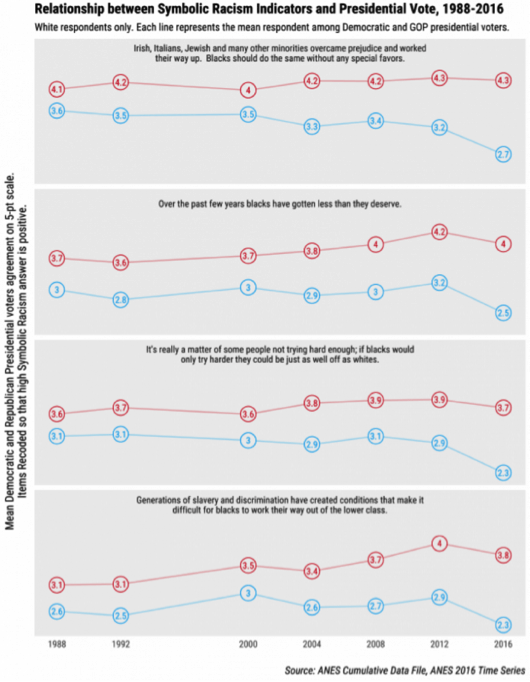
Three other researchers, John Sides, Michael Tesler, and Lynn Vavreck, just published their conclusions about this election in an article in the Journal of Democracy. They too saw growing racism among the key drivers of the Trump victory: “Three factors…help explain this outcome. First, fundamental economic and political trends favored a Democratic popular vote win. Second, the party coalitions had become more polarized by race and education during Obama’s presidency. Third, Trump’s focus on issues connected to ethnic and social identities made attitudes toward immigration and African Americans more important in voters’ choices in 2016 than they had been in 2012.”

The president’s victory came with a very narrow margin, and the new administration’s first days have been rocky and protest-filled. What we now see is that racism and bias remain key motivators for a significant part of the American population. None of us—politicians, policymakers, anyone concerned about solving the critical human problems we face—can ignore this. Focusing on policy and legislation without directly confronting racial anger and hatred cannot change the landscape.—Martin Levine


Our Voices Are Our Power.

Journalism, nonprofits, and multiracial democracy are under attack. At NPQ, we fight back by sharing stories and essential insights from nonprofit leaders and workers—and we pay every contributor.

Can you help us protect nonprofit voices?

Your support keeps truth alive when it matters most.
Every single dollar makes a difference.

Donate now
logo logo logo logo logo
About the author
Martin Levine

Martin Levine is a Principal at Levine Partners LLP, a consulting group focusing on organizational change and improvement, realigning service systems to allow them to be more responsive and effective. Before that, he served as the CEO of JCC Chicago, where he was responsible for the development of new facilities in response to the changing demography of the Metropolitan Jewish Community. In addition to his JCC responsibilities, Mr. Levine served as a consultant on organizational change and improvement to school districts and community organizations. Mr. Levine has published several articles on change and has presented at numerous conferences on this subject. A native of New York City, Mr. Levine is a graduate of City College of New York (BS in Biology) and Columbia University (MSW). He has trained with the Future Search and the Deming Institute.

More about: Nonprofit NewsPolicy
See comments

Sidebar-WTC
You might also like
Two Hundred and Fifty Years of Gunfire (Commentary)
Jaclyn Corin
They Wept Before the City Knew
Yahia Lababidi
A Letter to the World: From a Young Palestinian Man, To a World Where I and My City Will Be Eradicated
Yahia Lababidi and Mohammed Abu Lebda
We Did Not Come Here to Celebrate, We Came to Build
Linda Sarsour, Carmen Perez-Jordan and Saru Jayaraman
Thousands of Species Wait for Protection as Delays Grow Under Endangered Species Act
Rajeev Tyagi
Community Benefit Agreements: A Tool for Building Stronger Democracies
Sameera Fazili, Pronita Gupta and Doug Bloch

Upcoming Webinars

Group Created with Sketch.
July 16, 2:00 pm ET

Readying for the 2026 Midterms

How 501(c)(3)s Can Educate and Advocate During this Election Season

Register
Group Created with Sketch.
August 13, 2:00 pm ET

Building Narrative Power for Equity and Solidarity

Register

    
You might also like
A protester holds a handwritten sign reading "Does anything even matter anymore?" above a crowd gathered outside a government building.
Two Hundred and Fifty Years of Gunfire (Commentary)
Jaclyn Corin
A cluster of blue, 6-petaled forget-me-not flowers, a symbol of rememberance and memory.
They Wept Before the City Knew
Yahia Lababidi
A bombed out building in the heart of Rafah, Palestine, where author Mohammed Abu Lebda is from.
A Letter to the World: From a Young Palestinian Man, To a...
Yahia Lababidi and Mohammed Abu Lebda

Like what you see?

Subscribe to the NPQ newsletter to have our top stories delivered directly to your inbox.

See our newsletters

By signing up, you agree to our privacy policy and terms of use, and to receive messages from NPQ and our partners.

  • About
  • Advertise
  • Careers
  • Contact
  • Copyright
  • Donate
  • Funders
  • Editorial Policy
  • Media Relations
  • Privacy Policy
  • Submissions

We are using cookies to give you the best experience on our website.


Nonprofit Quarterly | Civic News. Empowering Nonprofits. Advancing Justice.
Powered by  GDPR Cookie Compliance
Privacy Overview

This website uses cookies so that we can provide you with the best user experience possible. Cookie information is stored in your browser and performs functions such as recognising you when you return to our website and helping our team to understand which sections of the website you find most interesting and useful.

Strictly Necessary Cookies

Strictly Necessary Cookie should be enabled at all times so that we can save your preferences for cookie settings.