
logo logo
Fund the truth. #Wethecivic giving banner
Donate
    • Membership
    • Donate
  • Social Justice
    • Racial Justice
    • Climate Justice
    • Disability Justice
    • Economic Justice
    • Food Justice
    • Health Justice
    • Immigration
    • LGBTQ+
  • Civic News
  • Nonprofit Leadership
    • Board Governance
    • Equity-Centered Management
    • Finances
    • Fundraising
    • Human Resources
    • Organizational Culture
    • Philanthropy
    • Power Dynamics
    • Strategic Planning
    • Technology
  • Columns
    • Ask Rhea!
    • Ask a Nonprofit Expert
    • Gathering in Support of Democracy
    • Hope in the Dark
    • Humans of Nonprofits
    • Inside the States
    • In Defense of Civil Society
    • The Myth of Heroic Leadership
    • The New Harvest Project
    • Notes from the Frontlines
    • Notes from the Long Arc
    • Reimagining Philanthropy
    • The Unexpected Value of Volunteers
    • We Stood Up
  • Newsletters
  • NPQ Online Events
    • Premium Webinars
    • Learn Out Loud
    • Partner Events
    • On Demand
  • Leading Edge Membership

Advancing Community Land Trusts Outpace Public Money Given to Fund Them

Steve Dubb
July 30, 2018
Public Domain, Link

July 26, 2018; Denverite and Asheville Citizen Times

In the past 18 months, community land trusts have been launched in many cities, including Buffalo, DC, Philadelphia, New York City, Pittsburgh, Baltimore, and Reno. Now, two more cities join this list: Denver, Colorado, and Asheville, North Carolina.

As NPQ has noted, community land trusts help cities seeking to preserve housing affordability for low-income residents. With a community land trust, land is held in trust by a nonprofit, with a board that includes public, local government, and tenant representatives. The trust preserves affordability by removing its holdings from the private market, usually through 99-year ground leases and preemptive purchase requirements that limit how much the house can be sold for.

The purchase details vary, but typically involve creating an intermediate rung between “renting” and owning,” by which the family purchasing the home gets a lower price in exchange for accepting restrictions spelled out in the deed that limit the amount the family can gain on resale. A common formula is for a family to be able to receive 25 percent of the equity gain plus the value of capital improvements; this has proven to be enough to enable a majority of families to “step up” into standard housing afterward. The remaining equity stays with the trust so that the house can be made available at an affordable price to the next family with no additional subsidy.

Community land trusts have proven to be effective at stabilizing housing. However, they are often under-resourced. Denver and Asheville are no exception. In Asheville, Dillon Davis reports that, “Asheville City Council recommitted $1 million [last] Tuesday to a new community land trust that will help the city and Buncombe County offer affordable housing and stave off the effects of neighborhood gentrification.” The entity will be called the Asheville Buncombe Community Land Trust and will begin operations in 2019. The source of funding is a $25 million affordable housing bond approved by voters in November 2016. Board chair Dewana Little says the nonprofit intends to address “issues of ‘gentrification-driven displacement’ in predominately Black neighborhoods and respond to a shortage of affordable housing.” At present, the nonprofit “is primarily focused on…strengthening organizational capacity, fundraising, designing programs for housing development and home ownership as well as community outreach efforts.”

Like Asheville, Denver has created an affordable housing fund; in Denver’s case, $150 million. But the $2 million committed for the new community land trust is not coming from the housing trust fund, but rather from the Colorado Department of Transportation (CDOT). As Andrew Kenney details in the Denverite, residents had opposed efforts “to rebuild and expand I-70 in north Denver.” Residents failed to stop the project, but the state agency agreed to provide $2 million in seed funding to support the launch of a resident-led community land trust.

As Kenney explains,

Sign up for our free newsletters

Subscribe to NPQ's newsletters to have our top stories delivered directly to your inbox.

By signing up, you agree to our privacy policy and terms of use, and to receive messages from NPQ and our partners.

CDOT offered up the money through a competitive process as a way to make up for the demolition of some 50-plus homes. GES [Globeville, Elyria-Swansea] Coalition will join with Brothers Redevelopment and the Colorado Community Land Trust to form the Globeville, Elyria-Swansea Affordable Housing Collaborative.

The money will be used in a “community land trust” model. The partnership already has purchased three homes in the area. One will be rehabilitated, while two others will be demolished and rebuilt as duplexes, and there are plans for more.

Kenney adds, “The majority of the money left over after the initial purchases will be used to buy and rehabilitate homes for the land trust, initiate new development, and rehabilitate homes for low-income owners.”

Maria De Luna Jimenez, a member of the GES coalition, says, “We want to help the families that are more in danger of being relocated, so they can have a place to live, in a stable place to live in good conditions—because, in reality, the houses that are here that they’re renting, the rent is high and they’re in bad condition.”

Jimenez adds that, “For us, this money, this $2 million—it’s a good quantity, but it’s not going to remedy everything the community needs.” According to Kenney, a “city report suggested that the state agency invest $14.5 million to make up for lost homes and other side effects,” so the existence of a funding gap is not in doubt.

That, however, takes little away from the success of what Kenney describes as a “community that has mobilized over the last 20 years around concerns about their environment and their health.” As organizer Robin Reichhardt, a Swansea resident who works with the coalition, notes, CDOT wasn’t “legally obligated to [contribute to the land trust]. They did it. That’s amazing.”

“What’s more frustrating is that the city hasn’t made any commitments to this project,” says Reichhardt. To date, Denver Mayor Michael Hancock “has proposed a plan to double Denver’s spending on affordable housing,” but has not committed to the land trust. That said, a Hancock spokesperson has said Hancock wants to play an “active role in furthering land trust strategies.”—Steve Dubb


Our Voices Are Our Power.

Journalism, nonprofits, and multiracial democracy are under attack. At NPQ, we fight back by sharing stories and essential insights from nonprofit leaders and workers—and we pay every contributor.

Can you help us protect nonprofit voices?

Your support keeps truth alive when it matters most.
Every single dollar makes a difference.

Donate now
logo logo logo logo logo
About the author
Steve Dubb

Steve Dubb is senior editor of economic justice at NPQ, where he writes articles (including NPQ’s Economy Remix column), moderates Remaking the Economy webinars, and works to cultivate voices from the field and help them reach a broader audience. In particular, he is always looking for stories that illustrate ways to build a more just economy—whether from the labor movement or from cooperatives and other forms of solidarity economy organizing—as well as articles that offer thoughtful and incisive critiques of capitalism. Prior to coming to NPQ in 2017, Steve worked with cooperatives and nonprofits for over two decades, including twelve years at The Democracy Collaborative and three years as executive director of NASCO (North American Students of Cooperation). In his work, Steve has authored, co-authored, and edited numerous reports; participated in and facilitated learning cohorts; designed community building strategies; and helped build the field of community wealth building. Most recently, Steve coedited (with Raymond Foxworth) Invisible No More: Voices from Native America (Island Press, 2023). Steve is also the lead author of Building Wealth: The Asset-Based Approach to Solving Social and Economic Problems (Aspen 2005) and coauthor (with Rita Hodges) of The Road Half Traveled: University Engagement at a Crossroads, published by MSU Press in 2012. In 2016, Steve curated and authored Conversations on Community Wealth Building, a collection of interviews of community builders that Steve had conducted over the previous decade.

More about: Community Land TrustsNonprofit NewsPolicy
See comments

Sidebar-WTC
You might also like
Two Hundred and Fifty Years of Gunfire (Commentary)
Jaclyn Corin
They Wept Before the City Knew
Yahia Lababidi
A Letter to the World: From a Young Palestinian Man, To a World Where I and My City Will Be Eradicated
Yahia Lababidi and Mohammed Abu Lebda
We Did Not Come Here to Celebrate, We Came to Build
Linda Sarsour, Carmen Perez-Jordan and Saru Jayaraman
Thousands of Species Wait for Protection as Delays Grow Under Endangered Species Act
Rajeev Tyagi
Community Benefit Agreements: A Tool for Building Stronger Democracies
Sameera Fazili, Pronita Gupta and Doug Bloch

Upcoming Webinars

Group Created with Sketch.
July 16, 2:00 pm ET

Readying for the 2026 Midterms

How 501(c)(3)s Can Educate and Advocate During this Election Season

Register
Group Created with Sketch.
August 13, 2:00 pm ET

Building Narrative Power for Equity and Solidarity

Register

    
You might also like
A protester holds a handwritten sign reading "Does anything even matter anymore?" above a crowd gathered outside a government building.
Two Hundred and Fifty Years of Gunfire (Commentary)
Jaclyn Corin
A cluster of blue, 6-petaled forget-me-not flowers, a symbol of rememberance and memory.
They Wept Before the City Knew
Yahia Lababidi
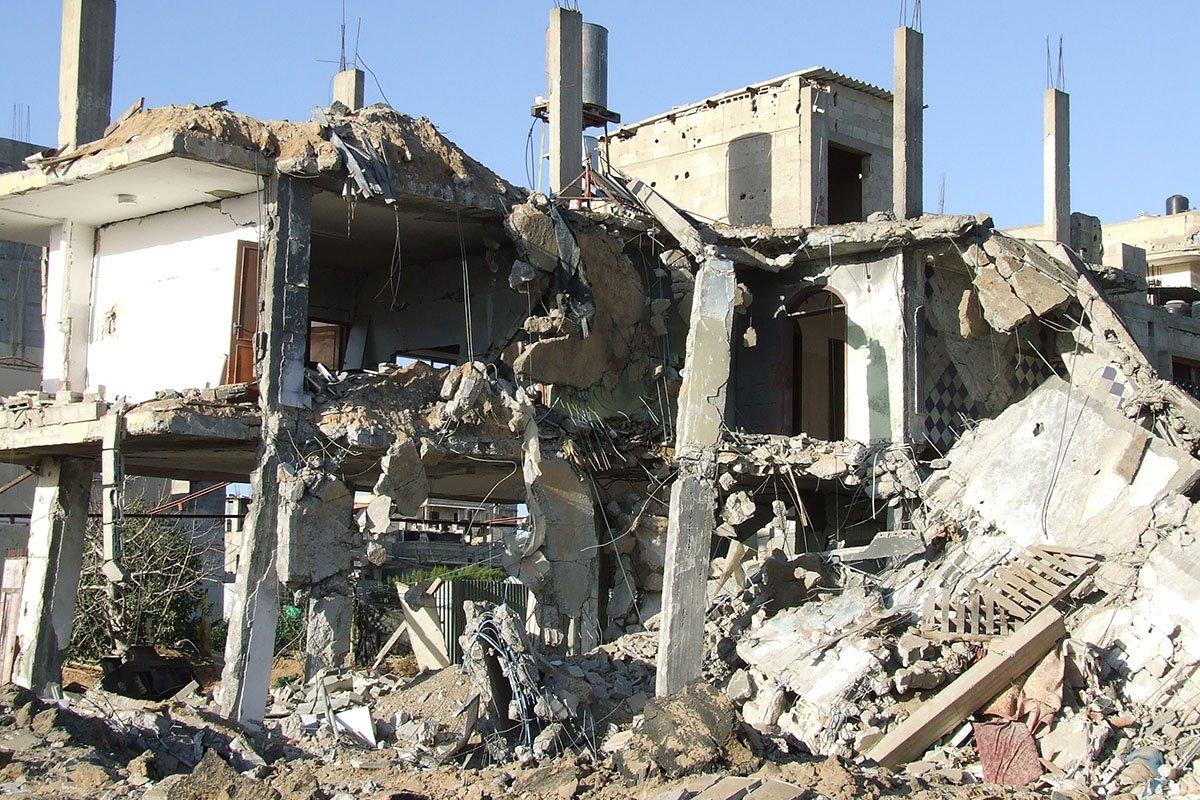
A bombed out building in the heart of Rafah, Palestine, where author Mohammed Abu Lebda is from.
A Letter to the World: From a Young Palestinian Man, To a...
Yahia Lababidi and Mohammed Abu Lebda

Like what you see?

Subscribe to the NPQ newsletter to have our top stories delivered directly to your inbox.

See our newsletters

By signing up, you agree to our privacy policy and terms of use, and to receive messages from NPQ and our partners.

  • About
  • Advertise
  • Careers
  • Contact
  • Copyright
  • Donate
  • Funders
  • Editorial Policy
  • Media Relations
  • Privacy Policy
  • Submissions

We are using cookies to give you the best experience on our website.


Nonprofit Quarterly | Civic News. Empowering Nonprofits. Advancing Justice.
Powered by  GDPR Cookie Compliance
Privacy Overview

This website uses cookies so that we can provide you with the best user experience possible. Cookie information is stored in your browser and performs functions such as recognising you when you return to our website and helping our team to understand which sections of the website you find most interesting and useful.

Strictly Necessary Cookies

Strictly Necessary Cookie should be enabled at all times so that we can save your preferences for cookie settings.