
logo logo
Fund the truth. #Wethecivic giving banner
Donate
    • Membership
    • Donate
  • Social Justice
    • Racial Justice
    • Climate Justice
    • Disability Justice
    • Economic Justice
    • Food Justice
    • Health Justice
    • Immigration
    • LGBTQ+
  • Civic News
  • Nonprofit Leadership
    • Board Governance
    • Equity-Centered Management
    • Finances
    • Fundraising
    • Human Resources
    • Organizational Culture
    • Philanthropy
    • Power Dynamics
    • Strategic Planning
    • Technology
  • Columns
    • Ask Rhea!
    • Ask a Nonprofit Expert
    • Gathering in Support of Democracy
    • Hope in the Dark
    • Humans of Nonprofits
    • Inside the States
    • In Defense of Civil Society
    • The Myth of Heroic Leadership
    • The New Harvest Project
    • Notes from the Frontlines
    • Notes from the Long Arc
    • Reimagining Philanthropy
    • The Unexpected Value of Volunteers
    • We Stood Up
  • Newsletters
  • NPQ Online Events
    • Premium Webinars
    • Learn Out Loud
    • Partner Events
    • On Demand
  • Leading Edge Membership

Higher Ed Board Proposes “Stress Tests” for Private Colleges in Massachusetts

Erin Rubin
January 25, 2019
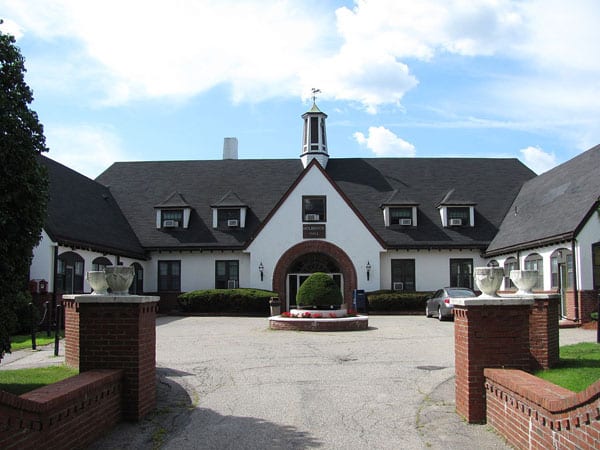
John Phelan [CC BY 3.0], from Wikimedia Commons

January 23, 2019; WBUR

The Massachusetts Board of Higher Education (BHE) says it is stepping in to protect students as small liberal arts colleges in the Commonwealth and elsewhere close their doors at an alarming rate.

The BHE is the governing body of the Massachusetts Department of Higher Education; it’s responsible for the mission, oversight, and governance of Massachusetts public colleges and universities. Its duties include analyzing the “goals, needs, and requirements” of public higher education and developing performance measurement systems for those schools. It also grants financial assistance to private higher education institutions, and thereby has some sway over how they are governed as well.

The board recommends that the Department of Higher Education screen private colleges and universities once a year. Starting next school year, each December 1st they will be evaluated based on metrics developed by pro bono consultants at EY-Parthenon to ensure they have the resources to teach and support their students for the next 18 months. The evaluations will use publicly available data that officials will verify privately with the schools. If the board determines that a school does not have sufficient resources for those 18 months, the school will be required to develop a “teach-out” plan so that students, professors, and others will not be caught without options, as has happened in the past. Institutions that do not comply with the reporting requirements would become ineligible for the financial aid that comes from state coffers.

Sign up for our free newsletters

Subscribe to NPQ's newsletters to have our top stories delivered directly to your inbox.

By signing up, you agree to our privacy policy and terms of use, and to receive messages from NPQ and our partners.

The idea is to protect students from the kinds of nasty surprises they’ve gotten as Mount Ida College, Chester College, and dozens of others closed. Students have been left frantically applying to new schools, trying to figure out new financial aid, and otherwise scrambling to continue their educations. On the other hand, small colleges’ struggles to survive help maintain a diverse higher education ecosystem—and, in some cases, those efforts work, creating models for others. The dangers of heaping more requirements with reputational consequences on such small systems are obvious, especially in light of the recent federal retreat from holding for-profit institutions accountable for what is often outright fraud against both students and the taxpayer. In light of all of that, this proposal could be seen as taking a hammer to a situation that might do better with an exploration of additional supports.

Small, private liberal arts schools, hundreds of which have historically dotted New England, are declining, as Harvard professor Clayton Christensen once predicted. The small class sizes and hands-on mentoring that are the selling point of many small colleges are expensive strategies to maintain, and revenue pools are shrinking not just in Massachusetts, but all over New England and at religious and other private schools across the country. The credit rating agency Moody’s found last year that one in five small private colleges in the US is under “fundamental stress.” A study by the Boston Globe of 75 New England colleges found that over 80 percent rely on tuition for 70 percent or more of their revenue, but for over 60 percent of schools surveyed, the percent of expenses covered by tuition revenue had dropped since 2016.

“It’s not that the expenses are going up; it’s really that the revenue is going down,” said Susan Stuebner, president of Colby-Sawyer College in New Hampshire. Many small schools have been trying to innovate and change to lower costs and attract more students; Christensen recommended that schools “create a second business model,” but that’s easier said than done.—Erin Rubin


Our Voices Are Our Power.

Journalism, nonprofits, and multiracial democracy are under attack. At NPQ, we fight back by sharing stories and essential insights from nonprofit leaders and workers—and we pay every contributor.

Can you help us protect nonprofit voices?

Your support keeps truth alive when it matters most.
Every single dollar makes a difference.

Donate now
logo logo logo logo logo
About the author
Erin Rubin

Erin Rubin was an assistant editor at the Nonprofit Quarterly, where she was in charge of online editorial coordination and community building. Before joining NPQ, in 2016, Erin worked as an administrator at Harvard Business School and as an editorial project manager at Pearson Education, where she helped develop a digital resource library for remedial learners. Erin has also worked with David R. Godine, Publishers, and the Association of Literary Scholars, Critics, and Writers. As a creative lead with the TEDxBeaconStreet organizing team, she worked to help innovators and changemakers share their groundbreaking ideas and turn them into action.

More about: Higher EducationNonprofit NewsPolicy
See comments

Sidebar-WTC
You might also like
Two Hundred and Fifty Years of Gunfire (Commentary)
Jaclyn Corin
They Wept Before the City Knew
Yahia Lababidi
A Letter to the World: From a Young Palestinian Man, To a World Where I and My City Will Be Eradicated
Yahia Lababidi and Mohammed Abu Lebda
We Did Not Come Here to Celebrate, We Came to Build
Linda Sarsour, Carmen Perez-Jordan and Saru Jayaraman
Thousands of Species Wait for Protection as Delays Grow Under Endangered Species Act
Rajeev Tyagi
Community Benefit Agreements: A Tool for Building Stronger Democracies
Sameera Fazili, Pronita Gupta and Doug Bloch

Upcoming Webinars

Group Created with Sketch.
July 16, 2:00 pm ET

Readying for the 2026 Midterms

How 501(c)(3)s Can Educate and Advocate During this Election Season

Register
Group Created with Sketch.
August 13, 2:00 pm ET

Building Narrative Power for Equity and Solidarity

Register

    
You might also like
A protester holds a handwritten sign reading "Does anything even matter anymore?" above a crowd gathered outside a government building.
Two Hundred and Fifty Years of Gunfire (Commentary)
Jaclyn Corin
A cluster of blue, 6-petaled forget-me-not flowers, a symbol of rememberance and memory.
They Wept Before the City Knew
Yahia Lababidi
A bombed out building in the heart of Rafah, Palestine, where author Mohammed Abu Lebda is from.
A Letter to the World: From a Young Palestinian Man, To a...
Yahia Lababidi and Mohammed Abu Lebda

Like what you see?

Subscribe to the NPQ newsletter to have our top stories delivered directly to your inbox.

See our newsletters

By signing up, you agree to our privacy policy and terms of use, and to receive messages from NPQ and our partners.

  • About
  • Advertise
  • Careers
  • Contact
  • Copyright
  • Donate
  • Funders
  • Editorial Policy
  • Media Relations
  • Privacy Policy
  • Submissions

We are using cookies to give you the best experience on our website.


Nonprofit Quarterly | Civic News. Empowering Nonprofits. Advancing Justice.
Powered by  GDPR Cookie Compliance
Privacy Overview

This website uses cookies so that we can provide you with the best user experience possible. Cookie information is stored in your browser and performs functions such as recognising you when you return to our website and helping our team to understand which sections of the website you find most interesting and useful.

Strictly Necessary Cookies

Strictly Necessary Cookie should be enabled at all times so that we can save your preferences for cookie settings.