logo logo
Donate
    • Membership
    • Donate
  • Social Justice
    • Racial Justice
    • Climate Justice
    • Disability Justice
    • Economic Justice
    • Food Justice
    • Health Justice
    • Immigration
    • LGBTQ+
  • Civic News
  • Nonprofit Leadership
    • Board Governance
    • Equity-Centered Management
    • Finances
    • Fundraising
    • Human Resources
    • Organizational Culture
    • Philanthropy
    • Power Dynamics
    • Strategic Planning
    • Technology
  • Columns
    • Ask Rhea!
    • Ask a Nonprofit Expert
    • Gathering in Support of Democracy
    • Hope in the Dark
    • Humans of Nonprofits
    • Inside the States
    • In Defense of Civil Society
    • The Myth of Heroic Leadership
    • Notes from the Frontlines
    • Notes from the Long Arc
    • Reimagining Philanthropy
    • The Unexpected Value of Volunteers
    • We Stood Up
  • Newsletters
  • NPQ Online Events
    • Learn Out Loud
    • Leading Edge Webinars
    • Partner Events
    • On Demand
  • Leading Edge Membership

Nonprofit Boards Should Heed This Multi-Stakeholder Revolt in Western Mass

Ruth McCambridge
November 1, 2017
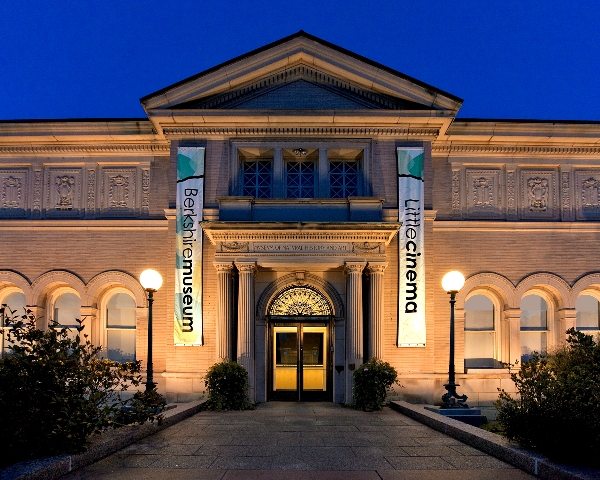
Berkshire Museum – Pittsfield / Massachusetts Office of Travel & Tourism

October 31st, 2017; Art News

In these days of stakeholder activism, nonprofit boards who misunderstand and offend the expectations of those stakeholders may find their plans blocked and their tenure shortened.

NPQ has been following the situation at Massachusetts’ Berkshire Museum, which will be in court today to defend itself against two suits that seek to halt their sale of 40 pieces of art—including two paintings by Norman Rockwell— from its collection. The museum says it needs the sale proceeds, which are estimated at $50 million, to fund a new vision of more high-tech and hands-on exhibits, renovations, and its endowment. Unfortunately for them, a number of other stakeholders are blocking the plan, including three sons of painter Norman Rockwell, who donated some of his work to the museum, and members of the museum. According to WBUR’s The Artery, there is also an independent activist group that has been publicly protesting, and the Massachusetts Cultural Council has weighed in with its own criticism. Additional entities opposing the sale include national museum organizations like the Association of Art Museum Directors.

“If museums began to essentially use their collections as financial assets, that would erode the confidence of collectors and donors in giving artworks to museums,” said Lori Fogarty, president of the Association of Art Museum Directors. This issue has arisen before, such as when contributors stepped in to save the Detroit Institute of Art from having to sell artwork to cover city pension plan shortfalls.

Fogarty said widely held professional standards permit museums to sell art for just one specific purpose: “If artworks from the collection are sold, that the proceeds from the sale will only be used for future acquisitions to the collection,” she said.

Sign up for our free newsletters

Subscribe to NPQ's newsletters to have our top stories delivered directly to your inbox.

By signing up, you agree to our privacy policy and terms of use, and to receive messages from NPQ and our partners.

And that purpose, she said, is not to fund renovations or build an endowment, as the Berkshire Museum has proposed.

Perhaps even more critically as far as legal standing is concerned, Maura Healey, the attorney general of Massachusetts, has filed with the court asking that it order the sale to be delayed to allow more time to study the plan. The Attorney General will likely be required to approve the plan at this point.

The plan to sell a portion of the museum’s permanent collection was first announced three months ago, to the predictable outrage of other museums for whom this is a violation of ethical standards. The situation is somewhat reminiscent of the widespread pushback to the decision of the board of Sweet Briar College to close the institution. Those who can prove that they have standing in court will progress through the legal system in the same way, with stakeholders and trustees vying for the right to make or at least weigh in on decisions.

In Sweet Briar’s case, of course, the board was finally displaced, a new board took over, and the institution remained open. But the museum board is forging forward into the court-based fray. “I believe the museum has the right to go forward, and we feel that the legal action is kind of factually and legally flawed,” said Elizabeth McGraw, president of its board. “We’re confident that we’ll be able to continue moving forward with our new plans and new visions for the museum.”

We’ll see, I guess, but this reminder that the board does not own any nonprofit and that they and the institution are accountable to a far wider group of interested parties cannot be emphasized enough.—Ruth McCambridge


The work isn’t done. Neither is our commitment.

The challenges facing nonprofits aren’t going away. Neither can the journalism that informs, connects, and amplifies the sector.

Help NPQ keep this work free and accessible.

Give Today
logo logo logo logo logo
About the author
Ruth McCambridge

Ruth is Editor Emerita of the Nonprofit Quarterly. Her background includes forty-five years of experience in nonprofits, primarily in organizations that mix grassroots community work with policy change. Beginning in the mid-1980s, Ruth spent a decade at the Boston Foundation, developing and implementing capacity building programs and advocating for grantmaking attention to constituent involvement.

More about: Arts and CultureBoard GovernanceEquity-Centered ManagementNonprofit NewsStakeholder Engagement
See comments

Stuffing-1
You might also like
Why the good offers seem to go to others
Rhea Wong
The case for co-governance for public education
James Haslam, Leigh Kennedy, Mike Matsuda and Mike Woodward
Can a deck of cards interrupt bias in grantmaking?
Devyn Taylor
Not just a drop in the bucket
Lauren O'Connor, Lily Mefford, Rokaya Aqrabawi and Elina “Saavi” Banerjee
What the Met museum’s union victory reveals about nonprofit governance
Jason Collins
Returning to reciprocity: What I learned working outside the circle my grandmother lived inside
Jessyca Dudley

Upcoming Webinars

Group Created with Sketch.
December 3, 2:00 pm ET

After the Midterms

What’s Next for Nonprofits?

Register
Group Created with Sketch.
January 28, 2:00 pm ET

Democratic Staff Structures

Weaving Shared Leadership and Union Practice in Nonprofits

Register
You might also like
A woman of color looks into the camera with a serious expression. She is sandwiched by a white female and Asian female coworker.
Why the good offers seem to go to others
Rhea Wong
A Black, bald man (aprent) with glasses sits at a desk with a child with curly hair across from a brunette woman (teacher) with glasses. The three are in a brightly lit classroom.
The case for co-governance for public education
James Haslam, Leigh Kennedy, Mike Matsuda and Mike Woodward
“Flippin’ Logics Cards” identify eight “dominant logics,” or recurring assumptions and ways of thinking that can shape how reviewers interpret an application.
Can a deck of cards interrupt bias in grantmaking?
Devyn Taylor

Like what you see?

Subscribe to the NPQ newsletter to have our top stories delivered directly to your inbox.

See our newsletters

By signing up, you agree to our privacy policy and terms of use, and to receive messages from NPQ and our partners.

  • About
  • Advertise
  • Careers
  • Contact
  • Copyright
  • Donate
  • Funders
  • Editorial Policy
  • Media Relations
  • Privacy Policy
  • Submissions

We are using cookies to give you the best experience on our website.


Nonprofit Quarterly | Civic News. Empowering Nonprofits. Advancing Justice.
Powered by  GDPR Cookie Compliance
Privacy Overview

This website uses cookies so that we can provide you with the best user experience possible. Cookie information is stored in your browser and performs functions such as recognising you when you return to our website and helping our team to understand which sections of the website you find most interesting and useful.

Strictly Necessary Cookies

Strictly Necessary Cookie should be enabled at all times so that we can save your preferences for cookie settings.