
January 16, 2018; 90.5 WESA-FM (Pittsburgh NPR)
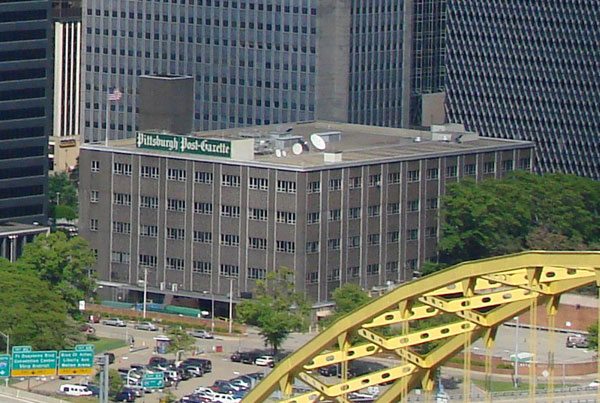
When the Pittsburgh Post-Gazette attempted to defend President Trump by charging that the president’s critics were engaging in “new McCarthyism,” the Pittsburgh Foundation and The Heinz Endowments were quick to voice their displeasure. This unusual step by the foundations unleashed other public statements by the Post-Gazette’s staff and relatives of the Post-Gazette’s editorial board. These dramatic responses were in sharp contrast to the silence from the civic sector in Toledo, where an identical editorial ran three days earlier.
The Post-Gazette’s Martin Luther King Day editorial asserted that President Trump has a point in believing that people from “shithole” countries are unworthy to come to the US by virtue of where they live: “It is not racist to say that this country cannot take only the worst people from the worst places and that we want some of the best people from the best places…”. Then, reaching for a fig leaf, the editors add, “…many of which are inhabited by people of color…” before concluding, “That’s not racism, it is reason.”
Got that? According to the editorial, stereotyping individuals by the place where they live is not racism. And the fact that the president identified by name undesirable places where people of color live and then contrasted them with Norway is “reason.”
Hours after the editorial hit newsstands, Pittsburgh’s public radio station, WESA, reported on the foundations’ response. The joint statement of the two foundations appeared on The Heinz Endowments’ website under the title, “Shame.” The response states clearly that the president’s racist language undermines civic efforts to address community issues.
Pittsburgh, like many communities around the country, still struggles with becoming the sort of fair and inclusive community where all feel welcome and have the real opportunity to thrive. We remain committed to that goal and believe we can get there.
Sign up for our free newsletters
Subscribe to NPQ's newsletters to have our top stories delivered directly to your inbox.
By signing up, you agree to our privacy policy and terms of use, and to receive messages from NPQ and our partners.
Then, the statement charges the Post-Gazette with complicity to undermine that goal: “To excuse racism in the name of politics, to attempt to dress it up in fancy clothes and camouflage, is to condone it.” This kind of advocacy is unusual for a community foundation, but part of a pattern for the Pittsburgh Foundation, as NPQ’s Steve Dubb recently noted.
It is worth noting that the Post-Gazette was republishing an editorial that was published three days earlier in the Toledo Blade. For some reason, the Post-Gazette editorial board waited until Martin Luther King Day to publish the editorial as if it were its own work. To its credit, WESA’s initial reporting revealed this identity of ownership relationship: “Last week, Blade and Post-Gazette publisher John Block was criticized by some for urging the paper to remove some of Trump’s alleged vulgar rhetoric from a headline. He and his twin brother Allan Block have publicly endorsed and donated large sums to Republican candidates in the past.” Then, in a nod to journalistic integrity, the article acknowledges their financial interest in the controversy: “WESA receives funding from The Heinz Endowments and Pittsburgh Foundation.”
In a follow up story, “Post-Gazette Staff, Members Of Publisher’s Family Condemn Editorial,” WESA reporter Virginia Alveno Young reported on statements of resistance from Post-Gazette staff and members of the owner’s family. The article reported that the Newspaper Guild of Pittsburgh had released a statement to the public after the Post-Gazette declined to run it in the newspaper. “Guild President Michael Fuoco said that it was rejected by the paper’s publisher, John Robinson Block, and will not be published.” Mr. Fuoco’s account of the Guild’s objections and negotiations was carried in the Columbia Journalism Review.
The statement by “shareholders and family members of the family that operates this newspaper” did run in the Post-Gazette under the title, “This PG editorial did not reflect values we share with William Block, Sr.” The statement quoted Dr. Martin Luther King, Jr. and announced, “We do not condone the sentiments expressed in the piece. We do not condone the whitewashing of racism, nor the normalization of it. We cannot remain silent and by implication approve of the use of the Post-Gazette to provide cover for racism.” No similar statement ran in the Toledo Blade, though several critical letters were published on the Blade website.
The pushback to the Post-Gazette editorial has overturned the adage that one should never pick a fight with an entity that “buys ink by the barrel.” Led by the Pittsburgh Foundation and The Heinz Endowments, the civic sector used public radio and social media to provide an alternative narrative to the one presented by corporate owners of the Post-Gazette who were operating outside the norms of the Pittsburgh community.
In a postscript, the same day the notorious editorial ran in the Post-Gazette, the newspaper ran a story about the Pittsburgh Foundation’s decision to file an amicus brief in a challenge to gerrymandering of Pennsylvania’s Congressional districts. The Post-Gazette observed, “The Foundation has never waded into a lawsuit this way before. But for an institution that seeks to improve the region’s quality of life, foundation president and CEO Maxwell King said, the subject was increasingly difficult to ignore.” Kind of prophetic in retrospect. On January 22nd, the Supreme Court of Pennsylvania sided with the plaintiffs in overturning the state’s redistricting plan.—Spencer Wells