
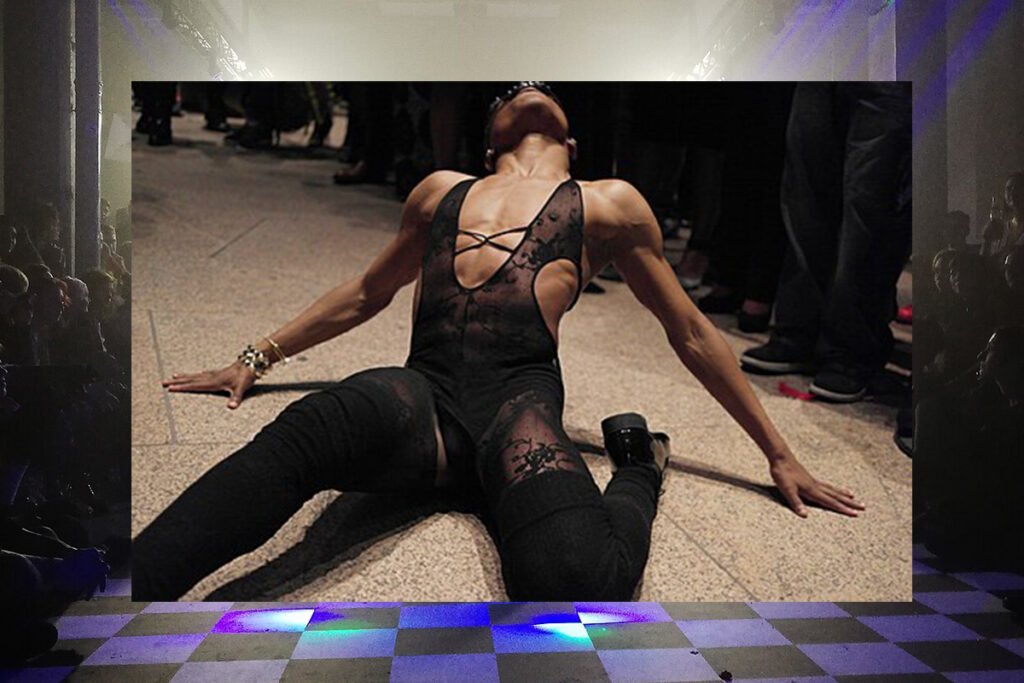
In 1776, when the Declaration of Independence announced that all men are created equal, it did not have us in mind. Not Black people, not people of color, not women; certainly not those of us whose very existence would be legislated as criminal over the next two and a half centuries. And yet, through interdependence, we built independence. On ballroom floors, on house music dance floors, in club basements, and at warehouse raves, where the democracy we forged and practiced was total—rooted in governance, mentorship, chosen kinship, and mutual aid.
This network of care, which prefigured the broader movement for trans justice, forged a language of self-determination and gender identity that would come to inform mainstream trans advocacy, while insisting—long before policy conversations caught up—that trans justice is inseparable from racial and economic justice.
Today, as trans people are being legislatively erased in real time, funders are scrambling for a theory of change to meet this moment. Ballroom already offers one, created around a commitment to belonging fierce enough to sustain generations of people through systematic exclusion from civic life. Since their beginnings, those who organized ballroom life never waited for policy conditions to improve before building infrastructure for dignity. They built structures and communities around the belonging found on ballroom, club, and dance floors across the country to this day. From there, they catalyzed the cultural shifts that eventually forced open the doors of social, economic, and civic change.
Ballroom Paved the Way for Today’s Trans Justice Movement
Ballroom culture was created by Black and Latine queer and trans communities, beginning in Harlem in the late 19th century and flowering into what became the houses, balls, and chosen families of the 1970s, ‘80s, ‘90s, and into today. Sociologists call these “third spaces,” the gathering grounds outside of home and work where people build community, share knowledge, and practice democracy at a human scale. For Black and Brown queer and trans people, who have been excluded from myriad community anchor spaces, the third space has been the ball, the after-hours club, the houses.
The “houses” that organized ballroom life were chosen family structures led by house parents, who were typically more senior members of the scene and often trans women, drag queens, and gay men. Through houses and house parents, queer and trans folks gained access to community, mentorship, housing, and emotional support as they experienced family rejection, homelessness, and violence. This network of care, which prefigured the broader movement for trans justice, forged a language of self-determination and gender identity that would come to inform mainstream trans advocacy, while insisting—long before policy conversations caught up—that trans justice is inseparable from racial and economic justice. Houses produced the trans justice movement’s first frontline advocates putting intersectional justice values into practice. These leaders would go on to demand greater visibility, access, and dignity for all.
I have spent decades watching the descendants of ballroom—the houses, the elders, the young people voguing in church basements and community centers—do the slow, unglamorous work of building and holding community together. Passing the hat at a Brooklyn rave to bail out a friend. Posting bond from a dance floor in New Orleans. Slipping gender affirming resources to a young person at a ball in Atlanta. Organizing voter drives between sets in Philadelphia, Texas, and Alabama.
Even as nightlife reproduces its own exclusions—racism in queer spaces, transmisogyny, the cost of a door charge, the surveillance of who gets in—the houses, raves, and clubs have continued to build, knowing the work is unfinished. The rhythms, kinship structures, and world-building practices traveled from Chicago warehouses, where Frankie Knuckles spun house music for Black and Brown queer crowds, into today’s QTBIPOC raves and dance floors, where DJs like Armana Khan and collectives like Papi Juice spin that same tradition out for Black, Brown, queer, and trans crowds around the world. They are all part of one continuous lineage comprised of the people this country has worked hardest to erase.
Beyond securing grantmaking dollars, what does it look like to apply ballroom’s kinship principles to philanthropy?”
Lessons From the Floor: How Funders Can Invest in True Belonging
I lead Borealis Philanthropy’s Fund for Trans Generations, which was designed with the belief that you cannot fund a movement and refuse to fund its floors.
Sign up for our free newsletters
Subscribe to NPQ's newsletters to have our top stories delivered directly to your inbox.
By signing up, you agree to our privacy policy and terms of use, and to receive messages from NPQ and our partners.
Ballroom culture offers deep lessons for funders who care about building true democracy—one committed to honoring complexity and wholeness. While donors pour resources into 501(c)(3)s that fit cleanly inside a grant report, the long-standing, self-defined civic infrastructure of Black and Brown trans life goes chronically underfunded, with only three and a half cents of every $100 reaching trans communities.
Beyond securing grantmaking dollars, what does it look like to apply ballroom’s kinship principles to philanthropy? At the Fund for Trans Generations (FTG), it looks like shifting power to the people closest to the work, with funding decisions determined by an advisory committee of BIPOC trans community organizers whose expertise is informed by their lived experience. It looks like recognizing the urgency of the moment with more than $3 million in rapid response grants since 2016, and another $200,000 to 25 trans-led organizations in 2026 to meet growing security and legal threats and doubling our fund as transantagonism rises. It looks like deepened investment that doesn’t disappear after a year: half of FTG’s general operating grants are multi-year commitments, paired with one-on-one and group coaching from a bench of expert coaches who walk alongside trans leaders over time.
It looks like the Flower Crown Project, the Fund’s just-wrapped two-year, $1.4 million investment in ten Black trans femme-led organizations, anchored in four pillars the cohort named themselves: Compassionate Care, Cultivation of Self, Cultural Perpetuity, and Unbridled Joy. Yes, unbridled joy—as a strategy, not a reward. The houses understood this long before we did: you cannot build a lasting movement on grief alone.
In the same vein, it means funding what philanthropy has historically deemed “extra”: land, sanctuary, rest, ceremony. It means mobilizing resources to organizations like The Griffin-Gracy Educational Retreat & Historical Center, known as House of gg. This is the legacy of the late Miss Major Griffin-Gracy and one of the only national spaces dedicated to rest for Black trans women activists, which hosts all-expense paid family gatherings for leaders to step out of crisis and return to their wholeness. It looks like supporting our partners at Imagine Water Works in New Orleans as they respond to the climate emergency and support Indigenous land stewardship on the Imagination Farm. And it looks like moving dollars to organizations like Trans Income Project, which has grown from a cash transfer collective into a collective safety net for trans Louisianans, providing meals, distributing direct cash, and covering HRT for folks from Louisiana, Mississippi, and Texas.
Yes, unbridled joy—as a strategy, not a reward. The houses understood this long before we did: you cannot build a lasting movement on grief alone.
This is what it means to fund the floor. Not as charity, but because investing in those who were never invited is how we achieve true democracy.
Over centuries, and still today, queer and trans communities have had to build new possibilities where there were none, updating societal norms and expanding belonging along the way. Now, as America turns 250 and asks itself again what and who democracy is for; how it is built: the answer is on the floor: Black, Brown, queer, and trans folks, dancing, governing, organizing, and holding one another close through it all. As it always has been—because we built it before they let us in.