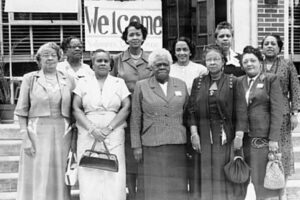
There is a woman on Milwaukee’s North Side who has been doing housing work for years without a job description that says so. She knows which landlords are predatory. She knows which properties are quietly slipping into tax default before anyone files the paperwork. She knows who on her block is one missed paycheck from eviction. When a neighbor faced foreclosure last winter, she connected them to a housing counselor, walked them to the appointment, and followed up when the process stalled. No program funded that intervention. No grant covered her time. She did it because she understood that stable housing is the foundation everything else rests on, and because no institution in her neighborhood was doing it reliably enough.
The infrastructure that has sustained housing stability in disinvested neighborhoods was never fully in the programs. Understanding that helps us see how federal housing cuts are not only a crisis, but a forced reckoning.
Her work is not exceptional. It is the rule. Across Milwaukee’s historically disinvested Black neighborhoods, and in Portland, Oregon, where different demographics face structurally identical conditions, informal housing leadership has quietly sustained communities that federal housing programs were designed to serve but never fully reached. Now, as the federal government moves to eliminate CDBG, HOME, Section 8, down payment assistance, and the organizational infrastructure supporting affordable housing development, the sector is asking: where will the money come from?
That is the right question, but not the only one. The more important question, the one the field has been slow to ask, is: where has the work been coming from all along? This essay shows how infrastructure that has sustained housing stability in disinvested neighborhoods was never fully inside the programs. Understanding this helps us see how federal housing cuts are not only a crisis, but a forced reckoning.
What Is Actually Being Cut
The proposed FY 2027 federal budget requests a 13 percent reduction in HUD funding, over 10 billion dollars, continuing a pattern of proposed eliminations that began with the FY 2026 cycle. The Community Development Block Grant program, the primary flexible federal tool for housing rehabilitation and neighborhood revitalization, is proposed for full elimination, affecting over 1,200 local governments nationwide. In Milwaukee alone, CDBG has supported emergency housing for more than 13,000 residents over the past five years. The HOME Investment Partnerships Program, which functions as gap financing for affordable housing development and is one of the only federal programs explicitly structured to support low-income homeownership, is also targeted for elimination. Without HOME, the financing architecture for many Low Income Housing Tax Credit developments collapses. Units do not get built.
Housing Choice Vouchers are being restructured into a state block grant with two-year caps on assistance for working-age adults. That is not a reform. It is the removal of the federal guarantee from rental stability for millions of households. In Portland, Multnomah County’s housing authority Home Forward is already absorbing a $35 million budget shortfall tied directly to federal reductions. Staff have been laid off. New voucher issuance is frozen. Down payment assistance programs are threatened. People are currently experiencing evictions because of such cuts. Fair housing enforcement is targeted. NeighborWorks America, which supports nearly 250 nonprofit housing and community development organizations, is proposed for defunding. Every layer of the housing system serving households below median income is under simultaneous pressure.
In Milwaukee, where Black homeownership sits at 27.2 percent, among the lowest rates of any major metropolitan area in the country, these cuts are not marginal. Down payment assistance is not supplemental for a household earning $31,000 annually in a city where homeownership requires income approaching $54,000 to avoid cost burden. It is the margin between entering ownership and permanent racial dependence. When that margin disappears, the wide racial wealth gap does not hold steady. It widens.
Milwaukee just did something significant. In July 2025, the Common Council adopted the Housing Element of the City’s Comprehensive Plan, signed by the Mayor the following day. The plan, shaped by two years of community engagement and over ten rounds of public meetings, explicitly incorporates anti-displacement priorities, homeownership support, and the recommendations of the Collective Affordable Housing Strategic Plan. More than 80 percent of all in-person engagement activities were held in or directly adjacent to Qualified Census Tracts, the very neighborhoods where median household incomes fall below 60 percent of Area Median Income. The plan is serious, hard-won, and necessary.
It also has an implementation problem. When community leaders from Metcalfe Park Community Bridges endorsed the plan, they did so with an explicit condition: continued deep investment in community engagement. That is not a procedural request. It is a warning. A comprehensive plan is a framework. What determines whether its anti-displacement commitments and homeownership priorities reach the households they are designed to serve is not the text of the plan. It is the relational infrastructure on the ground. The Housing Element was written with the community. Whether it is implemented with the community depends on whether the field can recognize and resource the neighborhood stewards who will carry that implementation in the blocks and buildings where no city planner is present.
She inherited a tradition of knowing, of watching, of organizing the block, that stretches back through generations of Black women who understood that no institution was coming and that the community would have to govern itself or not survive.
The Infrastructure the Government Built Against
Before naming what Black women built, it is necessary to name what was built against them. Richard Rothstein’s The Color of Law documents in granular detail how federal housing policy—from the explicit discrimination written into the Federal Housing Administration’s underwriting guidelines to the practice of redlining that denied Black families the mortgages through which white families built generational wealth across the twentieth century—produced the concentrated poverty in Black urban neighborhoods. Contemporary development frameworks now diagnose that poverty as a personal deficiency without accounting for how that concentration was manufactured. This is not ancient history. The segregation it produced is the map that community development organizations still work within. The wealth it denied is the gap that down payment assistance programs are now trying to close with a fraction of the resources that created it.
These leaders hold what no housing database captures: the living map of which properties are at risk, which tenants are vulnerable, which landlords are predatory, which resources are actually accessible, versus theoretically available but practically out of reach.
What Rothstein documents and what the community development field has been slowest to confront is this: inside the deliberately confined spaces of the redlined city, Black women built governance infrastructure anyway. Systems of care, mutual aid, and economic circulation that sustained community life despite being denied every form of institutional support that was simultaneously subsidizing the construction of white suburbs and white wealth. The neighborhood stewards in Milwaukee’s who know every landlord and every vulnerable tenant did not learn that knowledge from a program. She inherited a tradition of knowing, of watching, of organizing the block, that stretches back through generations of Black women who understood that no institution was coming and that the community would have to govern itself or not survive. That tradition is not resilience as metaphor. It is governance as practice, and it is more than two hundred and fifty years old.
Compassion, Communication, Consistency
Here is what the field needs to reckon with honestly: CDBG, HOME, and vouchers were essential. They were also never enough. Milwaukee’s 27.2 percent Black homeownership rate did not happen despite federal housing investment. It happened alongside it. Portland’s long-term Black community displacement from Albina, a neighborhood once home to 80 percent of the city’s Black population, occurred across decades of federal housing program operation. Between 1990 and 2010, more than 11,000 Black residents were displaced. The programs addressed some conditions. They did not close the structural gaps. What sustained neighborhoods through those gaps, what kept communities viable in the persistent presence of institutional failure, was something the field has never adequately named or resourced.
My doctoral research, conducted across Milwaukee’s North Side and Near West Side, names it. I call it Cultivated Governance. Not informal helping. Not volunteerism. Sophisticated, deliberate, sustained governance work performed by community members, primarily Black women, who have treated housing stability as a neighborhood responsibility rather than a program outcome. These leaders hold what no housing database captures: the living map of which properties are at risk, which tenants are vulnerable, which landlords are predatory, which resources are actually accessible versus theoretically available but practically out of reach.
Cultivated governance operates through three commitments I call the 3 C’s: Compassion, Communication, and Consistency.
- Compassion is the relational precision to read housing need accurately, to know the difference between a neighbor who needs a referral and one who needs someone to walk them through the door.
- Communication is the deliberate information infrastructure these leaders maintain, the networks through which housing resources, legal risks, and warnings actually move in a neighborhood.
- Consistency is the sustained, long-term presence that makes any of it possible. Trust in neighborhoods with long histories of institutional failure is not given. It is built over years and maintained through showing up, repeatedly, without a grant cycle determining when you start or stop.
What the Field Has Been Getting for Free
Often, this is called community engagement. It is, more precisely, a cost borne by community members who are never reimbursed for it. That must change.
A housing counselor arriving on a twelve-month grant cycle must spend the first six months building the trust a neighborhood steward already holds. That is not a soft observation. It is a structural cost with a dollar value that the field has never honestly accounted for. Community development organizations have benefited from neighborhood stewardship for decades without naming it as an input, compensating it as labor, or building program design around it as expertise. That is not a small omission. It is a foundational one.
When an organization begins work in a neighborhood, it typically invests significant time and resources in community trust development, relationship-building, and knowledge acquisition before any programmatic work can take root. Custodial leaders have already made that investment, at their own expense, over years and often decades. When housing programs partner meaningfully with existing neighborhood stewards, they skip the most expensive and time-intensive phase of community work. When programs ignore those leaders and attempt to rebuild relationships from scratch, they spend money reproducing infrastructure that already exists.
Often, this is called community engagement. It is, more precisely, a cost borne by community members who are never reimbursed for it. That must change. And it must change with more urgency as federal resources are being cut, and the field cannot afford to keep rebuilding what already exists.
Sign up for our free newsletters
Subscribe to NPQ's newsletters to have our top stories delivered directly to your inbox.
By signing up, you agree to our privacy policy and terms of use, and to receive messages from NPQ and our partners.
Portland Is Building the Answer in Real Time
Portland is doing something the field should study carefully, because two active projects are attempting, with different tools and at different scales, to close the gap between institutional housing investment and community-rooted leadership. Neither project has fully resolved the tension. Together, they define the frontier of what equitable housing development can look like when community governance is treated as architecture rather than afterthought.
In 2018, a coalition of community-based organizations in the Cully neighborhood approached Prosper Portland not to receive an urban renewal plan, but to co-create one. The result, the Cully Tax Increment Finance (TIF) District, established unanimously by Portland City Council in November 2022 with $350 million in maximum indebtedness, was explicit from the outset that its primary purpose was stabilization over development: preventing the displacement of vulnerable residents before initiating growth. Over the prior decade, the Cully neighborhood had lost 50 percent of its Black population. The TIF district was designed to stop the rapid decline. A Community Leadership Committee drawn directly from neighborhood stakeholders provides ongoing guidance and oversight of every action plan and investment priority, not advisory input, but governance authority over how dollars are sequenced and where they flow.
This is not standard urban renewal practice. Standard urban renewal produced Albina. It produced the Interstate 5 construction that slashed a thriving Black neighborhood in half in 1962, the Veterans Memorial Coliseum that displaced hundreds of families, the Legacy Emanuel Hospital expansion that erased more. What Cully is attempting is the structural inverse: community members initiating the process, naming the beneficiaries explicitly in the plan text, prioritizing stabilization before development, and retaining governance authority over the sequencing of investment. That is the institutional architecture of cultivated governance. It is what happens when the field stops extracting community knowledge for program validation and starts building the program around it from the beginning.
Albina Vision Trust is doing something more ambitious still. AVT describes its work as restorative redevelopment, and the framing is precise. This is not revitalization, a word that has historically signaled displacement rebranded as investment. It is the deliberate reconstitution of a community that was dismantled by public policy, returning both people and wealth to the place from which both were extracted. The organization’s own language names the theoretical stakes: AVT exists to ensure that the most marginalized communities are reflected in the built environment and participate in the wealth generated by their presence as owners of homes and businesses. Connection, the organization asserts, is capital. Community can heal. Healing can transform what is possible for generations yet to come.
The Community Investment Plan that anchors AVT’s work was itself a three-year, community-led planning process launched in 2020, pairing planners, architects, artists, and economists with Black Portlanders in what AVT describes as a people-first, multi-generational engagement approach. The plan received international recognition, including the AZ Honor Award for Social Good. It is now the foundation for the Reconnecting Albina Planning Project, a formal partnership between AVT, the Portland Bureau of Planning and Sustainability, the Portland Bureau of Transportation, and Prosper Portland, funded through a federal Department of Transportation Reconnecting Communities grant. The project, expected to conclude in fall 2026, is creating land use, transportation, and governance frameworks for the redevelopment of Lower Albina, centering a set of questions that the community development field has rarely asked publicly: how will the economic benefits of community ownership be achieved and shared? What governance structures and community stewardship mechanisms are necessary to sustain equitable development over time?
Albina One, AVT’s first completed development, is a 94-unit affordable housing building constructed by Colas Construction, one of the only Black-owned general contractors in Oregon, and designed by a Black woman who is not only a seasoned architect but one from Portland. Seventy-five units are locked between 30 and 60 percent area median income (AMI). Nineteen units are Section 8 eligible. Preference in housing applications is given to residents with historical and generational ties to the neighborhood under the city’s North/Northeast Preference Policy. The building was opened with a daylong block party featuring Black artists, vendors, and community groups. These are not decorative choices. They are structural decisions about who builds equity through the build, not only who is housed by it.
AVT names what neighborhood stewardship has always known: connection is capital, and the community that maintains connection through dispossession is the community that holds the most valuable and least compensated asset in neighborhood development.
What Cultivated Governance Offers These Models
The Cully TIF and Albina Vision Trust are extraordinary. They represent genuine advances in how the community development field can structure investment to align with community governance. They are also not yet replicable without a theoretical framework that explains why they work, makes their logic transferable across contexts, and gives practitioners the language to recognize and sustain the leadership conditions that made them possible in the first place.
That is what cultivated governance is built to do. Cultivated governance does not describe exceptional leaders doing exceptional work in exceptional places. It describes a form of governance that exists in every neighborhood that has survived disinvestment, that has always existed there, and that has been systematically invisible to the frameworks the community development field uses to evaluate, fund, and design programs. And it is, in fact, exemplary! The community members who approached Prosper Portland in 2018, before there was a TIF district, before there was a plan, with a vision for what their neighborhood needed, were exercising neighborhood stewardship in its most elemental form. AVT’s founding logic, that the community most harmed by displacement should govern the process of return, is neighborhood stewardship as organizational mission.
The Reconnecting Albina Planning Project’s fourth governance question—what implementation tools, governance structures, and community stewardship mechanisms are needed to facilitate and sustain desired development?—is precisely the question cultivated governance is designed to answer.
The three C’s—Compassion, Communication, and Consistency—name the specific capacities that make community-rooted housing governance functional over time. They give program designers something to look for when building community leadership committees, something to protect when institutional incentives push toward efficiency over relationship, and something to build around when designing the governance architecture of a TIF or a community land trust or a restorative redevelopment district.
In Milwaukee, those capacities live in individual neighborhood stewards who have never been offered organizational infrastructure or compensation. In Cully and Albina, those capacities are being institutionalized, with real tension and real stakes, into formal governance structures. Cultivated governance bridges those contexts. It names what is being built and why it works, and names what is lost when it is built over rather than from.
The Rebuild Has to Be Different
The advocacy work to restore federal housing funding must continue. Federal investment in housing is not optional. The market will not produce affordable units at the scale the country needs. State and local governments cannot fill a $10 billion HUD reduction. The legal and legislative fights over CDBG, HOME, and vouchers are necessary and should be pressed hard.
But the field should not fight to restore what was cut without asking whether what existed before was sufficient. The honest answer, in Milwaukee and Portland both, is that it was not. The rebuild is an opportunity to design something more aligned with how housing stability actually works in communities, which is through the sustained, deliberate, relational leadership of people who treat their neighborhoods as a governance responsibility rather than a service area.
That means flexible, direct funding mechanisms that reach neighborhood stewards without requiring organizational incorporation as the price of access. It means housing organizations changing how they hire, partner, and attribute expertise. It means formally compensating the housing knowledge that informal leaders have spent years accumulating. It means building programs that treat relational infrastructure as an input, not an output. And it means using the theoretical language that makes these commitments transferable, that allows a practitioner in Portland to recognize in Cully what a researcher found in Milwaukee, and to build accordingly.
Portland is asking the right questions right now. The Reconnecting Albina Planning Project is active. The Cully Community Leadership Committee is meeting. Albina Vision Trust is negotiating the acquisition of a 10.5-acre parcel that could return thousands of people to a neighborhood from which they were expelled by public policy. Milwaukee enacted a Housing Element in July 2025 that explicitly names anti-displacement and homeownership for existing residents as governing priorities, and that was built through two years of engagement concentrated in the city’s lowest-income neighborhoods. These are not finished models. They are live commitments, and every one of them faces an implementation gap between the policy on paper and the relational infrastructure required to make it real. That gap is where cultivated governance operates. That gap is where the research lives.
The woman on Milwaukee’s North Side who walked her neighbor to the housing counselor is not a footnote. She is not a feel-good story about resilience in the face of institutional failure. She is the record. She is the two-hundred-and-fifty-year-plus record of what Black women have done with the neighborhoods the government confined them to, built inside the walls that federal policy constructed, sustained the communities that urban renewal tried to erase, kept alive the knowledge that no housing database has ever captured.
The question before the field now, in Milwaukee and Portland and every city with a disinvested neighborhood, is whether the institutions rebuilding after federal cuts will finally organize themselves around leaders like her. Or whether they will, once again, build over her and call it progress.