logo logo
Fund the truth. #Wethecivic giving banner
Donate
    • Membership
    • Donate
  • Social Justice
    • Racial Justice
    • Climate Justice
    • Disability Justice
    • Economic Justice
    • Food Justice
    • Health Justice
    • Immigration
    • LGBTQ+
  • Civic News
  • Nonprofit Leadership
    • Board Governance
    • Equity-Centered Management
    • Finances
    • Fundraising
    • Human Resources
    • Organizational Culture
    • Philanthropy
    • Power Dynamics
    • Strategic Planning
    • Technology
  • Columns
    • Ask Rhea!
    • Ask a Nonprofit Expert
    • Gathering in Support of Democracy
    • Hope in the Dark
    • Humans of Nonprofits
    • Inside the States
    • In Defense of Civil Society
    • The Myth of Heroic Leadership
    • The New Harvest Project
    • Notes from the Frontlines
    • Notes from the Long Arc
    • Reimagining Philanthropy
    • The Unexpected Value of Volunteers
    • We Stood Up
  • Newsletters
  • NPQ Online Events
    • Premium Webinars
    • Learn Out Loud
    • Partner Events
    • On Demand
  • Leading Edge Membership

Gaza, Donors and Academic Freedom: A Story of Social Media Use

Martin Levine
September 23, 2014


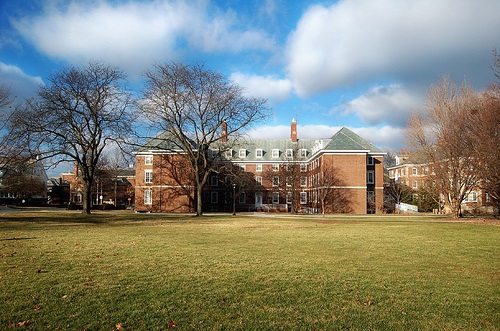
UIUC

September 9, 2014; Chronicle of Higher Education and Los Angeles Times

NPQ has written a great deal about the relationship between large donors and academic freedom in universities. Those articles have included this one on a donor’s large gift to a political management program and this one on a large gift from the Charles G. Koch Foundation to Florida State University to establish programs on the Study of Political Economy and Free Enterprise and on Excellence in Economic Education. So the following story from University of Illinois at Urbana-Champaign should sound somewhat familiar, although in this case it is about the threat of donor withdrawal rather that a donor “buying” a program. In the end, however, it is all about control.

After the university actively recruited Professor Steven Salaita for a tenured position in the Native American Studies Department, Professor Salaita accepted the job offer, resigned from the faculty at Virginia Tech, and relocated to Illinois, set to begin his new job in August. Shortly before his start date, however, controversy broke out, fueled by a series of Twitter posts by Professor Salaita expressing his strong opposition to Israel’s conduct in Gaza. What follows are examples of that feed.


The people of #Gaza can’t even swim to safety. #Israel not only controls the borders, but the waterways, as well.

— Steven Salaita (@stevesalaita) August 1, 2014

It’s ultimately useless to discuss #Gaza if you’re unwilling to also acknowledge #Israel‘s displacement of 700k Palestinians in 1948.

Sign up for our free newsletters

Subscribe to NPQ's newsletters to have our top stories delivered directly to your inbox.

By signing up, you agree to our privacy policy and terms of use, and to receive messages from NPQ and our partners.

— Steven Salaita (@stevesalaita) July 31, 2014

It’s quite simple, really: don’t support any ideology whose practice results in dead children. #Gaza #GazaUnderAttack

— Steven Salaita (@stevesalaita) July 31, 2014


Supporters of Israel on and off campus reacted strongly, challenging the appointment. Abraham Foxman, national director of the Anti-Defamation League, said that Salaita’s tweets “border on anti-Semitism.” Noah Feingold, a UIUC junior majoring in environmental sustainability, highlighted the unwelcoming feeling Salaita’s tweets could create among students who are supportive of Israel. “I think it’s more of an issue of civil discourse,” Feingold said. “It’s not about Judaism or about Israel, it’s about feeling safe on campus.” A donor wrote in with an unveiled threat: “Having been a multiple 6-figure donor to Illinois over the years, I know our support is ending as we vehemently disagree with the approach this individual espouses.”

In response to these protests, the university reconsidered its job offer and ultimately withdrew it as the fall semester began. This brought forth new voices, who felt the university’s action threatened the integrity and effectiveness of the school. Salaita’s supporters said the university had violated his academic freedom, which allows faculty to teach or write about unpopular views without fear of losing their jobs. The American Historical Association, one of a number of organizations that have protested Salaita’s firing, said in a letter to University Chancellor Phyllis Wise:

“Such a policy produces a chilling effect, inhibiting the full exchange of ideas that both scholarly investigation and democratic institutions need. If allowed to stand, your administration’s punitive treatment of Steven Salaita will chill the intellectual atmosphere at the University of Illinois.”

Wise defended the decision as a choice “not to hire,” via the means of not passing Salaita’s appointment to the board, rather than the firing of a tenured faculty member for his political statements. She also said, to a group of students, that although “it is absolutely critical that we raise more money because the state is gradually decreasing the amount of money [we receive]…that was not any factor in my decision.” Salaita, naturally, sees it the other way, and has since indicated at a news conference on September 9th that he is considering suing the university for denying him a position on the faculty; however, he is uncertain whether he has a solid case or will actually pursue the suit.—Marty Levine


Our Voices Are Our Power.

Journalism, nonprofits, and multiracial democracy are under attack. At NPQ, we fight back by sharing stories and essential insights from nonprofit leaders and workers—and we pay every contributor.

Can you help us protect nonprofit voices?

Your support keeps truth alive when it matters most.
Every single dollar makes a difference.

Donate now
logo logo logo logo logo
About the author
Martin Levine

Martin Levine is a Principal at Levine Partners LLP, a consulting group focusing on organizational change and improvement, realigning service systems to allow them to be more responsive and effective. Before that, he served as the CEO of JCC Chicago, where he was responsible for the development of new facilities in response to the changing demography of the Metropolitan Jewish Community. In addition to his JCC responsibilities, Mr. Levine served as a consultant on organizational change and improvement to school districts and community organizations. Mr. Levine has published several articles on change and has presented at numerous conferences on this subject. A native of New York City, Mr. Levine is a graduate of City College of New York (BS in Biology) and Columbia University (MSW). He has trained with the Future Search and the Deming Institute.

More about: AccountabilityEducationHigher EducationNonprofit NewsPolicySocial Media
See comments

Sidebar-WTC
You might also like
We Did Not Come Here to Celebrate, We Came to Build
Linda Sarsour, Carmen Perez-Jordan and Saru Jayaraman
The Myth of Heroic Leadership Is a Justice Issue
Brooke Richie-Babbage
Thousands of Species Wait for Protection as Delays Grow Under Endangered Species Act
Rajeev Tyagi
Community Benefit Agreements: A Tool for Building Stronger Democracies
Sameera Fazili, Pronita Gupta and Doug Bloch
Strong Enough to Change: White Oak Pastures and Farming for Future Generations
Sarah Young, Elizabeth Searing and Kimberly Wiley
Custodians
Yahia Lababidi

Upcoming Webinars

Group Created with Sketch.
July 16, 2:00 pm ET

Readying for the 2026 Midterms

How 501(c)(3)s Can Educate and Advocate During this Election Season

Register
Group Created with Sketch.
August 13, 2:00 pm ET

Building Narrative Power for Equity and Solidarity

Register

    
You might also like
A stenciled graffiti reading, “What Next?” on a textured gray surface.
We Did Not Come Here to Celebrate, We Came to Build
Linda Sarsour, Carmen Perez-Jordan and Saru Jayaraman
A lone red rubber duck, positioned in front of a mass of yellow rubber ducks.
The Myth of Heroic Leadership Is a Justice Issue
Brooke Richie-Babbage
Close-up of a red wolf lying still on wood chips, head down, gaze turned away from the camera.
Thousands of Species Wait for Protection as Delays Grow...
Rajeev Tyagi

Like what you see?

Subscribe to the NPQ newsletter to have our top stories delivered directly to your inbox.

See our newsletters

By signing up, you agree to our privacy policy and terms of use, and to receive messages from NPQ and our partners.

  • About
  • Advertise
  • Careers
  • Contact
  • Copyright
  • Donate
  • Funders
  • Editorial Policy
  • Media Relations
  • Privacy Policy
  • Submissions

We are using cookies to give you the best experience on our website.


Nonprofit Quarterly | Civic News. Empowering Nonprofits. Advancing Justice.
Powered by  GDPR Cookie Compliance
Privacy Overview

This website uses cookies so that we can provide you with the best user experience possible. Cookie information is stored in your browser and performs functions such as recognising you when you return to our website and helping our team to understand which sections of the website you find most interesting and useful.

Strictly Necessary Cookies

Strictly Necessary Cookie should be enabled at all times so that we can save your preferences for cookie settings.