logo logo
Fund the truth. #Wethecivic giving banner
Donate
    • Membership
    • Donate
  • Social Justice
    • Racial Justice
    • Climate Justice
    • Disability Justice
    • Economic Justice
    • Food Justice
    • Health Justice
    • Immigration
    • LGBTQ+
  • Civic News
  • Nonprofit Leadership
    • Board Governance
    • Equity-Centered Management
    • Finances
    • Fundraising
    • Human Resources
    • Organizational Culture
    • Philanthropy
    • Power Dynamics
    • Strategic Planning
    • Technology
  • Columns
    • Ask Rhea!
    • Ask a Nonprofit Expert
    • Gathering in Support of Democracy
    • Hope in the Dark
    • Humans of Nonprofits
    • Inside the States
    • In Defense of Civil Society
    • The Myth of Heroic Leadership
    • The New Harvest Project
    • Notes from the Frontlines
    • Notes from the Long Arc
    • Reimagining Philanthropy
    • The Unexpected Value of Volunteers
    • We Stood Up
  • Newsletters
  • NPQ Online Events
    • Premium Webinars
    • Learn Out Loud
    • Partner Events
    • On Demand
  • Leading Edge Membership

Milestones in Racial Killing Cases as One Cop Pleads Guilty

Anna Berry
May 5, 2017
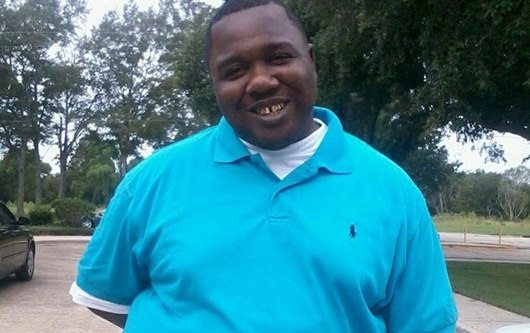
“Alton Sterling” by 4WardEver Campaign UK

May 3, 2017; New York Times

Alton Sterling. Walter L. Scott. The U.S. Justice Department announced developments this week in cases involving the police killings of the two African American men. While one family will finally gain some closure, for the other, the heartbreak continues.

The news came as U.S. Attorney General Jeff Sessions’ leadership continues to create controversy and pushback from across the country, including his threats to cut DOJ funding for sanctuary cities and his plan to pause police reform consent decrees in cities like Ferguson, Cleveland, Baltimore, and Chicago.

According to the New York Times, on Wednesday, the Justice Department “declined to bring charges against two officers involved in the fatal shooting of a black Louisiana man, Alton B. Sterling. The announcement brought an end to what federal officials called an exhaustive investigation into the death of Mr. Sterling, who was killed on July 5th in the parking lot of a Baton Rouge convenience store where he often peddled CDs.”

“It was the unanimous decision of all the prosecutors and agents in this case that we simply did not have sufficient evidence to prove beyond a reasonable doubt that either officer violated the federal criminal civil rights laws,” Corey R. Amundson, the acting United States attorney here, said at a news conference Wednesday afternoon.

The DOJ had opened the investigation into the shooting of the father of five last summer. The country faced a scathing United Nations critique around the same time, which highlighted issues with excessive police force and ongoing racial discrimination. In November, leaders and members of the Black Lives Matter movement who protested Sterling’s murder settled with four Louisiana agencies in a federal class action lawsuit filed by the state’s ACLU and the New Orleans Workers’ Center for Racial Justice. Sterling’s aunt, Sandra Sterling, told a local TV station that the family’s “suffering still continues.”

In the second case, involving the death of Walter L. Scott, the recent news was much different. From the Times:

Sign up for our free newsletters

Subscribe to NPQ's newsletters to have our top stories delivered directly to your inbox.

By signing up, you agree to our privacy policy and terms of use, and to receive messages from NPQ and our partners.

A day earlier and some 700 miles away, Michael T. Slager, a former police officer in North Charleston, S.C., pled guilty to a charge of willfully using excessive force to deprive Walter L. Scott of his civil rights when he shot Mr. Scott as he fled on foot in April 2015. The two cases have been among the most explosive in the nation’s complex and emotional debate about race and policing…

Scott’s mother, Judy Scott, has forgiven Mr. Slager, who could possibly face a life sentence in prison, according to the Times.

Neither case is a precedent for how future investigations will be dealt with under Sessions, since both were holdovers from the previous attorney general, Loretta E. Lynch. Although there isn’t much optimism from civil rights advocates about the Department’s new leader, the Times noted that Sessions “has also explicitly said that bad police officers should be prosecuted.”

President Barack Obama’s administration also drew fire:

The Obama administration made a priority of giving sensitive use ­of­ force cases close scrutiny. But it also prompted criticism, and sometimes outrage, when it closed inquiries without bringing charges in cities like Minneapolis and Memphis and smaller locales including Ferguson, Mo., and Smyrna, Ga. Mr. Sessions’ department will almost certainly be forced to make similarly tough calls in the coming months.

Indeed, another tragic killing occurred over the weekend when a teenaged African American boy, Jordan Edwards, was shot by a police officer in Texas.—Anna Berry


Our Voices Are Our Power.

Journalism, nonprofits, and multiracial democracy are under attack. At NPQ, we fight back by sharing stories and essential insights from nonprofit leaders and workers—and we pay every contributor.

Can you help us protect nonprofit voices?

Your support keeps truth alive when it matters most.
Every single dollar makes a difference.

Donate now
logo logo logo logo logo
About the author
Anna Berry

Anna Berry is a writer and editor with more than a decade of experience in nonprofit management, fundraising, and communications. She has covered international civil society, human rights, and the media, among other topics, for Nonprofit Quarterly since 2016.

More about: Nonprofit NewsPolicy
See comments

Sidebar-WTC
You might also like
Two Hundred and Fifty Years of Gunfire (Commentary)
Jaclyn Corin
They Wept Before the City Knew
Yahia Lababidi
A Letter to the World: From a Young Palestinian Man, To a World Where I and My City Will Be Eradicated
Yahia Lababidi and Mohammed Abu Lebda
We Did Not Come Here to Celebrate, We Came to Build
Linda Sarsour, Carmen Perez-Jordan and Saru Jayaraman
Thousands of Species Wait for Protection as Delays Grow Under Endangered Species Act
Rajeev Tyagi
Community Benefit Agreements: A Tool for Building Stronger Democracies
Sameera Fazili, Pronita Gupta and Doug Bloch

Upcoming Webinars

Group Created with Sketch.
July 16, 2:00 pm ET

Readying for the 2026 Midterms

How 501(c)(3)s Can Educate and Advocate During this Election Season

Register
Group Created with Sketch.
August 13, 2:00 pm ET

Building Narrative Power for Equity and Solidarity

Register

    
You might also like
A protester holds a handwritten sign reading "Does anything even matter anymore?" above a crowd gathered outside a government building.
Two Hundred and Fifty Years of Gunfire (Commentary)
Jaclyn Corin
A cluster of blue, 6-petaled forget-me-not flowers, a symbol of rememberance and memory.
They Wept Before the City Knew
Yahia Lababidi
A bombed out building in the heart of Rafah, Palestine, where author Mohammed Abu Lebda is from.
A Letter to the World: From a Young Palestinian Man, To a...
Yahia Lababidi and Mohammed Abu Lebda

Like what you see?

Subscribe to the NPQ newsletter to have our top stories delivered directly to your inbox.

See our newsletters

By signing up, you agree to our privacy policy and terms of use, and to receive messages from NPQ and our partners.

  • About
  • Advertise
  • Careers
  • Contact
  • Copyright
  • Donate
  • Funders
  • Editorial Policy
  • Media Relations
  • Privacy Policy
  • Submissions

We are using cookies to give you the best experience on our website.


Nonprofit Quarterly | Civic News. Empowering Nonprofits. Advancing Justice.
Powered by  GDPR Cookie Compliance
Privacy Overview

This website uses cookies so that we can provide you with the best user experience possible. Cookie information is stored in your browser and performs functions such as recognising you when you return to our website and helping our team to understand which sections of the website you find most interesting and useful.

Strictly Necessary Cookies

Strictly Necessary Cookie should be enabled at all times so that we can save your preferences for cookie settings.