A version of this article was originally published by the Braxton Institute and can be viewed here.
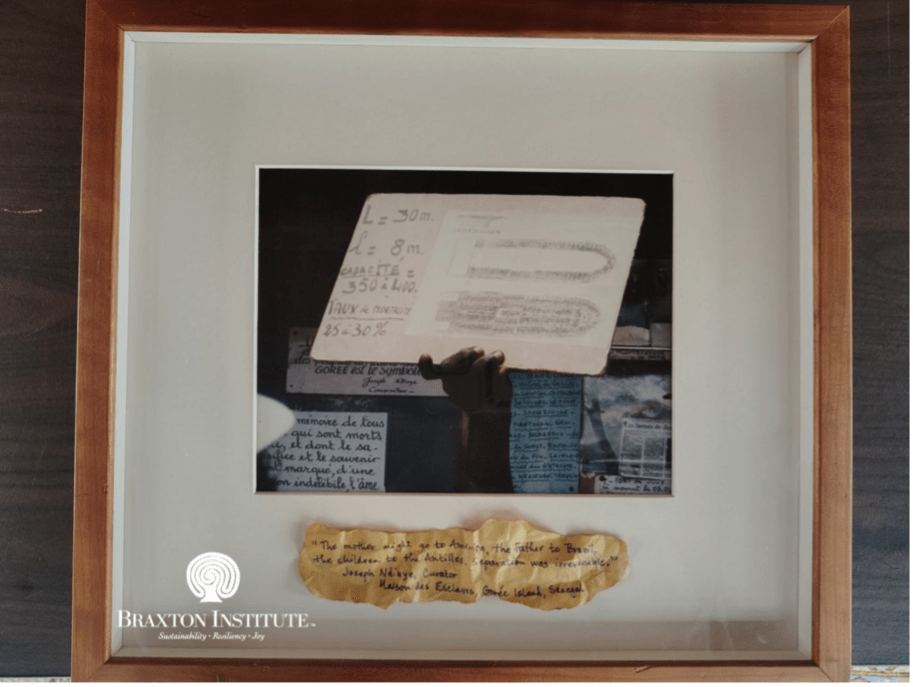
Some years ago, I participated in a pilgrimage to “sites of memory” in Ghana, Ivory Coast and Senegal as I was beginning to write the play, Crossing a Deep River: A Ritual Drama in Three Movements, an experimental ensemble piece for actors, dancers, and musicians about the trans-Atlantic trafficking and enslavement of Africans.
The first mention of the Middle Passage that I can recall came from my grandmother, Emma Margaret Harrison, who told me, “My father always said that we have a home over there.” His “over there” did not refer to Heaven or Canaan, but to Africa. Her father was William Harrison, enslaved on Montpelier, an estate near Laurel, MD, until he was eight years old. He had passed this memory on to his daughter, and she in turn to her son and his children. This oral transmission from generation to generation becomes a form of sharing and a ritual of remembrance steeped in what I call “crossing consciousness,” my grandmother’s awareness that the Harrison family had been held in bondage by the Snowden and Thomas families, Maryland Quakers directly involved in the importation of enslaved Africans into Maryland in the 18th century.
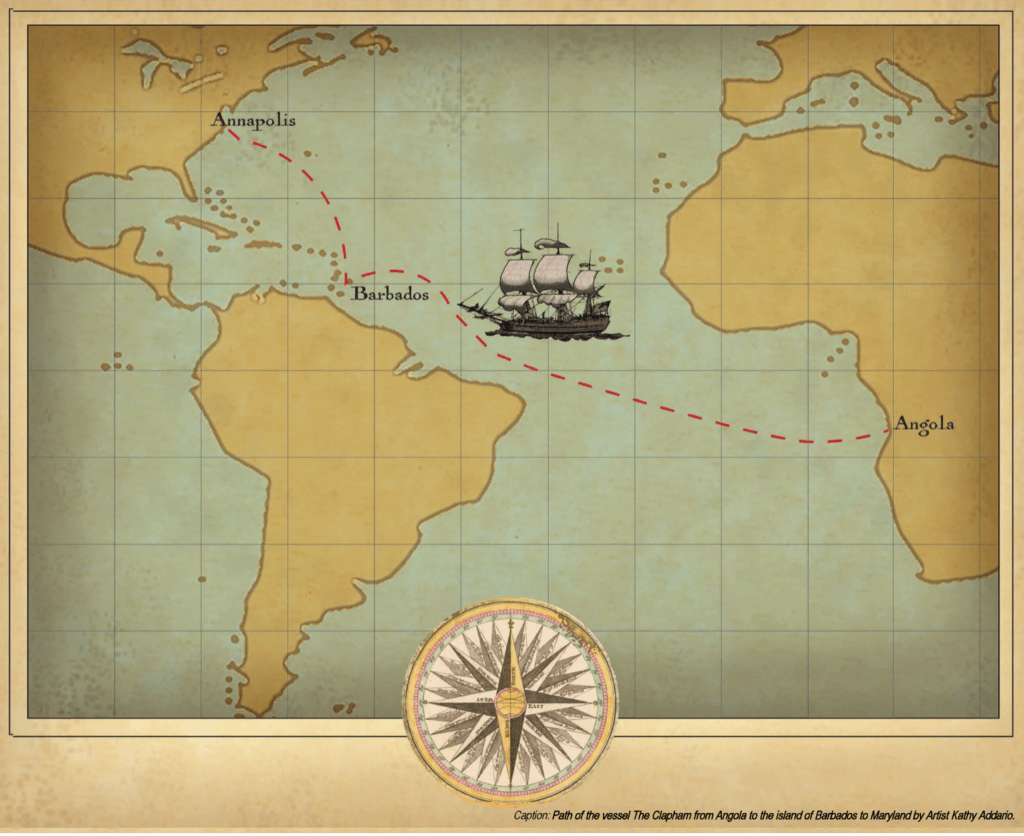
Such consciousness has long been a part of the African American experience. On the southern plantation, suppressed memories of the Middle Passage surfaced in what Booker T. Washington referred to as whispered conversations:
In the slave quarters and even later, he writes, I heard whispered conversations among the colored people of the tortures which the slaves, including, no doubt, my ancestors on my mother’s side, suffered while being conveyed from Africa to America.
The same repressed memory surfaces in 1852, in Frederick Douglass’ What to the Slave is the Fourth of July? Taking up, in his words, “the plaintive lament of a peeled and woe-stricken people,” he invoked the 137th Psalm and with it a sacred memory:
If I forget thee, O Jerusalem, let my right hand forget her cunning. If I do not remember thee, let my tongue cleave to the roof of my mouth.
I have made many journeys in search of knowledge of African people that I had not been able to find in books. In a watery dungeon beneath the Mercado Modelo in Bahia, Brazil, I had the strange experience of hearing the voices of people I could not see: men, women, and children weeping and moaning. Opening to these voices and those of the dispossessed Africans whose 18th and 19th century narratives that after nearly a quarter century of teaching I know almost by heart, I began an inner journey even into the waters of the Atlantic itself.
As a certified master scuba diver, in the waters of Bonaire, an Island in the Netherlands Antilles, I heard voices similar to the ones beneath the Mercado Modelo. This occurred at a depth of ninety feet at a dive site called “Invisibles,” a barren stretch of underwater seascape opposite a series of salt flats where Africans had been forced to mine this “white gold.” Back on board the dive boat, I could see on shore the stone pyramids where rebellious slaves had been staked and left to “dry out.”
Sign up for our free newsletters
Subscribe to NPQ's newsletters to have our top stories delivered directly to your inbox.
By signing up, you agree to our privacy policy and terms of use, and to receive messages from NPQ and our partners.
It has been said that the future of a people can only be illuminated when founded on the past. Crossing consciousness presents itself in the memory of the earliest slave narrators, from Belinda Sutton Royall, a Yoruba woman kidnapped as a child and sold into slavery in New York in the 18th century, and Quobna Ottobah Cugoano, an Akan youth transported around the same time, remembered by Frederick Douglass and Booker T. Washington, among others. Even today, it remains part of the African American inheritance.
My play, Crossing a Deep River: A Ritual Drama in Three Movements, is the flowering of a seed planted by my grandmother long ago when she rocked me to sleep and whispered, “We have a home over there.” The words “over there” were part of a life occluded and hidden, a whisper that remained in our privileged and private sphere, and therefore safe.
Crossing the vast Atlantic from Africa to the Americas was indeed like crossing into the afterworld—the world after Africa. Symbolically then, the Atlantic was the deepest river of all. Crossing a Deep River: A Ritual of Drama in Three Parts, therefore, is not merely about the tearing and fragmentation of peoples and cultures in Africa and the Americas; it is also about our secret lives, a plantlike bending and turning and quivering, the search for a home and wholeness, and the truth of the human heart. It is about memories whispered on Southern plantations and kept generation after generation, not only in America and the Caribbean, but in Africa and Europe too. It is about necessary remembrance, and the telling of stories that, in Toni Morrison’s words, were “not to be passed on.”
Morrison also speaks about discredited knowledge—knowledge, that in her words is “discredited only because black people were discredited, and therefore, what they knew was discredited.” Writers, artists, and musicians like Tom Feelings, Marion Brown, Alice Walker, Everett Hoagland, Derek Walcott, Charles Johnson, Malkia Roberts, Renee Stout, Tony Davis, filmmaker Haile Gerima and many others have worked with this discredited knowledge, finding in it the inspiration to speak the unspeakable.
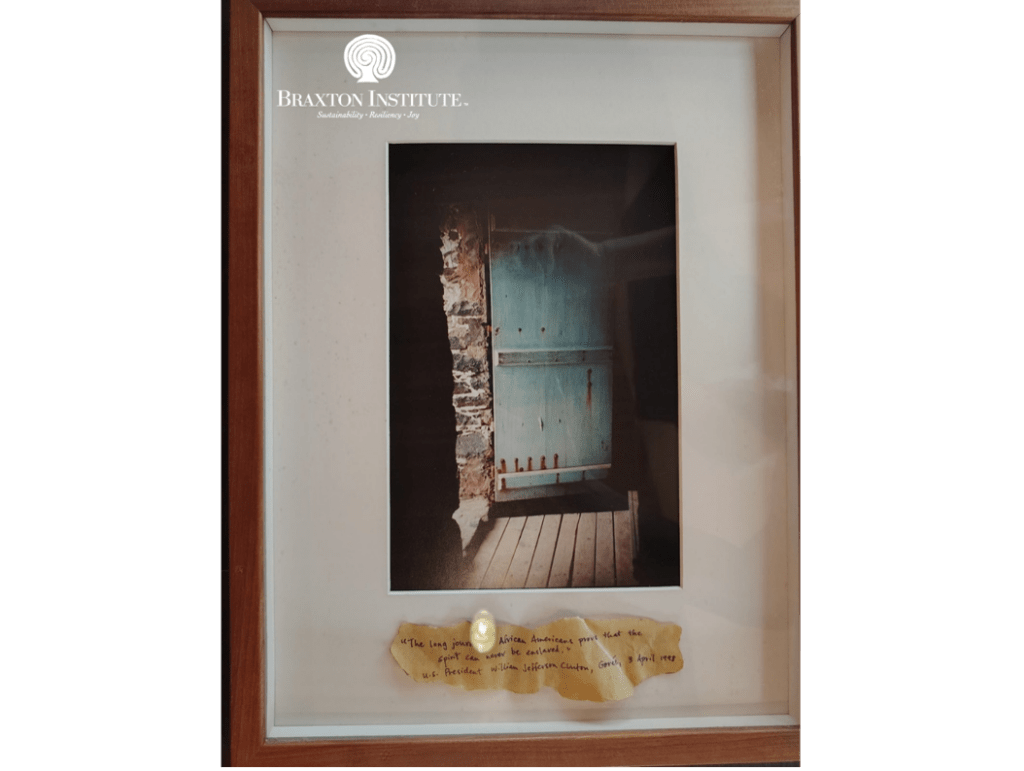
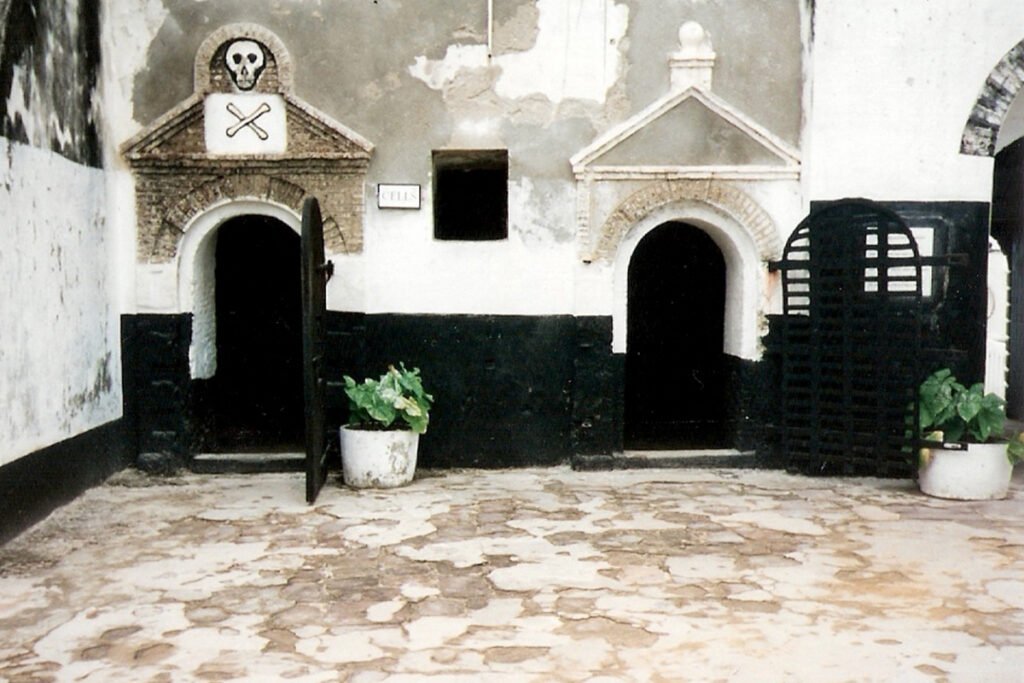
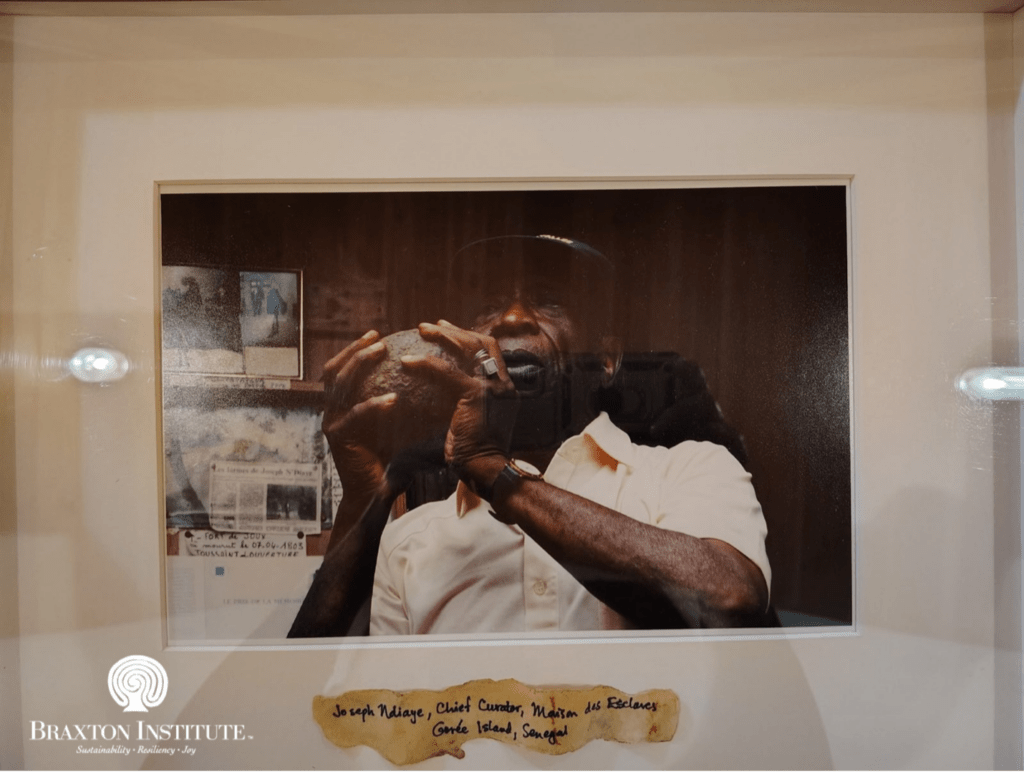
At Elmina fortress, there is a barred room with a skull and crossbones over the door. As many as four men at a time might be put into that room without food or water; the door was never opened as long as any one lived. What price resistance, to be the last alive among the dead? At Cape Coast fortress there is, in fact, a priest who keeps an altar of remembrance like the priest in Haile Gerima’s independent film SANKOFA. Pittsburg Africans on this Urban League sponsored pilgrimage (some black, some white) filed into his sanctuary and watched respectfully while he poured libations and invoked the spirits. Every one of us left some small offering, usually cash. Goree has its own punishment chamber—small, dark and solitary; its height prohibits standing. Anyone who believes with French Pierre Nora that, “We speak so much of history because we have so little of it left,” should enter that room and close the door.
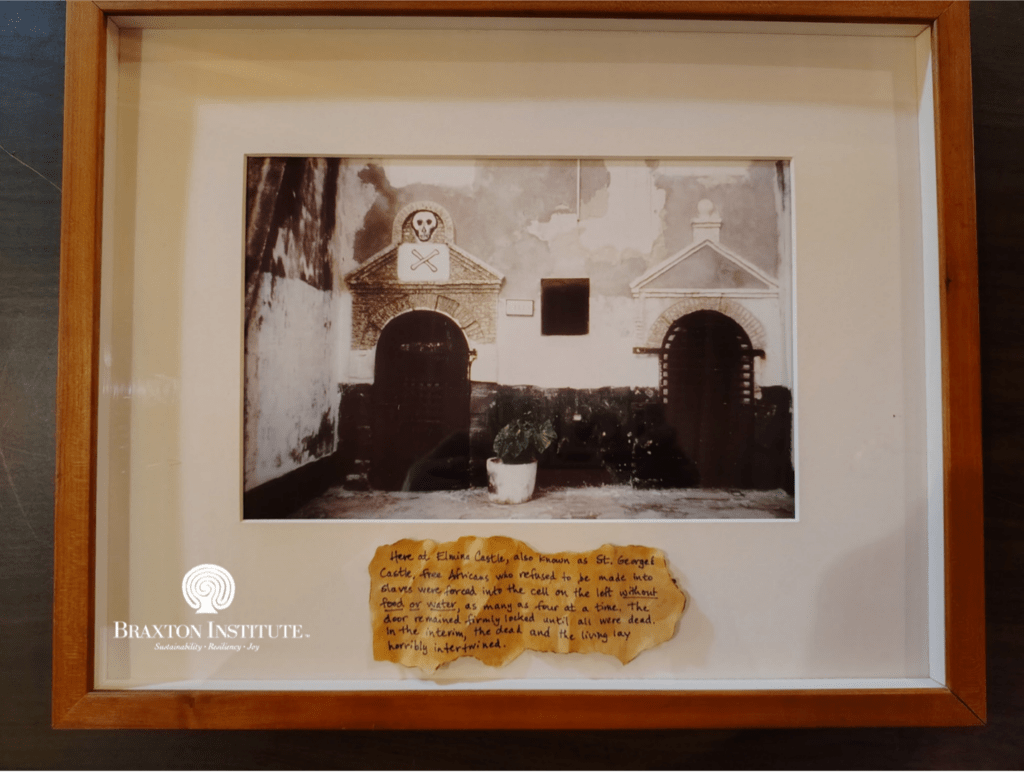
In order to get well again as a people, whether as people of a common heritage or many peoples honoring a particular heritage, we must open the doors of the most private chambers of the soul and dare to engage a fragmented but collective past. Once one has been to Cape Coast or Goree, one sees Africa more readily in Liverpool or New London, in Muenster, Germany or Hanover, New Hampshire, in Paris, or St. Louis, in Haarlem or New Amsterdam—not to mention Cuba, Puerto Rico, Barbados and in the Sea Islands of South Carolina or Virginia’s Dismal Swamp. Even the place names have memory: in Bahia, Brazil, for example, one remembers that the Pelhourino district is called by that name, pelhourino, place of punishment, because our very cousins were flayed and scourged there.
I therefore recommend visiting these “sites of memory” to others similarly afflicted with unanswerable questions about the past and manifestations of the past in the present. White American authors have done the same: Hawthorne, for example, returned to Salem to write The Scarlet Letter, his novel of atonement. For those who cannot travel abroad, there is travel at home just as Thoreau “traveled much” in Concord. Was there a whipping post or auction block in the place where you live? Do streets of your city carry repressed and embedded narratives? Have you told your children the whispered stories that were passed down to you? What I learned in Africa, I think, is not only the importance of making the journey, but the importance of making and keeping rituals of remembrance.