This story was copublished with The 19th, an independent, nonprofit newsroom reporting on gender, politics, policy, and power, as well as #WeTheCivic: America 250, a narrative movement centering the multiracial nonprofit and civil society workers, organizations, and communities in America 250 narratives.
This story was originally reported by Errin Haines of The 19th. Meet Errin and read more of their reporting on gender, politics and policy.
In the lead-up to our country’s 250th anniversary, Errin Haines is writing a series of columns to contemplate the complicated expansion of our democracy. Subscribe to The Amendment newsletter.
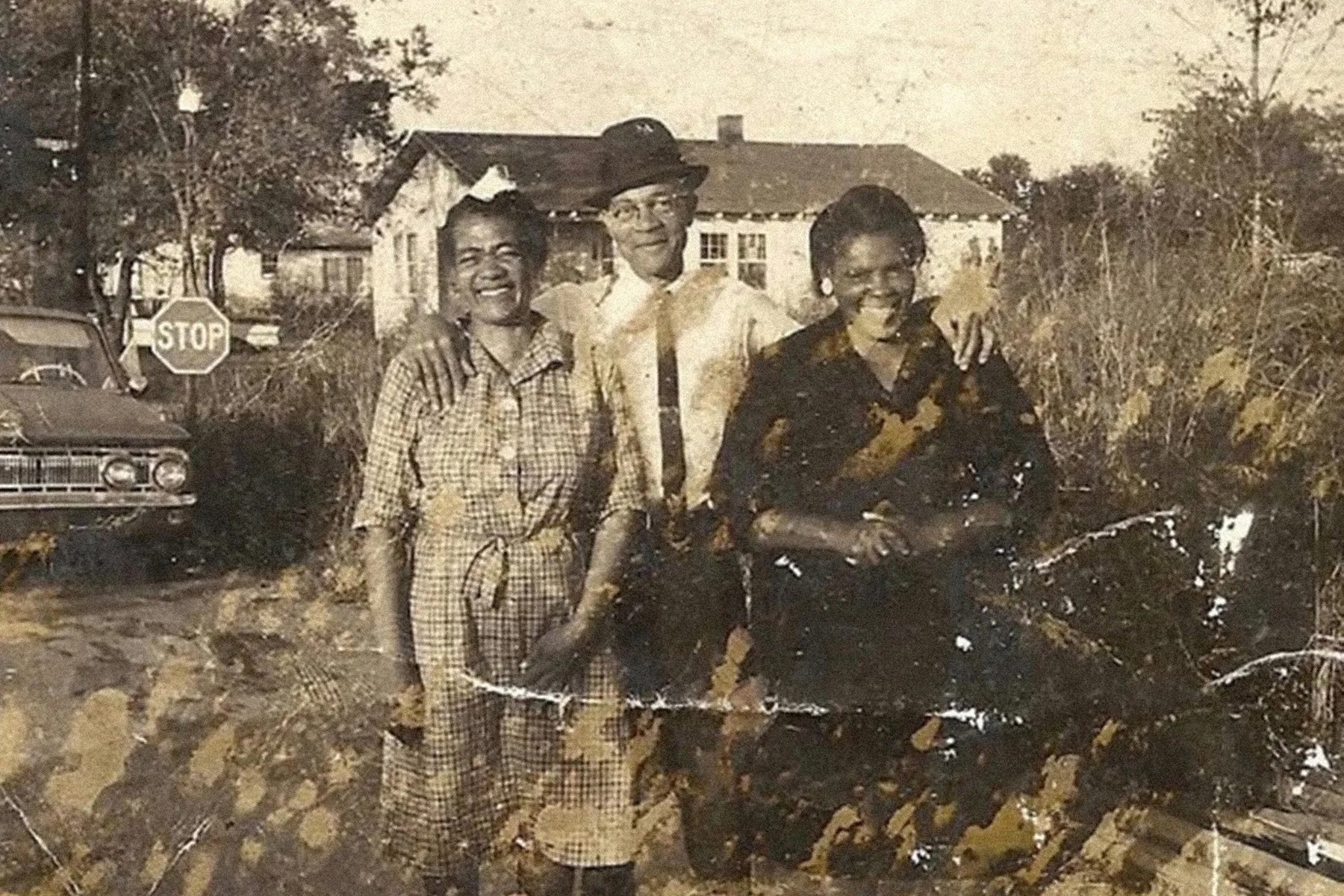
Joseph and Nellie Gamble were born in 1905 and 1910 in Jim Crow Alabama – which meant that for much of their adult lives, they were unable to vote alongside their fellow citizens on Election Day.
Across the South for nearly a century after Reconstruction, Black Americans like the Gambles were legally blocked from the ballot box by a system of racist laws that made them second-class citizens denied their full rights as promised by our founding documents.
When the Gambles finally were able to cast their ballots, neither of them took it lightly. Joseph kept in his wallet his poll tax receipt to prove that he had paid the additional fee imposed on Black voters before they were allowed to vote — often a cost-prohibitive barrier and an insult to citizenship for those who could afford to pay. He and his wife captured the significance of the moment by dressing in their Sunday best; Nellie made sure to carry her best pocketbook.
She would take her granddaughter, LaTosha Brown, to the polls and let her pull the lever. Brown did not know why, but she learned early that voting was important and special.
Brown registered to vote as soon as she turned 18, moved by a passion that extended beyond her ability to vote. Brown was also obsessed with power: who has it, who doesn’t and how those who have it use it. Because she recognized early that voting is a means of wielding power in our democracy, she became a voting rights activist.
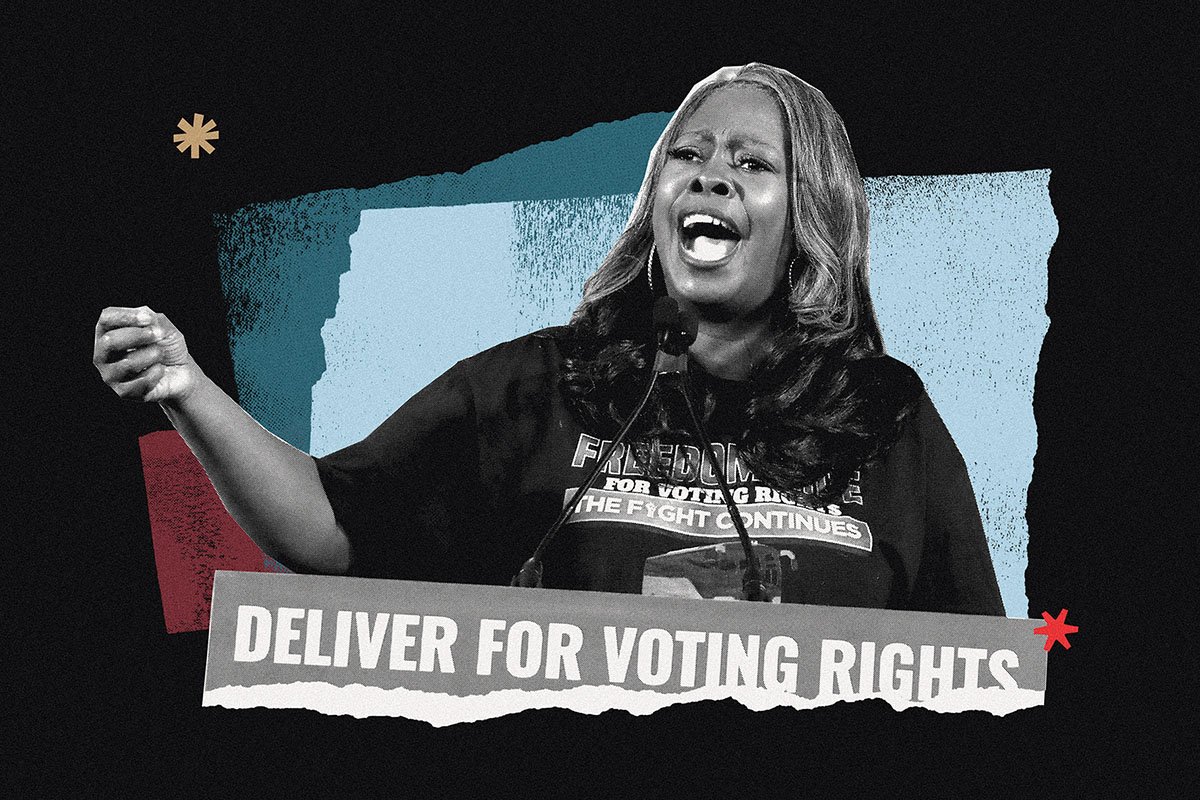
In 2016, Brown co-founded Black Voters Matter as a means of formalizing her life’s mission to show Black Americans their power to have a voice on all kinds of choices that directly affect them. In the decade since, she has helped Black voters win elections across the South, orchestrating successful on-the-ground get-out-the-vote campaigns across Alabama, Georgia, Mississippi, Florida and Louisiana. As President Donald Trump has accused Black voters of fraud, she has carried on, her headquarters a 45-foot long bus emblazoned with bold phrases like “WE GOT POWER!” and “WE WON’T BLACK DOWN!”.
Black women have fought to expand and protect democracy, even when they were excluded from it at our nation’s founding. Brown has understood that since her early days in the modern-day movement, registering Black voters and making sure they cast their ballots. Her work is centered on strengthening this connection between intention and action. She knows that’s one of the paths for change.
“We’ve reduced voting as just this action, or this thing of being participatory,” she said. “The evidence that I am human is based on the power of choice.”
Equality and freedom for all are founding premises of the United States. As the country marks its 250th anniversary, access to either of these beliefs is still grounded in exclusion. LaTosha Brown is among the Black women pushing for change, part of a lineage of revolutionaries waging a fight for full citizenship as some in our country continue to try to exclude them from the promises and privileges of our democracy.
For Brown, voting is more than a right. It is sacred, the physical manifestation of human agency. It is a declaration of victory in a hard-fought battle. Her own grandparents weren’t political or activists, but they knew they should have a say in who makes the laws they abide by — and in who represents them.
“There’s still an ongoing fundamental attack on our right to vote, because America has always fundamentally attacked our humanity. The right to vote and our right as a human being are intricately tied together. They’re not separate and apart.”
*
Much of America’s journey since 1776 has been one from exclusion to belonging, and Black women have been among those leading the charge to perfect our union as one that is inclusive and more truly representative.
Sign up for our free newsletters
Subscribe to NPQ's newsletters to have our top stories delivered directly to your inbox.
By signing up, you agree to our privacy policy and terms of use, and to receive messages from NPQ and our partners.
The rights of life, liberty and the pursuit of happiness declared in our nation’s founding document are, in many ways, unlocked by one’s right and ability to vote. The authors of the Declaration of Independence wrote about a government “deriving their just powers from the consent of the governed.”
The right to vote was not initially extended to those who were not white male landowners; that had to be written into our Constitution more than a century later — for Black men at first and then for white women. Black women were among the others who would fight for another half-century for their access to the ballot. For them, the fight to ensure America honors the ideals articulated in the Declaration of Independence, an aspirational roadmap to a just society, is not over.
Their access to the ballot box came with the passage of the Voting Rights Act of 1965, after Black Americans and others bled and died across the South in yearslong battles waged against legal and civil efforts at subjugation. The law stood for years as the crown jewel of the Civil Rights Movement. In its wake, millions of Black Americans registered to vote and exercised their power at the ballot box, helping to elect a record number of Black politicians at the local, state and federal levels.
Today, we face a new contradiction: Many Americans are celebrating our democracy — some as a finished product — yet the right to vote, perhaps the most tangible expression of our citizenship, remains unequal for all.
Decades of progress came undone in April, when the Supreme Court dealt a final blow to the Voting Rights Act in a landmark case that cleared the way for politically driven racial gerrymandering. Within hours of the ruling, states moved to redraw their maps to consolidate Republican power and eliminate districts represented by Black elected officials. By redrawing the lines of congressional districts, Republican-led legislatures in Louisiana, Alabama, Tennessee and other Southern states have diluted or altogether undone majority-Black districts, weakening — if not entirely eliminating — the ability of Black voters in the region to choose who speaks for them in Washington.
To have a vote is to have a voice in American politics. The question at this milestone for democracy is whose voice will still matter headed into our next 250 years.
*
Brown was at the nail salon with her aunt Ella Gamble Wilmer when news of the Supreme Court ruling broke — and it broke the 92-year-old Orville, Alabama, native, who told her niece as she wept: “I never thought we’d be back here.”
Brown was initially in shock at the decision. Then she felt betrayal. Then, something else entirely set in.
“All they did is put more gas in my tank,” Brown said.
Less than a month later, Brown was back in Selma, leading a coalition of civil rights groups, faith leaders and activists across the Edmund Pettus Bridge in the spirit of the 600 foot soldiers who risked their lives attempting to march across it for voting rights on March 7, 1965. The march was the catalyst for the passage of the act in August of that year.
The coalition Brown led in Selma has launched Freedom Summer, a nod to the 1964 campaign of the same name to register Black voters in Mississippi. Over the next few months, organizers will be holding events in at least a dozen cities, registering and mobilizing voters ahead of the midterm elections.
Now is the time for Black voters to think differently and plant the seeds for the next 250 years of American democracy, Brown said.
“We have to shift from seeing ourselves just as citizens of this nation and start seeing ourselves as founders,” she said. “It is clear that what we have in place right now is woefully insufficient. In this moment, where everything is being torn down, we should be spending a lot of time and energy around organizing ourselves and our visions around what will we build next.”
There will never be true democracy without choice, and a country that excludes its citizens cannot fully claim – or celebrate – our founding ideals.
In America, to vote is to belong. May we continue our journey towards belonging, away from exclusion, so that the promise of liberty and equality becomes real across our United States.