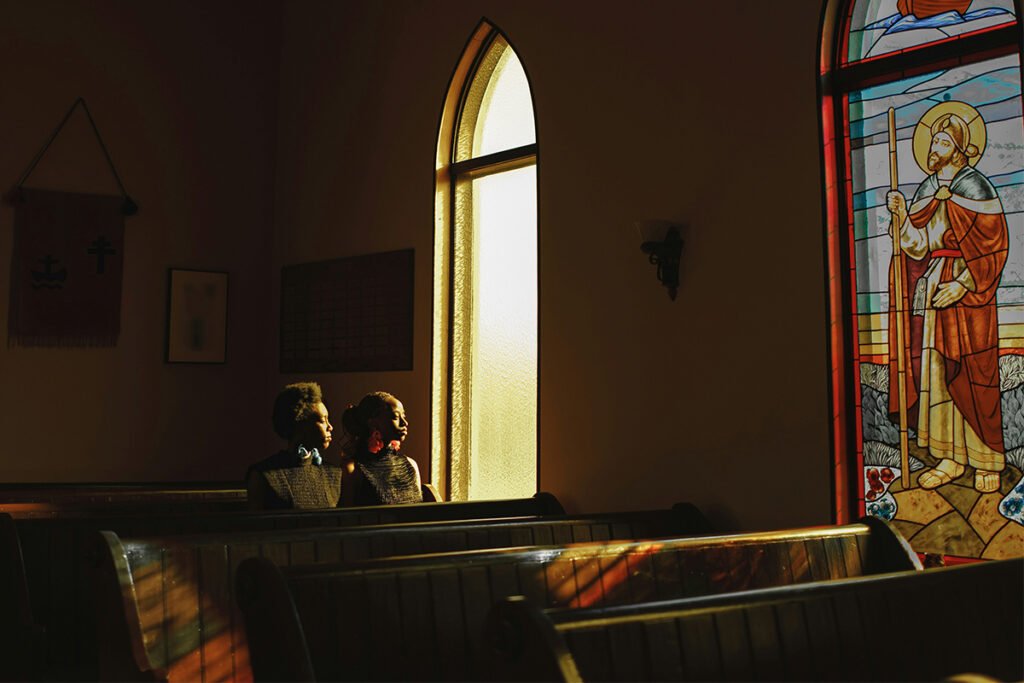
Most often, Christian Nationalism shows up subtly, as a story someone has come to believe about why their life looks the way it does, cloaked in the language of faith.
On May 17, thousands gathered on the National Mall for Rededicate 250, a White House-backed, taxpayer-funded prayer rally. By any honest measure, it was the most aggressive display of state-sanctioned Christian Nationalism in recent American history. Defense Secretary Pete Hegseth was there. Franklin Graham was there. House Speaker Mike Johnson was there. The event framed our nation’s founding as an explicitly Christian project and called the nation to recommit itself as One Nation Under God. The critics who named it as unconstitutional and dangerous were right to do so quickly and without equivocation.
But we don’t need to look to that stage—full of the most extreme voices in Christian Nationalism—to learn about how this ideology actually moves through people’s lives. In fact, Christian Nationalism rarely announces itself the way it did on the National Mall. Over the last several months, we began to understand this as we built Voices of Repair: on calls with Black clergy across denominations, in conversations with organizers and interfaith leaders preparing for a summer of synchronized sermons and community conversations ahead of July fourth. What that work taught us is that, most often, Christian Nationalism shows up subtly, as a story someone has come to believe about why their life looks the way it does, cloaked in the language of faith.
That is the piece the broader progressive ecosystem must address, and it is the piece our work keeps putting back in front of us. Like most ideologies, Christian Nationalism exists on a spectrum. The most extreme tactics are being deployed by White Christian evangelicals. Still, much of the current narrative across this field doesn’t name the subtler ways this ideology shows up in the very communities Trump’s bisesquicentennial strategy is writing out of the story. That failure has consequences. Millions of Black and brown Christians are increasingly susceptible to a story about themselves, their faith, and their place in this nation’s past, present and future that simply is not true.
There was a particular moment that has stayed with us since the first call we held while building Voices of Repair. We spoke with a Black deacon, in his mid-to-late 60s, with decades of service in a Black church. During a discussion about what was happening in his city, he said he abhorred the killing of Black children by police and believed in invest-divest organizing strategies. He went on to say, however, that those killings resulted from children’s behaviors, which stem from God being taken out of schools. He did not experience those two beliefs as being in tension with one another. To him they were the same conviction, stated twice, from two different directions.
As narrative and communications strategists, the gap and the dissonance was apparent. And so was the opportunity for intervention. We were trained, like most people in this field, to listen for the policy position, the line where someone tells you what they believe should happen. But our work and experience also taught us to listen for the presence of theological logic sitting underneath that position, quietly doing the work of explaining away the systemic harm and, along with it, people’s dignity and humanity. That gap—between what someone believes should be done and the framework they reach for to make sense of why harm happens in the first place—is exactly what is missing in most narrative work, including work we did earlier in our careers, before the insidiousness of Christian Nationalism moved from the fringes into the White House.
That same gap exists inside of many interfaith organizing spaces, too, where there’s an acceptance of liberation theology, and the instinct is often to build a coalition around shared belief in everyone’s humanity and right to safety, anchored in moral language like justice, dignity, and repair. But what happens when we build without looking at the foundation? What happens when we choose language without interrogating how the words exist inside the places no one sees? Sometimes those conversations happen organically, but sometimes we have to agitate and force them to the surface. Voices of Repair was built to do that: to name that gap directly rather than organize around it.
You cannot argue against a belief system with a better fact; you have to meet it inside the language it already speaks, and be willing to name the contradiction out loud instead of organizing politely around it.
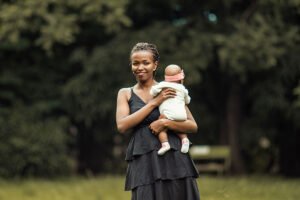
Take the following example: If a hard working single mother, who grew up in the church, heard repeatedly that having children out of wedlock was a sin, then that mother working to make ends meet is more likely to attribute her hardship to her “moral failing” of being an unwed mother than to the structural barriers between her and higher wages or affordable housing. Neither she nor the deacon would call themselves a Christian Nationalist. They may not even recognize the term if you used it to describe what they believe about themselves, their conditions, or their community. But look closely and you can see the threads binding their beliefs to a framework intended to do exactly what it’s doing.
Recent PRRI data shows that 34 percent of Black Christians hold Christian Nationalist beliefs, a rate that exceeds the number among White Christians, by around 30 percent.
Sign up for our free newsletters
Subscribe to NPQ's newsletters to have our top stories delivered directly to your inbox.
By signing up, you agree to our privacy policy and terms of use, and to receive messages from NPQ and our partners.
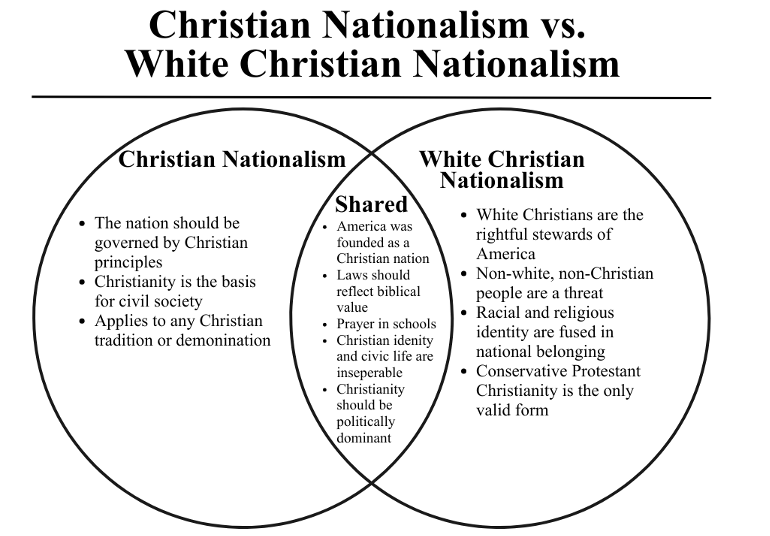
We assumed, like a lot of people in this work, that better stories alone would close the gap between people of faith who adhere to nationalist beliefs and those who don’t. But building Voices of Repair has shown us that progressive faith leaders, preachers, organizers, and strategists can deploy powerful counter narratives and still not move the needle on issues like family, reproductive healthcare, poverty, and immigration, because people’s sense of reality is shaped by moral and religious foundations long before our stories reach them. You cannot argue against a belief system with a better fact; you have to meet it inside the language it already speaks, and be willing to name the contradiction out loud instead of organizing politely around it.
The right understands this, and they are not simply consolidating their existing base. They are adding voices and foot soldiers to an army that sees the 250th anniversary of the United States as an ordained opportunity to proselytize a version of the nation’s future that has no room for anyone who isn’t white, heterosexual, wealthy, male, and Christian.
The Black church carries a prophetic obligation to name harm and demand remedy, which means faith cannot be treated as a private comfort. It has to be a public commitment.
Voices of Repair is the outgrowth of what these conversations taught us: that the most effective counter to a false story is not a louder argument but a truer one, delivered by people the community already trusts, in the language its faith already speaks. That is why the campaign centers Black clergy across denominations, not outside messengers, and is built around sermons, speeches and community conversations leading up to July fourth and through August, rather than talking points.
Regardless of whether the work you are moving, supporting, or funding is explicitly religious, Christian Nationalism is the engine driving most of the political violence we are experiencing from this administration, so dismantling it has to be collective responsibility, not a niche concern. To funders seeding money into Southern electoral organizing, combating Christian Nationalism has to be part of the conversation, because people may publicly align with candidates who look like them, but they vote for candidates whose platforms match what they believe their faith says about moral issues. To fellow narrative strategists working on reproductive justice, it would serve the work to understand more precisely how Christian Nationalism, not just Christianity, shapes Black women’s sense of their own bodily autonomy. And if you are a journalist, storyteller, or creative, your role in shaping and distributing these stories matters now more than it ever has.
What our religious traditions actually tell us about repair and reparations, as a moral obligation and not just a political demand, is something our communities are only beginning to reckon with in public. Across most religious traditions, justice for the oppressed is not optional, and there is no remedy without repair. The Black church carries a prophetic obligation to name harm and demand remedy, which means faith cannot be treated as a private comfort. It has to be a public commitment.
But theological clarity on its own will not move this moment. It has to be joined to the fights that have defined Black freedom struggles across generations: reclaiming the truth of Christianity while still reckoning with the role it played in colonization and empire, protecting Black media and Black storytellers facing coordinated backlash for simply reporting what is happening to our communities, and defeating the authoritarianism closing in on all sides while pressing toward the liberation our people have been organizing toward for centuries.
This summer, from #ReparationsJune to #BlackAugust, we are calling on faith leaders and people of faith and goodwill around this country to join Voices of Repair, because the spirit of truth and repair will always be stronger than fear and hatred. Together, we will make sure our nation’s next chapter is not only about those who labored and sacrificed to build this nation. It will be authored by them, in the ink of love, justice, and freedom.