Nonprofits will not make a dent in racial (or other kinds of) justice until we are able to imagine and develop organizational forms that elevate subordinated voices.
Voice under Domination



Nonprofits will not make a dent in racial (or other kinds of) justice until we are able to imagine and develop organizational forms that elevate subordinated voices.
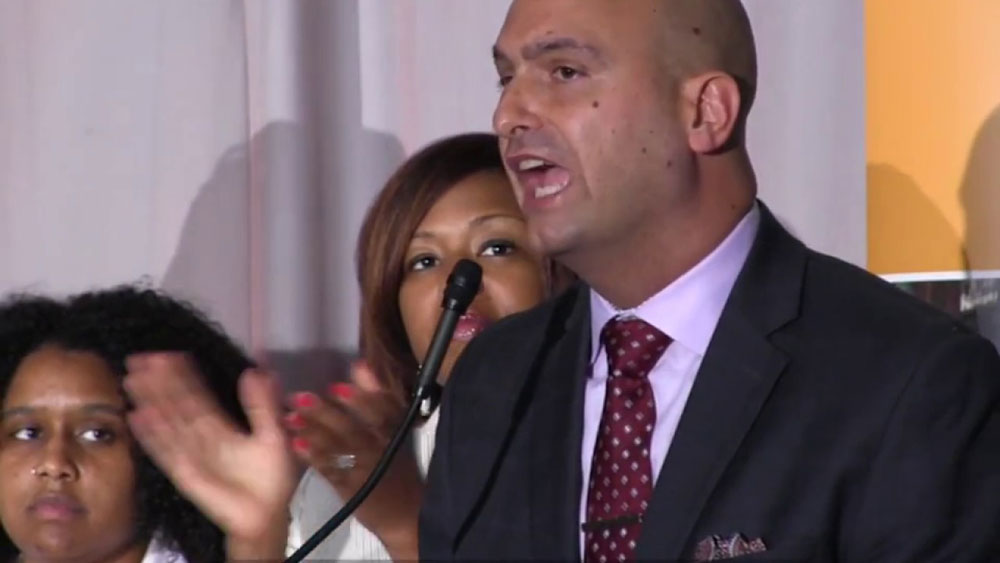
The Detroit school system seeks to provide a safe learning environment for the children it teaches by declaring all school facilities to be sanctuary sites.

In St. Louis, asthma attacks result in Black children being admitted into the emergency rooms of hospitals at 10 times the rate of white children.

In the wake of last month’s racially motivated El Paso mass shooting, many Texans are assessing the link between incendiary language and anti-immigrant violence.

A new study from the Women’s Philanthropy Institute at Lilly examines the role of activist donors on building the women’s fund field.

The work of a Michigan nonprofit aims to identify invasive aquatic species early on, before they spread to a wider area.

Kochan, the codirector of MIT’s Institute for Work and Employment Research, discusses the rapidly changing accountability trends around for-profits and nonprofits and what he sees as an impending collision between sometimes diametrically opposed forces.

“Managing nonprofit brands requires acknowledging multiple stakeholders’ involvement in processes and structures related to brand development.” This article explains the whats, the whys, and the hows.

Nonprofits exist in a “muted market” that, without correction, privileges monied or regulatory stakeholder groups. That’s a big problem for those who expect them to put their interests first.

This article looks at how stakeholder theory applies to and plays out in and around nonprofits and outlines the questions that should be central to nonprofit leaders.
An NPQ article on participatory grantmaking made important distinctions between feedback and two-way communication that shifts power relationships. The director of the Fund for Shared Insight responds.

Philanthropy, driven by people with wealth, has a hard time addressing problems wealth created. Participatory grantmaking, by empowering communities to make grant decisions, can help change that.