logo logo
Fund the truth. #Wethecivic giving banner
Donate
    • Membership
    • Donate
  • Social Justice
    • Racial Justice
    • Climate Justice
    • Disability Justice
    • Economic Justice
    • Food Justice
    • Health Justice
    • Immigration
    • LGBTQ+
  • Civic News
  • Nonprofit Leadership
    • Board Governance
    • Equity-Centered Management
    • Finances
    • Fundraising
    • Human Resources
    • Organizational Culture
    • Philanthropy
    • Power Dynamics
    • Strategic Planning
    • Technology
  • Columns
    • Ask Rhea!
    • Ask a Nonprofit Expert
    • Gathering in Support of Democracy
    • Hope in the Dark
    • Humans of Nonprofits
    • Inside the States
    • In Defense of Civil Society
    • The Myth of Heroic Leadership
    • The New Harvest Project
    • Notes from the Frontlines
    • Notes from the Long Arc
    • Reimagining Philanthropy
    • The Unexpected Value of Volunteers
    • We Stood Up
  • Newsletters
  • NPQ Online Events
    • Premium Webinars
    • Learn Out Loud
    • Partner Events
    • On Demand
  • Leading Edge Membership

Black Feminists: No One Will Speak for Us but Ourselves

Ruth McCambridge
September 28, 2018
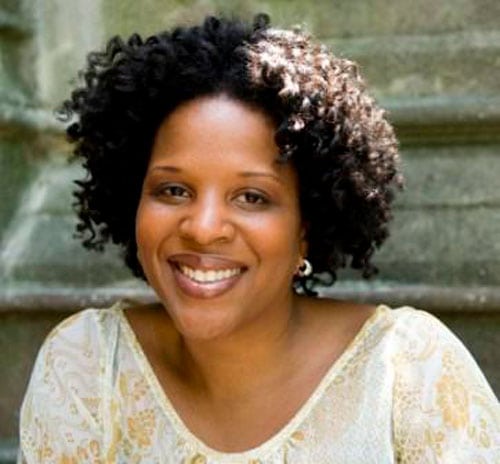
By rayon Richards [CC BY 2.0 ], via Wikimedia Commons

September 27, 2018; New York Times

There is a trend in this country of black women’s leadership that’s becoming a rising moment of women of color standing for elected office—successfully and with good ground game. This is the result of years of movement building. We are reminded of this by the full-page ad run on Wednesday in the New York Times that declares support for Dr. Christine Blasey Ford. Its form closely replicates an ad run in that same paper in 1991 in defense of Anita Hill. That ad contained the names of 1600 women signatories, including such luminaries as Audre Lorde and Toni Morrison. Its central statement was, “No one will speak for us but ourselves.”

In this version, the names of 1600 men in tiny type surround the statement, “We believe Anita Hill. We also believe Christine Blasey Ford.” The elaboration that follows reads, in part, “For decades, a culture of misogyny has allowed men to act with impunity and without consequence. We demand an end to that culture and we pledge to do our part in dismantling it.”

The 1991 ad, organized by black feminist scholars Barbara Ransby, Deborah King, and Elsa Barkley Brown, was smaller, and the $50,000 to pay for it was mostly raised in small amounts of $10 to $25 using a phone number and a post-office box.

Sign up for our free newsletters

Subscribe to NPQ's newsletters to have our top stories delivered directly to your inbox.

By signing up, you agree to our privacy policy and terms of use, and to receive messages from NPQ and our partners.

“We wanted black women’s voices to be heard, and we found her story to be believable,” said Dr. Ransby, a history professor at the University of Illinois, Chicago.

Indeed, it was tweets from Tayari Jones, which have since been retweeted more than 19,000 times, recalling her participation in the ad as a 20-year-old student, that brought the 1991 ad to the attention of a new generation of activists, including Meena Harris of the Phenomenal Woman Action Campaign. Harris had already started to work with a nonprofit, Futures Without Violence, where male allies are speaking out. Enter Alicia Garza, cofounder of the Black Lives Matter Global Network, and a social media and crowdfunding campaign was soon launched that sought the $100,000 required to run a full-page New York Times ad.

The connective tissue between the two ads, run more than a generation apart, says much about the staying power of a movement that has often been given less than a second thought by white progressives. It’s more than impressive to see it now centering itself in the forefront of an effort to reclaim the country for all of its residents.

For more thoughts on the aftermath of yesterday’s Kavanaugh hearing, you can read today’s feature.—Ruth McCambridge


Our Voices Are Our Power.

Journalism, nonprofits, and multiracial democracy are under attack. At NPQ, we fight back by sharing stories and essential insights from nonprofit leaders and workers—and we pay every contributor.

Can you help us protect nonprofit voices?

Your support keeps truth alive when it matters most.
Every single dollar makes a difference.

Donate now
logo logo logo logo logo
About the author
Ruth McCambridge

Ruth is Editor Emerita of the Nonprofit Quarterly. Her background includes forty-five years of experience in nonprofits, primarily in organizations that mix grassroots community work with policy change. Beginning in the mid-1980s, Ruth spent a decade at the Boston Foundation, developing and implementing capacity building programs and advocating for grantmaking attention to constituent involvement.

More about: Black VoicesFeminismNonprofit NewsPolicy
See comments

Sidebar-WTC
You might also like
Beyond What Is: Reimagining the American Project
Kelly Burton
Two Hundred and Fifty Years of Gunfire (Commentary)
Jaclyn Corin
They Wept Before the City Knew
Yahia Lababidi
A Letter to the World: From a Young Palestinian Man, To a World Where I and My City Will Be Eradicated
Yahia Lababidi and Mohammed Abu Lebda
We Did Not Come Here to Celebrate, We Came to Build
Linda Sarsour, Carmen Perez-Jordan and Saru Jayaraman
The Architecture of the Republic: Democracy, Caste, and the Crisis Beneath the Crisis
Kelly Burton

Upcoming Webinars

Group Created with Sketch.
July 16, 2:00 pm ET

Readying for the 2026 Midterms

How 501(c)(3)s Can Educate and Advocate During this Election Season

Register
Group Created with Sketch.
August 13, 2:00 pm ET

Building Narrative Power for Equity and Solidarity

Register

    
You might also like
A cropped photo of a person’s legs walking along a paved road. There is a yellow arrow veering to the the side and pointing ahead. The person walks alongside this arrow.
Beyond What Is: Reimagining the American Project
Kelly Burton
A protester holds a handwritten sign reading "Does anything even matter anymore?" above a crowd gathered outside a government building.
Two Hundred and Fifty Years of Gunfire (Commentary)
Jaclyn Corin
A cluster of blue, 6-petaled forget-me-not flowers, a symbol of rememberance and memory.
They Wept Before the City Knew
Yahia Lababidi

Like what you see?

Subscribe to the NPQ newsletter to have our top stories delivered directly to your inbox.

See our newsletters

By signing up, you agree to our privacy policy and terms of use, and to receive messages from NPQ and our partners.

  • About
  • Advertise
  • Careers
  • Contact
  • Copyright
  • Donate
  • Funders
  • Editorial Policy
  • Media Relations
  • Privacy Policy
  • Submissions

We are using cookies to give you the best experience on our website.


Nonprofit Quarterly | Civic News. Empowering Nonprofits. Advancing Justice.
Powered by  GDPR Cookie Compliance
Privacy Overview

This website uses cookies so that we can provide you with the best user experience possible. Cookie information is stored in your browser and performs functions such as recognising you when you return to our website and helping our team to understand which sections of the website you find most interesting and useful.

Strictly Necessary Cookies

Strictly Necessary Cookie should be enabled at all times so that we can save your preferences for cookie settings.