
logo logo
Fund the truth. #Wethecivic giving banner
Donate
    • Membership
    • Donate
  • Social Justice
    • Racial Justice
    • Climate Justice
    • Disability Justice
    • Economic Justice
    • Food Justice
    • Health Justice
    • Immigration
    • LGBTQ+
  • Civic News
  • Nonprofit Leadership
    • Board Governance
    • Equity-Centered Management
    • Finances
    • Fundraising
    • Human Resources
    • Organizational Culture
    • Philanthropy
    • Power Dynamics
    • Strategic Planning
    • Technology
  • Columns
    • Ask Rhea!
    • Ask a Nonprofit Expert
    • Gathering in Support of Democracy
    • Hope in the Dark
    • Humans of Nonprofits
    • Inside the States
    • In Defense of Civil Society
    • The Myth of Heroic Leadership
    • The New Harvest Project
    • Notes from the Frontlines
    • Notes from the Long Arc
    • Reimagining Philanthropy
    • The Unexpected Value of Volunteers
    • We Stood Up
  • Newsletters
  • NPQ Online Events
    • Premium Webinars
    • Learn Out Loud
    • Partner Events
    • On Demand
  • Leading Edge Membership

Can Co-ops Actually Begin to Reverse the Nation’s Inequality Tide?

Steve Dubb
January 14, 2019
“Bridge Over ‘Reversing Falls’ at Low Tide—Saint John, New Brunswick, September 2017,” Ron Cogswell

January 11, 2019; Truthout

In the wake of the Great Recession, observes Laura Flanders (of The Laura Flanders Show), co-ops are now expanding, but can they actually begin to reverse the nation’s rising inequality? The nation’s growing wealth inequality has many causes, but some of the wealth-shifting mechanisms can be easily identified simply by examining what have become business standard operating procedures. Amazon, which was briefly valued at over a trillion dollars, is a case in point. First, and most directly, Amazon concentrates profits at the top with a single chief executive, Jeff Bezos, who’s now worth over $100 billion. A second route is by undermining existing local businesses and economies.

To address how to change these kind of numbers, Flanders interviews Nathan Schneider, a media studies professor at the University of Colorado. Schneider, in addition to his academic position, is a leader in the platform cooperative movement. Platform co-ops are member-owned businesses for whom the app or platform is owned in common. Platform co-ops are a potential tool for fostering more democratic control over tech assets. For example, a driver-owned ride-hailing service that competes with Uber is one kind of platform co-op. Another is Stocksky, a photographer-owned website that, notes MJ Kaplan in NPQ, brings together “1,000 contributing artists who earned $4.9 million in royalties based on revenues of $10.7 million in 2016.”

Beyond platform co-ops, interest has spiked in worker-owned enterprises broadly speaking, notes Flanders, with “cities from New York to Madison, Oakland and Jackson…investing in worker-owned businesses and business incubators.” Many of these efforts are highly inspiring. Here at NPQ, we have covered many of these developments, both in print and in webinars.

In interviewing Schneider, though, Flanders poses a big question: “Can collectively-owned co-ops take on the robber barons?” she asks. It is also a question that we have posed at NPQ. Schneider, who also recently authored the book Everything for Everyone: The Radical Tradition that Is Shaping the Next Economy, makes a few observations.

First, Schneider suggests learning from history—and especially the history of cooperative development that came out of the Great Depression: “It’s hard to believe what happened in the 1930s after the Rural Electrification Act, [which] just enables electric utility cooperatives to access loans at the cost that banks are getting their money. Suddenly, within a decade or so, you had nearly all of rural America electrified. That is an astonishing accomplishment, demonstrating that models are financeable, scalable, and powerful if we allow ourselves to recognize that.” For example, one area where NPQ suggested building on precisely this model, was to leverage the existing rural electric co-op network to expand broadband access.

Sign up for our free newsletters

Subscribe to NPQ's newsletters to have our top stories delivered directly to your inbox.

By signing up, you agree to our privacy policy and terms of use, and to receive messages from NPQ and our partners.

Schneider also suggests taking a pragmatic approach to ownership. As Schneider puts it,

I think we need to become artists of ownership. Recognize that ownership is a fluid medium. It is something that is crafted through law and through contract and through practice. And I think there’s been a tendency, in my generation…to want to relinquish it and enter a sharing economy where everything is shared, but really it turns out to be a situation where everything is rented and those bosses are not giving up their ownership.

So my view is kind of like, until they give up ownership, nobody else should. We need to learn how to practice it more creatively and make sure that whatever economy we’re moving into, we’re coming into it from a place of more power and control over our lives. We’re in a moment where inequality is being driven by inequalities of ownership. We have to start there before we can talk about what comes next.

Flanders also asks Schneider: if the economy were to falter again as it did during the Great Recession, how should the civil sector respond? Schneider gives a few basic suggestions, including making sure credit unions are “powerful enough to be a meaningful alternative to banks,” as well as broader regulation of both business and the use of internet data.

Most of all, however, Schneider emphasizes the importance of imagination. “We were in a moment of such a lack of imagination ten years ago and in the years following,” he explains. For him, the impact of social movements like Occupy has been to reclaim and recognize that “we haven’t even asked ourselves what we really want.”

Schneider adds, however, that we cannot just wait for the economy to falter, but instead need to build the infrastructure now. “All of these things need to be,” Schneider explains, “not only part of our imagination, but part of our process of building power behind it.”—Steve Dubb


Our Voices Are Our Power.

Journalism, nonprofits, and multiracial democracy are under attack. At NPQ, we fight back by sharing stories and essential insights from nonprofit leaders and workers—and we pay every contributor.

Can you help us protect nonprofit voices?

Your support keeps truth alive when it matters most.
Every single dollar makes a difference.

Donate now
logo logo logo logo logo
About the author
Steve Dubb

Steve Dubb is senior editor of economic justice at NPQ, where he writes articles (including NPQ’s Economy Remix column), moderates Remaking the Economy webinars, and works to cultivate voices from the field and help them reach a broader audience. In particular, he is always looking for stories that illustrate ways to build a more just economy—whether from the labor movement or from cooperatives and other forms of solidarity economy organizing—as well as articles that offer thoughtful and incisive critiques of capitalism. Prior to coming to NPQ in 2017, Steve worked with cooperatives and nonprofits for over two decades, including twelve years at The Democracy Collaborative and three years as executive director of NASCO (North American Students of Cooperation). In his work, Steve has authored, co-authored, and edited numerous reports; participated in and facilitated learning cohorts; designed community building strategies; and helped build the field of community wealth building. Most recently, Steve coedited (with Raymond Foxworth) Invisible No More: Voices from Native America (Island Press, 2023). Steve is also the lead author of Building Wealth: The Asset-Based Approach to Solving Social and Economic Problems (Aspen 2005) and coauthor (with Rita Hodges) of The Road Half Traveled: University Engagement at a Crossroads, published by MSU Press in 2012. In 2016, Steve curated and authored Conversations on Community Wealth Building, a collection of interviews of community builders that Steve had conducted over the previous decade.

More about: Cooperatives and Employee OwnershipNonprofit NewsPolicy
See comments

Sidebar-WTC
You might also like
Two Hundred and Fifty Years of Gunfire (Commentary)
Jaclyn Corin
They Wept Before the City Knew
Yahia Lababidi
A Letter to the World: From a Young Palestinian Man, To a World Where I and My City Will Be Eradicated
Yahia Lababidi and Mohammed Abu Lebda
We Did Not Come Here to Celebrate, We Came to Build
Linda Sarsour, Carmen Perez-Jordan and Saru Jayaraman
The Freedom Quilting Bee and America’s 250-Year Story
Jason Collins
A Crushed 1891 Strike by Black Farmer Cooperatives Holds Keys to Economic Justice Today
Shivank Pandey

Upcoming Webinars

Group Created with Sketch.
July 16, 2:00 pm ET

Readying for the 2026 Midterms

How 501(c)(3)s Can Educate and Advocate During this Election Season

Register
Group Created with Sketch.
August 13, 2:00 pm ET

Building Narrative Power for Equity and Solidarity

Register

    
You might also like
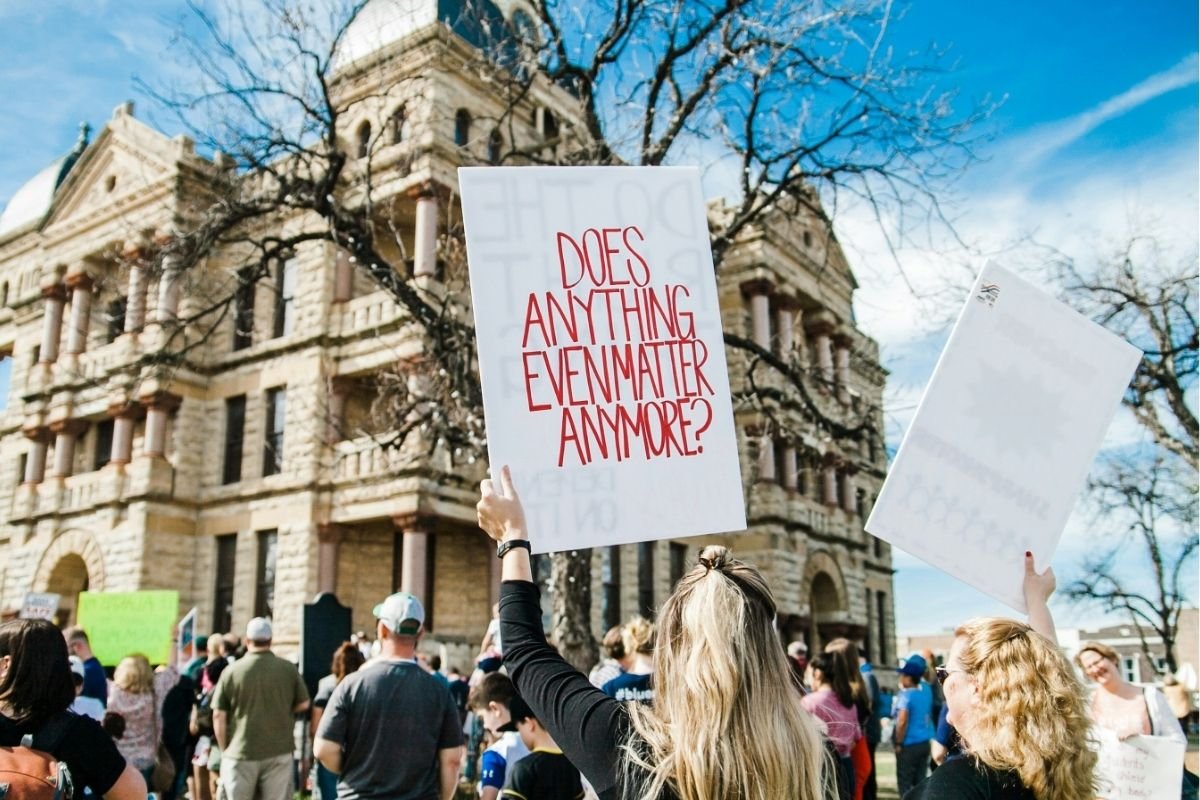
A protester holds a handwritten sign reading "Does anything even matter anymore?" above a crowd gathered outside a government building.
Two Hundred and Fifty Years of Gunfire (Commentary)
Jaclyn Corin
A cluster of blue, 6-petaled forget-me-not flowers, a symbol of rememberance and memory.
They Wept Before the City Knew
Yahia Lababidi
A bombed out building in the heart of Rafah, Palestine, where author Mohammed Abu Lebda is from.
A Letter to the World: From a Young Palestinian Man, To a...
Yahia Lababidi and Mohammed Abu Lebda

Like what you see?

Subscribe to the NPQ newsletter to have our top stories delivered directly to your inbox.

See our newsletters

By signing up, you agree to our privacy policy and terms of use, and to receive messages from NPQ and our partners.

  • About
  • Advertise
  • Careers
  • Contact
  • Copyright
  • Donate
  • Funders
  • Editorial Policy
  • Media Relations
  • Privacy Policy
  • Submissions

We are using cookies to give you the best experience on our website.


Nonprofit Quarterly | Civic News. Empowering Nonprofits. Advancing Justice.
Powered by  GDPR Cookie Compliance
Privacy Overview

This website uses cookies so that we can provide you with the best user experience possible. Cookie information is stored in your browser and performs functions such as recognising you when you return to our website and helping our team to understand which sections of the website you find most interesting and useful.

Strictly Necessary Cookies

Strictly Necessary Cookie should be enabled at all times so that we can save your preferences for cookie settings.